The Heat is On
July 16, 2021 | Safety | By Tri-County International Trucks
THE HEAT IS ON
The crazy weather continues this year and the heat is setting record temperatures across North America. What are you doing to protect your employees from Heat Stroke and exhaustion?
These conditions are created when our body is unable to regulate our heat production at a safe level. First, we need to make all employees aware of the signs and symptoms for these conditions:
1. Fatigue, weakness, fainting
2. Nausea and vomiting
3. Headache
4. Dizziness
5. Muscle cramps
6. Irritability
7. Sweating (absence or presence)
8. Paleness
These conditions can be further escalated by the physical condition of your employees. Employees at a greater risk for heat exhaustion and heat stroke are those with: Heart disease, Skin diseases, Extensive burns, Endocrine disorders (hyperthyroidism, diabetes, etc.), High blood pressure, Overweight, Depression, Insomnia and Fever. Over the counter drugs can also contribute to a greater risk for these conditions.
ALL HEAT-RELATED ILLNESSES ARE PREVENTABLE!
What can you do to prevent them?
• Use Common Sense!
• Limit your exposure to direct sunlight as much as possible.
• Drink more fluids (non-alcoholic); do not drink fluids that contain caffeine or large amounts of sugar. Sport drinks are good as they replace electrolytes and salt in your body. Avoid extremely cold fluids as these can cause stomach cramps. Drink often throughout the day 4-6 ounces at a time. WATER IS GOOD!
• Wear lightweight, light colored, loose fitting clothing that does not create a safety hazard for your work environment. If outdoors, wear a hat to reduce direct exposure to the sun.
• Make sure your employees are wearing sunglasses that provide UV protection and are impact resistant.
• Avoid hot foods and heavy meals. They add heat to your body.
• Drivers who are on routes should pack a cooler with water for the day. Also, keep an umbrella in the truck if you are operating in extreme conditions (desolate, desert, etc.). This will allow you to move to an area with breeze and still be protected from the sun.
• If exposure to the sun is inevitable, apply generous amounts of sunscreen with a high SPF rating to exposed skin.
• Make sure your truck is in excellent condition. A good pre-trip inspection is crucial in extreme heat conditions to prevent breakdowns, otherwise you may find yourself and your unit on the side of the road exposed to the extreme heat.
Work Zone Awareness
We are now in the middle of work zone season and you cannot drive anywhere without experiencing a work zone. As traffic volumes begin rebounding as COVID-19 lockdown orders are relaxed, renewed emphasis is being placed on highway work zone safety especially as higher incidences of speeding recorded during the pandemic are abating only slowly. “Though overall [motor vehicle] fatalities have decreased in the long run, the top three crash contributors – impaired driving, lack of restraint use and speeding – have persistently each accounted for nearly a third of all crash fatalities,” noted John Saunders, Director of Highway Safety for the Virginia Department of Motor Vehicles, in testimony during a June 30 hearing before the Senate Committee on Commerce, Science, and Transportation’s Subcommittee on Transportation and Safety. Now is the time to reinforce to your drivers the dangers that exist around Work Zones!
10 Tips for Driving Safely in Work Zones
• EXPECT THE UNEXPECTED! (Normal speed limits may be reduced, traffic lanes may be changed, and people may be working on or near the road.)
• SLOW DOWN and TURN ON YOUR FOUR WAY FLASHERS. (Speeding is one of the major causes of work zone crashes.)
• DON'T TAILGATE! KEEP A SAFE DISTANCE BETWEEN YOU AND THE VEHICLE AHEAD OF YOU. (The most common crash in a highway work zone is the rear end collision. So, don't tailgate.)
• KEEP A SAFE DISTANCE BETWEEN YOUR VEHICLE AND THE CONSTRUCTION WORKERS AND THEIR EQUIPMENT.
• PAY ATTENTION TO THE SIGNS! (The warning signs are there to help you and other drivers move safely through the work zone. Observe the posted signs until you see the one that says you've left the work zone.)
• OBEY ROAD CREW FLAGGERS! (The flagger knows what is best for moving traffic safely in the work zone. A flagger has the same authority as a regulatory sign, so you can be cited for disobeying his or her directions.)
• STAY ALERT AND MINIMIZE DISTRACTIONS! (Dedicate your full attention to the roadway and avoid changing radio stations or using cell phones while driving in a work zone.
• KEEP UP WITH THE TRAFFIC FLOW. (Motorists can help maintain traffic flow and posted speeds by merging as soon as possible. Don't drive right up to the lane closure and then try to barge in.)
• SCHEDULE ENOUGH TIME TO DRIVE SAFELY AND CHECK RADIO, TV AND WEBSITES FOR TRAFFIC INFORMATION. (Expect delays and leave early so you can reach your destination on time. Check the National Work Zone Safety Information Clearinghouse - http://wzsafety.tamu.edu for information on work zone delays throughout the country.)
• BE PATIENT AND STAY CALM. (Work zones aren't there to personally inconvenience you. Remember, the work zone crew members are working to improve the road and make your future drive better.)
Top 3 Hazmat Violations in 2021
According to the Federal Motor Carrier Safety Administration’s (FMCSA’s) Analysis & Information (A&I) online data, the top three hazardous materials regulations violations so far this year are as follows:
- Package not secure in vehicle (177.834(a))
- No copy of US DOT Hazardous Materials Registration Number (107.620(b))
- Shipping paper accessibility (177.817(e))
“Package not secure in vehicle” has been at the top of the list for the past four years (that’s as far as the data goes back).
Driver focus
Drivers are on the road and responsible for the hazmat load at the time of inspection. The top three violation areas — package securement, USDOT hazmat registration, and shipping papers — are all areas where drivers may need to be reminded of their responsibilities.
Package securement. While on the road, packages containing hazmat and not permanently attached to the vehicle must be secured. This means the packages must be braced and secured to minimize shifting within the vehicle during normal transportation conditions. Additionally, drivers need to be aware of segregation requirements. Certain hazmat cannot be transported with other types of hazmat and this information is laid out in the segregation table in 177.848. Be sure your drivers know about the segregation requirements, where to find the table, and how to use the information.
No copy of USDOT Hazardous Materials Registration Number. Each year, if you’re required to obtain the hazardous material registration, you’re required to keep copies of the registration statement and the certificate of registration at your principal place of business. There’s an additional requirement for motor carriers, however. Drivers must carry a copy of your current certificate of registration, or another document bearing your current year’s registration number identified as the “U.S. DOT Hazmat Reg. No.” Every vehicle you use for the transportation of hazardous material that meets the registration criteria must have this proof of registration on board. It could be that drivers have this documentation on board, but just aren’t aware of it. Or it could be that the documentation truly isn’t on board the vehicle. Since certificates for 2021-2022 were just issued, be sure to place a new copy of the documentation in your vehicles and let drivers know what to provide to enforcement when asked.
Shipping papers. While transporting hazmat by highway, shipping papers have very specific requirements because they need to be accessible to authorities in the event of an incident or accident. Be sure to remind drivers that. If the hazmat shipping paper is carried with any other papers, it is clearly distinguished either with a tab or by appearing first. When at the controls, the shipping papers must be within the immediate reach of the driver when restrained by the seat belt. The shipping papers must be readily visible to anyone entering the driver’s compartment, or in a pouch or holder mounted on the inside of the driver’s side door. If the driver is not in the vehicle, the shipping paper must be either in the door pouch, the door holder, or the driver’s seat. Additionally, shipping papers must have emergency response information on or in association with the shipping paper.
Key to remember
This data can help you identify areas for improvement. Giving drivers short and simple reminders about their responsibilities can help prevent these common violations.
FMCSA’s Training Provider Registry (TPR) Goes Live
After years of delays, the Federal Motor Carrier Safety Administration’s (FMCSA) entry-level driver training (ELDT) rule is headed to the finish line with the opening of the Training Provider Registry (TPR). Schools, motor carriers, and other entities planning on providing ELDT are now able to register with FMCSA.
Registration is a three-step process:
1. Access - Entities will need have a login.gov account to access the TPR. If an entity doesn’t have an account, one will need to be created. Once logged in, the user will be sent to the TPR registration site.
2. Registration - Information that will be required during the registration process includes: Provider name, facility name, contact information; Type of provider (for-hire/not-for-hire, in-house/not-in-house); Type of training provided; Average training hours and cost; and Third-party affiliations, certifications, or accreditations. Training providers will also be required to certify they meet specific standards related to curricula, facilities, instructors, vehicles, and state licensing (if applicable).
3. Additional locations - Once FMCSA has approved an entity’s request, providers with more than one location will need to register each of these locations.
The TPR may be accessed at: https://tpr.fmcsa.dot.gov/Provider < About ELDT and the TPR
As of February 7, 2022, compliance with all aspects of the ELDT rule is required. The ELDT rule establishes minimum training standards for drivers: Applying for their initial CDL; Upgrading their current CDL; or Obtaining a passenger, school bus, or hazardous materials endorsement for the first time. An entry-level driver must prior to taking the CDL skills test, successfully complete a prescribed program of theory and behind-the-wheel instruction provided by a school or other entity listed on FMCSA’s Training Provider Registry (TPR). With the implementation of this rule, the process of obtaining a CDL, upgrading a CDL, or obtaining certain endorsements will become more complex.
CVSA Announces Dates for Brake Safety Week
This year's Brake Safety Week is scheduled for August 22-28, according to the Commercial Vehicle Safety Alliance (CVSA). The enforcement campaign is a part of the larger Brake Safety Awareness Month, which takes place in August.
During CVSA's annual enforcement event, roadside inspectors will: Focus on the brake systems and components as they conduct North American Standard Inspections; and Compile data on brake hoses/tubing, the emphasis this year. The association will issue a report on its findings later this year. The event is also an opportunity for motor carriers to educate drivers and maintenance service providers on the importance of brake safety.
Our Member Story for the Michigan Chamber of Commerce
July 8, 2021 | News | By Tri-County International Trucks

Our Member Story for the Michigan Chamber of Commerce
We are glad to share our Michigan Chamber of Commerce Member Story! Check out what we had to say about being a member and its benefits on their site. We kept things rolling in 2020 because of the Michigan Chamber of Commerce.
You should make the Michigan Chamber your Chamber, like we are, today!
“I’m born and raised in Michigan & this is a family-owned business with three generations actively involved in the day-to-day operations of the company,” adds Todd Fracalossi. “It’s important for us to stay in Michigan, because from the U.P. to Detroit, there is something for everybody. Michigan is home.”
July 4th Holiday Safe Driving
July 2, 2021 | Safety | By Tri-County International Trucks
The 4th of July holiday is a time to enjoy fireworks and show country pride but is also traditionally one of the more dangerous times on the road. The news is saying that this will be the 2nd highest July 4th holiday on record with regards to citizens traveling. With the pandemic many people have been “shelter in place” for a long time and are now ready to celebrate with the easing of restrictions in most states. Many municipalities are already experiencing a higher-than-normal percentage of fireworks violations prior to the holiday. Your drivers need to be on high alert when operating their units and be practicing their Smith5keys of defensive driving:
1. Aim High in Steering
Look 15 seconds into your future. (Do not just look at the vehicle in front of you)
2. Get the Big Picture
Look for Hazards. (Other Motorists, Pedestrians, Vehicle doors opening)
3. Keep Your Eyes Moving
Do not stare. (Use your peripheral vision) (Stop the fixed habit stare)
4. Leave Yourself an Out
Monitor the space cushion around you and your bike.
5. Make sure They See You
Use your signals- (Directionals, 4-Way Flashers, Head Lights, Brake Lights, Horn, Hand Signals) Make Eye Contact.
Drive Sober or Get Pulled Over
To keep families safe this Independence Day, law enforcement agencies will have increased enforcement focused on impaired driving during the 4th of July holiday period.
Drinking and driving is a bad combination, the consequences are abundantly clear, yet people still make the poor decision to drive after drinking. Please be smart and make this 4th of July holiday a fun and memorable one.
If you are headed to 4th of July parties, designate a sober driver before heading out for the evening. If you are hosting a party, offer nonalcoholic drinks for designated sober drivers and monitor who is drinking. See people leaving who have been drinking? Check how they are getting home. Offer to let them stay the night if a sober driver is not available to take them home. Driving with just a buzz does not cut it. With the rise in ride-share options, there really is no excuse for driving impaired.
The average cost of a DUI arrest is approximately $13,500, accounting for vehicle impound fees, fines, attorney fees, auto insurance hikes and other penalties. Also, prescription drugs, over-the-counter medications and marijuana can all be impairing and land you a DUI, especially in combination with alcohol and/or other drugs.
Have You Prepared Your Terminal Facility for the 4th of July Holiday?
It is not uncommon for thieves to target truck terminals and truck dealerships over the holidays. Thieves know that holiday weekends are a good opportunity for a successful theft as the possibility exists for no one to be at your facility. Make sure that you take extra precaution to secure the trucks and items of value at your facility. If your units do not have anti-siphon devices or locking caps, instruct the drivers not to fill the units at the end of the day. Make sure that all security alarms and cameras are in working order. Walk the perimeter of the lot to make sure that security fencing is in good condition. Move units and all other material such as pallets, tires, etc. far enough away from the fence so they cannot be used to climb on to get over the fence. Review your security lighting to make sure it is operational and adequate. Lighting can be obstructed by vehicles or trees allowing a thief a place to be unseen. Consider blocking the entrance and exits to the lot so units cannot be stolen. Throughout the three-day weekend assign management personnel to check the terminal randomly. Notify local law enforcement officials of your hours of operation over the holidays so they know when to expect activity at your location. Using a little prevention and common sense can deter a thief from striking your facility and disrupting your business!
Cargo Theft and 4th of July


It's Finally Summer!
June 25, 2021 | Safety | By Tri-County International Trucks
FOR MANY, THE HEAT HAS BEEN HERE FOR QUITE SOME TIME
With much of the U.S. experiencing unprecedented heat and drought, you’ll want to consider the following precautions to beat the heat while on the road during these hot summer months.
Stay Hydrated: It’s easy to forget to drink water while on the road, but it’s extremely important to stay properly hydrated - particularly during the hottest months of the year. Keeping a couple of bottles of water next to you while you’re driving will serve as a constant reminder and make it practical for you to drink water throughout the day.
Keep Tires Inflated: In the higher temperatures of the summer, the chance of tire blowouts increases. Under-inflated tires can further increase the risk for blowouts, so you’ll want to be sure you check that your tires are properly inflated before you drive.
Check Your Brakes Regularly: Check your brakes before you start your drive because higher temperatures can result in a loss of friction when the brake parts can’t absorb any more heat.
Protect Yourself from the Sun: Spending several hours, a day driving means you will have a lot of sun exposure. Don’t forget to follow sun safety tips like wearing sunscreen and wearing long sleeves.
Be Aware of Crowded Roads: Roads tend to be a lot more crowded during the summer months with families taking vacations and a lot more people having time off work. Heavy traffic volume presents more dangers for truck drivers, so you’ll want to be extra alert and aware of other vehicles on the road.
Know the Signs of Serious Heat-Related Illness: If you must load and unload freight or do other heavy work in hot conditions, you could succumb to a heat-related illness before you realize how sick you are. Two risky heat-related conditions are heat exhaustion and heatstroke.
Heat exhaustion is a serious medical problem that may or may not require medical attention. Signs of heat exhaustion include the following symptoms:
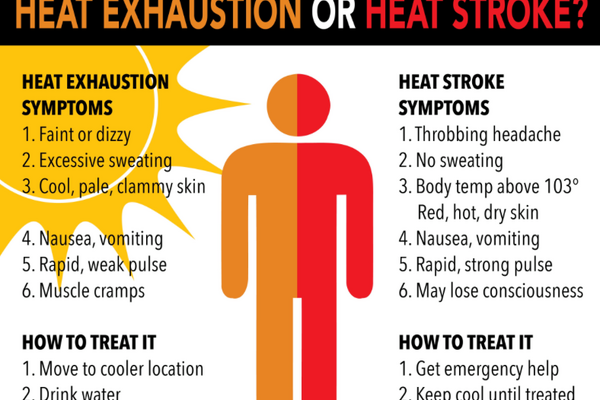
- Sweating profusely
- Skin that’s cold and clammy
- Pulse that’s faint and rapid
- Cramps in stomach and/or muscles
- Exhaustion
- Dizziness and headache
- Fainting
- Sick to the stomach
If you or another worker is showing the above signs of heat exhaustion, move the affected person to a cool spot, loosen their garments, and apply cold compresses. The person should take small sips of water and seek professional medical care if they’re vomiting or if symptoms continue past an hour.
Heatstroke is another medical emergency and always requires immediate medical care. Signs of heatstroke include the following:
- Body temperature above 103 degrees Fahrenheit
- Skin that’s hot to the touch
- Skin that’s red; skin that’s dry or damp
- Dizziness and nausea
- Disorientation
- Loss of consciousness
According to the U.S. Centers for Disease Control, you should move a person suffering from heatstroke to a cool location while another person (or you if you’re alone) contacts 911. Use cold, wet cloths to help lower the heat-affected person’s body temperature or assist the heat-affected person with a cool bath until first responders are on the scene. Never give a person with heatstroke a sip of water.
Pay Attention to these A/C System Failure Warning Signs
When issues with your A/C system begin to occur internally, your truck will give you some warning signs. Listen to your truck and invest the time now to avoid spending more time in the shop later on.
If you experience one or more of the following, you should have your A/C system inspected by a professional technician:
- Lack of air flow coming from the vents
- Warm air instead of cool
- A noisy compressor
- A lack of water dripping from the cab drain tube when A/C is running (when the humidity increase, so should the amount of moisture dripping)
Follow these best practices when it comes to year-round maintenance to increase the reliability of your truck's A/C system:
- Have your cabin filters replaced as needed or according to the manufacturer's recommendations.
- Keep the condenser on the front of the cab clean.
- Keep the compressor belt tight and in good condition.
- Don’t wait until the hottest day of summer to service your truck’s A/C system needs to be serviced.
Tips For Getting the Most Out of Your Reefer Unit In Hot Climates
A proper pre-trip on ThermoKing and Carrier units is the start to Loading Best Practices:
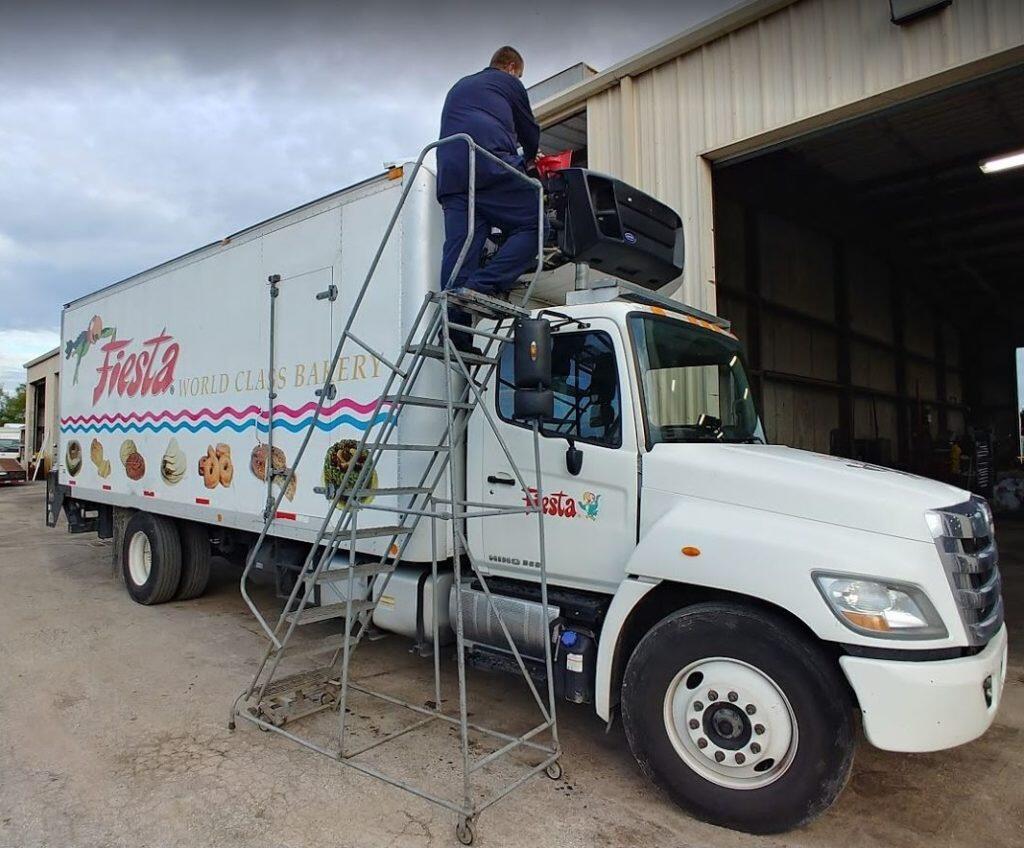
- Initiate an automatic pretrip to identify any operational concerns while the reefer cycles through all its modes. Do not load truck/trailer if alarm codes indicate service is needed.
- Inspect the condition of the truck/trailer, noting any damage to the insulation, door seals, and defrost drains.
- Clean inside of truck/trailer. To prevent contamination hazards and blockage of airflow, the floor channels and refrigeration unit air stream must be free of debris.
- Pre-cool truck/trailer:
- Always pre-cool truck/trailer to the temperature of the product to be loaded. Doing so will remove unwanted heat from the truck/trailer walls, floor, and ceiling. Remember refrigeration units are not designed to lower product temperature.
- Load product with the proper loading pattern:
- Product should be loaded quickly and efficiently using the proper loading patterns that maximize air circulation around and through the product load. Product should never be loaded tightly against the evaporator housing, doors, walls, ceiling, or tightly against other pallets of product. All six sides of all pallets should be exposed to airflow.
Delivery Best Practices:

- Inspect strip curtains (if used), report any damage to your supervisor.
- Be certain reefer unit is off when opening doors, reefers will pull in warm, humid air if the door is left open while the unit is running.
- Minimize door opening duration to further reduce this intake of warm outside air. Remember, the longer the doors are open, the longer it will take to regain the proper temperature.
- Move product quickly when delivering to cross dock locations.
July is UV Safety Awareness Month
June 18, 2021 | Safety | By Tri-County International Trucks
Get Out Your Sunglasses! July is UV Safety Awareness Month
Thanks to eyeandhealth.com, we found the below information to be extremely helpful to protect yourself from harmful UV rays.
During the summer there is usually emphasis on protecting your skin from UV rays. But you shouldn’t forget about protecting your eyes—exposure to bright sunlight increases risk of developing cataracts, macular degeneration, and growths on the eye including cancer.
July is UV safety awareness month. However, while sitting behind the wheel of a CMV, your eyes are especially at risk of subjection to UV rays all year round. This makes it important to protect your eyes from UV rays in every situation by wearing proper eye protection, such as UV blocking sunglasses.
Here are some tips from the American Academy of Ophthalmology:
- Don’t focus on color or darkness of sunglass lenses: Select sunglasses that block UV rays. Don’t be deceived by color or cost. The ability to block UV light is not dependent on the price tag or how dark the sunglass lenses are.
- Check for 100 percent UV protection: Make sure your sunglasses block 100 percent of UV-A rays and UV-B rays.
- Choose wrap-around styles: Ideally, your sunglasses should wrap all the way around to your temples, so the sun’s rays can’t enter from the side.
- Wear a hat: In addition to your sunglasses, wear a broad-brimmed hat to protect your eyes.
- Don’t rely on contact lenses: Even if you wear contact lenses with UV protection, remember your sunglasses.
- Don’t be fooled by clouds: The sun’s rays can pass through haze and thin clouds. Sun damage to eyes can occur anytime during the year, not just in the summertime.
- Protect your eyes during peak sun times: Sunglasses should be worn whenever outside, and it’s especially important to wear sunglasses in the early afternoon and at higher altitudes, where UV light is more intense.
- Never look directly at the sun. Looking directly at the sun at any time, including during an eclipse, can lead to solar retinopathy, damage to the eye’s retina from solar radiation.
- Don’t forget the kids: Everyone is at risk, including children.
- Protect their eyes with hats and sunglasses. In addition, try to keep children out of the sun between 10 a.m. and 2 p.m., when the sun’s UV rays are the strongest.
FMCSA Vision Standard for CMV Drivers

Safe driving requires a combination of good vision, adequate visual field, ability to spread attention over the field of view, and motor skills. While protecting your eyes from UV is important, let’s not forget about how well you need to be able to see overall. Visual inputs are essential for driving a commercial motor vehicle (CMV). It is difficult to provide rigorous scientific evidence for the level of vision required for safe driving because driving is a highly complex task. Currently, the FMCSA provides guidance with their vision standard that requires drivers to have:
- A distant visual acuity of at least 20/40 in each eye without corrective lenses or visual acuity separately corrected to 20/40 or better with corrective lenses;
- A distant binocular acuity of at least 20/40 in both eyes with or without corrective lenses;
- A field of vision of at least 70 degrees in the horizontal Meridian in each eye;
- The ability to recognize the colors of traffic signals and devices showing standard red, green, and amber.
Can I wear contact lenses to do the vision test?
You are permitted to wear contact lenses, provided you’re used to wearing them and have developed a tolerance for wearing contacts. Be aware that monovision counts as a disqualification, so use of a contact lens in one eye for distant visual acuity and another lens in the other eye for near vision is not acceptable.
I am legally blind in one eye from an injury? With documentation from my eye specialist can I pass the DOT physical?
This type of injury will require documentation. If you are going to drive only within your state borders, it will be easier. Just check with your DMV to see what the states rules and regulations are. To pursue an interstate medical card will require an exemption that you can only get from the FMCSA.
Hurricane Season is Here!
June 1st was the official start date of the 2021 hurricane season that runs through November 30th. If we have learned anything from prior storms, preparation is critical. Now is the time to re-evaluate emergency plans and update as needed. The information below should help your company and employees as well to prepare now to make steps to minimize loss in the event of a major hurricane this year. Below are selected links to information to help you prepare for and recover from hurricanes and tropical storms.
1. National Hurricane Center
https://www.nhc.noaa.gov/
2. Weather Channel.com
https://weather.com/
The Weather Channel’s comprehensive storm site, complete with a drop-down menu of satellite photos and computer-generated projection maps.
3. FEMA Hurricane Background And Preparedness Information
Comprehensive information on disaster planning and recovery, provided by the Federal Emergency Management Administration.
https://www.fema.gov/emergency-managers/risk-management/hurricanes
4. Google Automatic Hurricane News Alert
Simply enter your email address and Google News will automatically email hurricane updates to you. https://www.google.com/alerts
5. Hurricane Preparedness Planning for Businesses
This document contains information useful before, during and after a storm. Included in the document are templates for assigning tasks and responsibilities to staff members, as well as recommendations for developing a comprehensive plan.
6. A Site to Share with Employees On Preparing Their Homes
Schools out! Summer is here! Remember, safety first!
June 11, 2021 | Safety | By Tri-County International Trucks
With the arrival of summer, many of us are looking forward to spending more time outdoors. School is out, so there are many children going to and from, and participating in, outdoor activities throughout the day. Adults, too, are taking advantage of the longer daylight hours, so let us all commit ourselves to staying alert and staying safe.
Here are some safety tips for drivers I urge you to follow:
• The last week of school is an exciting time for children and they may become preoccupied and forget the rules of the road. Use extra caution when driving through school zones.
• During those last few days of school, be aware that kids may be arriving or leaving school at different times throughout the day.
• Remember that playground speed limits remain in effect year-round. Observe carefully when driving around playgrounds and parks. Small children are less predictable and harder to see than adults.
• Watch for clues, a hockey net or ball in the road or on the sidewalk can mean kids are playing nearby. Pay attention and always anticipate the unexpected.
• Always watch for small children as you are backing up. Walk around your vehicle to make sure no kids or pets are behind it.
• As you make your deliveries you will see children that would normally be in schools on bikes, skateboards or walking in parking lots, shopping centers, and crossing streets.
Heat and Your Truck
For drivers to operate a commercial motor vehicle (CMV) in a safe manner they also need to understand how heat affects the operation of the CMV. Two areas drivers must pay attention too during their inspections are the engine coolant and the tires!
Engine Coolant
Approximately 8 years ago the OEM truck manufactures introduced extended life coolant (ELC) into the industry! With each EPA change the operating temperature of the engine has increased 10 to 15 degrees. It is estimated that 50% of all engine failures are associated with an overheat condition of the engine.
With today’s emission systems, an engine running low on coolant runs the risk of damage to the emission components such as the exhaust gas recirculation or EGR.
The benefit of using ELC is the fact that you can improve the engine's heat transfer rate by 12 to 13 percent over conventional anti-freeze.
Diesel Exhaust Fluid DEF
There is a quality level sensor in the DEF tank that can be affected by extreme heat. It is recommended that you keep the DEF tank as full as possible to keep the sensor cool in extreme heat conditions.
During the pre-post trip inspection driver should:
1. Make sure that the coolant level is within range of the marking on the side of the coolant reservoir.
2. If the coolant level is low contact your Idealease service provider immediately for direction. ELC coolant should be a red/orange color and should be free of dirt, debris, rust, and other contaminants.
Do NOT ELC with mixed conventional anti-freeze!
3. If when operating a CMV a dash light comes on with an overheat warning immediately pull the unit into a safe parking place and contact your Idealease service provider for direction. Operating the unit in an overheat situation can severely damage the engine.
Tires
During the summer season, when the ambient temperatures can get over 100° F, and some road temperatures can reach almost 200° F, the heat problems caused by under inflation are more extreme. Tires that are run under inflated will be more prone to failure in these temperatures. A very famous tire engineer once stated, “Heat is to tires as Kryptonite is to Superman,” in other words, it is their worst enemy. Taken all together, hot summer temperatures, under inflated tires, heavy loads, and traveling at high speeds (not that this ever happens), and you have a recipe for tire disaster…. that is exactly why you see more alligators on the highway in the summer season.
What can drivers do to minimize tire related issues during the summertime months?
1. Tire pressures need to be checked more frequently in the summer.
2. Tire pressures need to be checked when the tire is “cold” and not after operation. Pressures can increase during operation when “hot” by as much a 15% giving you a false reading.
3. Inspect tires for punctures and damage during pre-post trip inspections and stops. Tire punctures tend to increase during the summer months because the tread rubber becomes hotter and “softer” and acts as a magnet to nails and road debris.
4. Immediately report to your Idealease service provider tire conditions that need attention.
One Year of Educational Enforcement Kicks off Canada’s ELD Mandate
It has been years in the making and has finally arrived. Canada’s electronic logging device (ELD) mandate is set to become effective on June 12. However, enforcement of the mandate will not start for one year. An educational enforcement period will be in place in all Canadian jurisdictions until June 2022.
While carriers have more time to find, select, and install certified devices, there are a few commonly asked questions that have surfaced regarding Canada’s ELD mandate and educational enforcement period:
Q. What is the compliance date for Canada’s ELD mandate?
A. The mandate is effective on June 12, 2021, and the ELD mandate will be in place. However, enforcement of the mandate will not start until June 2022. All jurisdictions have agreed to defer enforcement for one year.
Q. During the educational enforcement period, what is expected?
A. Carriers and drivers must continue complying with the hours-of-service regulations and continue logging hours as usual for now. Carriers and drivers will not be required to have certified ELDs, as no certified devices are available yet.
Q. Canada requires third-party certification of ELDs. What does this mean?
A. Currently, FPInnovations is the entity approved to certify ELDs in Canada. ELD providers must submit their ELD to FPInnovations for rigorous testing. Once the testing is complete and the ELD provider passes the tests, the ELD will be certified for use in Canada. A list of certified ELD providers will eventually be posted on Transport Canada’s website.
Q. Does a U.S. self-certified device meet Canada’s certification requirement?
A. No. ELDs used in Canada must be third-party certified before they may be used in Canada.
Q. With the adoption of the ELD mandate in Canada, were there any changes to the hours-of-service limits?
A. No. The hours-of-service limits remain the same. Transport Canada made a few technical amendments to the regulation, but none of these updates changed the hours-of-service limits.
Q. Will U.S. carriers that operate into Canada be required to comply with Canada’s ELD mandate? Many already have ELDs.
A. Yes. While many of Canada’s technical specifications are nearly identical to the U.S. ELD specifications, Canada differs in a few areas. This means that US carriers operating into Canada will need to comply with those differences. Again, U.S. carriers and drivers operating into Canada will need to ensure they are using third-party certified ELDs, when available.
CVSA Announces Dates for Brake Safety Week
This year's Brake Safety Week is scheduled for August 22-28, according to the Commercial Vehicle Safety Alliance (CVSA). The enforcement campaign is a part of the larger Brake Safety Awareness Month, which takes place in August. During CVSA's annual enforcement event, roadside inspectors will: focus on the brake systems and components as they conduct North American Standard Inspections; and Compile data on brake hoses/tubing, the emphasis this year. The association will issue a report on its findings later this year. The event is also an opportunity for motor carriers to educate drivers and maintenance service providers on importance of brake safety.
MEMORIAL DAY HOLIDAY SAFETY
May 29, 2021 | Safety | By Tri-County International Trucks
As we celebrate the upcoming Memorial Day holiday, let us not lose site of the freedom that we all enjoy. On May 3, 2000, President William J. Clinton, designated that 3:00 pm on Memorial Day as a time for US citizens to observe one minute of silence in respect and reverence to those individuals who have given the ultimate sacrifice to protect the freedom of the United States of America. Also keep in your thoughts and prayers for the wellbeing of the lives of the men and women who currently serve in our armed forces. Have a safe and enjoyable holiday!
Prepare Your Terminal Facility for the Long Memorial Day Holiday
This is the first three-day holiday weekend of the year, and it is not uncommon for thieves to target truck terminals and truck dealerships over the holidays. During the COVID-19 pandemic there has been an escalation in vehicles being broke into. Another theft item that has escalated is the Diesel Particulate Filter (DPF). The DPF is constructed with precious metals. Thieves use a battery powered saws all to cut off the DPF. Thieves recently stole a complete after treatment system from one of our customers units. The theft not only resulted in the cost of replacing the parts but also resulted in the unit being down for six weeks, due to parts on backorder. Thieves know this holiday is a good opportunity for successful theft, as the possibility for no one to be at the facility exists.
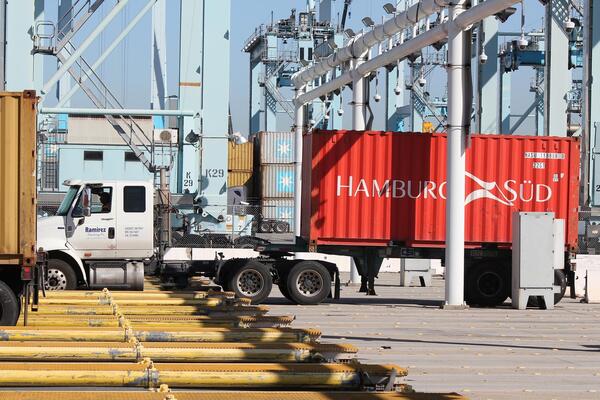
Here are some security tips:
- Make sure that you take extra precaution to secure the trucks and items of value at your facility.
- If your units do not have anti-siphon fuel devices or locking fuel caps, instruct the drivers not to fill the units at the end of the day.
- Make sure that all security alarms and cameras are in working order.
- Walk the perimeter of the yard to make sure that security fencing is in good condition.
- Move units and all other material such as pallets, tires, etc far enough away from the fence so they cannot be used to climb on to get over the fence.
- Review your security lighting to make sure it is operational and adequate. Lighting can be obstructed by vehicles or trees allowing a thief a place to be unseen.
- Make sure the security alarm system is operational and cameras are adjusted.
- Consider blocking the entrance and exits to the lot so units cannot be stolen. Throughout the three-day weekend assign management personnel to check the terminal randomly.
- Notify local law enforcement officials of your hours of operation over the holidays so they know when to expect activity at your location.
Using a little prevention and common sense can deter a thief from striking your facility and disrupting your business!
FMCSA Extends COVID-19 Waivers for Another Three Months
The Federal Motor Carrier Safety Administration (FMCSA) provided a three-month extension to several emergency waivers enacted in response to the COVID-19 pandemic.
The Emergency Declaration and license and medical-card waivers were due to expire on May 31, 2021, after several extensions throughout 2020. The continuing impact of COVID-19 on supply chains and state licensing agencies led the agency to extend the waivers yet again.
Qualifying truck and bus drivers now have through August 31, 2021, to operating under the terms of the new waivers. However, the FMCSA could terminate or modify the waivers before then.
Emergency Declaration
The Emergency Declaration applies to those motor carriers and their drivers providing direct assistance to the pandemic emergency.
The exemption is limited to transportation of:
- Livestock and livestock feed;
- Pandemic-related medical supplies and equipment, vaccines, and products related to vaccine administration and distribution;
- Masks, gloves, hand sanitizer, soap, disinfectants, and similar supplies and equipment; and
- Food, paper products, and other groceries for emergency restocking of distribution centers or stores.
Direct assistance does not include nonemergency transportation of qualifying commodities or routine commercial deliveries, including mixed loads with a nominal quantity of qualifying emergency relief added to obtain the benefits of this emergency declaration.
Qualifying motor carriers and drivers are exempt from 49 CFR Parts 390-399, except as noted in the emergency declaration that will be made available at fmcsa.dot.gov/COVID-19.
License and medical-card waivers
Drivers having trouble updating their licenses or medical certificates due to the pandemic now have more time to renew those credentials.
The most recent waiver for commercial driver's licenses (CDLs), commercial learner's permits (CLPs), and medical certificates is effective June 1, 2021, and will remain in place until August 31, 2021. The FMCSA says it will review these waivers on July 1 to verify they are still needed.
Under the licensing waiver, states have the option to extend the validity of CDLs and CLPs that expired on or after March 1, 2020, until August 31, 2021.
For CLP holders, the FMCSA has also waived:
- The requirement to retake the knowledge test if more than a year has passed since the permit was issued,
- The 14-day waiting period for taking the CDL skills test,
- The requirement that a CLP holder be accompanied by a CDL holder physically present in the front seat (he or she may be elsewhere in the cab), and
- Restrictions on states performing skills tests on out-of-state applicants and using certain third-party skills-test examiners who are not fully trained.
The licensing waiver is not binding on the states, so drivers should verify that their state is honoring it.
Under the revised medical-card waiver, a driver can qualify for an extension on an expiring medical card if:
- His or her existing medical card expired on or after March 1, 2021;
- The existing medical card was issued for at least 90 days;
- The driver has not been diagnosed with a disqualifying medical condition since the previous medical exam; and
- The driver carries a copy of his or her expired medical certificate and any required variance.

Reporting crashes
If any of your drivers are taking advantage of the licensing or medical-card waivers, you must notify the FMCSA of any DOT-recordable crashes involving those drivers.
Time for Spring Cleaning…. What’s in the Cab of your Truck(s)?
May 21, 2021 | Safety | By Tri-County International Trucks
When is the last time you looked inside the cab, body, or trailer of the trucks that your drivers are operating?
Over the years of inspecting and looking inside commercial motor vehicles for the companies I have worked for, I have seen the following items inside trucks that present unique dangerous situations to the driver and unnecessary liability exposure to the company:
Armadillos, dogs, cats, snakes, a folding chair, television on the dash, milk crates, garbage, windows tinted beyond federal regulations, stuffed animals in the windshield, alcohol, drugs, firearms, radar detectors and unauthorized passengers.
Some of these items are strictly prohibited by the Federal Motor Carrier Safety Regulations and others are restricted by regulations. Regardless of the regulations each of these items should be addressed by your company safety policy and procedures manual to insure safe operations of your commercial motor vehicles.
Please review the following Federal Motor Carrier Safety Regulations with your drivers, as it pertains to:
Items in the windshield, garbage, and clutter inside the cab: 398.4 Driving of motor vehicles
Interference with driver. No motor vehicle shall be driven when any object obscures his/her view ahead, or to the right or left sides, or to the rear, or interferes with the free movement of his/her arms or legs, or prevents his/her free and ready access to the accessories required for emergencies, or prevents the free and ready exit of any person from the cab or driver's compartment.
Devices mounted at the top of the windshield: 393.60 Prohibition on obstructions to the driver's field of view
Antennas, transponders, and similar devices must not be mounted more than 152 mm (6 inches) below the upper edge of the windshield. These devices must be located outside the area swept by the windshield wipers, and outside the driver's sight lines to the road and highway signs and signals.
Decals and stickers mounted on the windshield: 393.60 Prohibition on obstructions to the driver's field of view
Commercial Vehicle Safety Alliance (CVSA) inspection decals, and stickers and/or decals required under Federal or State laws may be placed at the bottom or sides of the windshield provided such decals or stickers do not extend more than 115 mm (4½ inches) from the bottom of the windshield and are located outside the area swept by the windshield wipers, and outside the driver's sight lines to the road and highway signs or signals.
Unauthorized Passengers: 392.60 Unauthorized persons not to be transported
Unless specifically authorized in writing to do so by the motor carrier under whose authority the commercial motor vehicle is being operated, no driver shall transport any person or permit any person to be transported on any commercial motor vehicle other than a bus. When such authorization is issued, it shall state the name of the person to be transported, the points where the transportation is to begin and end, and the date upon which such authority expires. No written authorization, however, shall be necessary for the transportation of:
(1) Employees or other persons assigned to a commercial motor vehicle by a motor carrier.
(2) Any person transported when aid is being rendered in case of an accident or other emergency.

Tinting of Windows: 393.60 Glazing in specified openings
Coloring or tinting of windshields and the windows to the immediate right and left of the driver is allowed, provided the parallel luminous transmittance through the colored or tinted glazing is not less than 70 percent of the light at normal incidence in those portions of the windshield or windows which are marked as having a parallel luminous transmittance of not less than 70 percent. The transmittance restriction does not apply to other windows on the commercial motor vehicle.
Televisions: 393.88 Television receivers
Any motor vehicle equipped with a television viewer, screen or other means of visually receiving a television broadcast shall have the viewer or screen located in the motor vehicle at a point to the rear of the back of the driver's seat if such viewer or screen is in the same compartment as the driver and the viewer or screen shall be so located as not to be visible to the driver, while he/she is driving the motor vehicle. The operating controls for the television receiver shall be so located that the driver cannot operate them without leaving the driver's seat
Alcohol: 392.5 Alcohol prohibition
Be on duty or operate a commercial motor vehicle while the driver possesses wine of not less than one-half of one per centum of alcohol by volume, beer as defined in 26 U.S.C. 5052(a), of the Internal Revenue Code of 1954, and distilled spirits as defined in section 5002(a)(8), of such Code. However, this does not apply to possession of wine, beer, or distilled spirits which are manifested and transported as part of a shipment.
Drugs and controlled substances: 392.4 Drugs and other substances
(a) No driver shall be on duty and possess, be under the influence of, or use, any of the following drugs or other substances:
(a)(1) Any 21 CFR 1308.11 Schedule I substance;
(a)(2) An amphetamine or any formulation thereof (including, but not limited, to "pep pills," and "bennies");
(a)(3) A narcotic drug or any derivative thereof; or
(a)(4) Any other substance, to a degree which renders the driver incapable of safely operating a motor vehicle.
(b) No motor carrier shall require or permit a driver to violate paragraph (a) of this section.
(c) Paragraphs (a)(2), (3), and (4) do not apply to the possession or use of a substance administered to a driver by or under the instructions of a licensed medical practitioner, as defined in §382.107 of this subchapter, who has advised the driver that the substance will not affect the driver’s ability to safely operate a motor vehicle.
(d) As used in this section, "possession" does not include possession of a substance which is manifested and transported as part of a shipment.
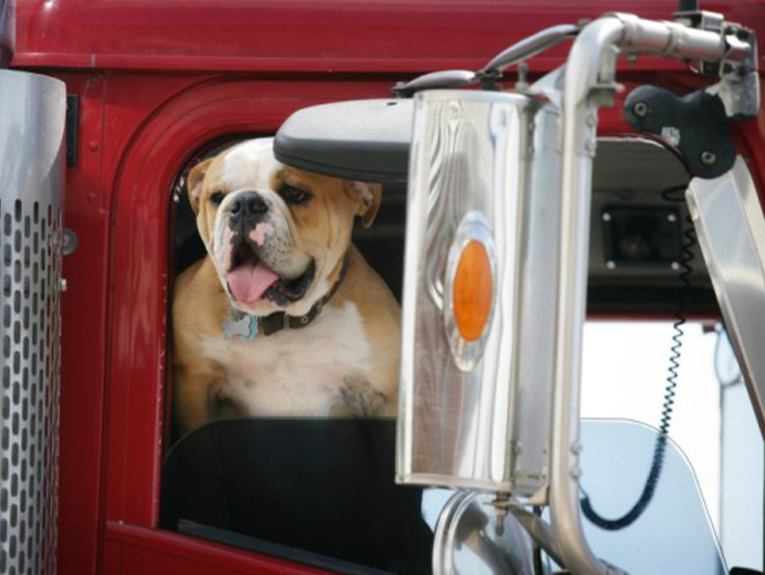
Animals
The Federal Motor Carrier Safety regulations do not specifically address animals inside of a commercial motor vehicle.
Firearms
Firearms by federal regulation are not specifically regulated rather each state has laws regarding transportation of firearms in motor vehicles. Most states have a concealed weapon laws which make it illegal to transport a firearm concealed in any type of motor vehicle without a permit.
Radar Detectors: 392.71 Radar Detectors; use and/or possession
(a) No driver shall use a radar detector in a commercial motor vehicle, or operate a commercial motor vehicle that is equipped with or contains any radar detector.
(b) No motor carrier shall require or permit a driver to violate paragraph (a) of this section

CVSA Issues Inspection Bulletin on Identifying Motor Carriers
The Commercial Motor Vehicle Safety Alliance has issued an Inspection Bulletin to assist roadside inspectors in identifying motor carriers. The bulletin discusses use of documents and driver interviews to ensure that the inspection report, and any violations, are ascribed to the correct carrier.
The bulletin also discusses the information on the carrier’s Motor Carrier Identification Report Form (MCS-150), including the use of DBA or trade names and vehicle marking requirements.
The bulletin makes clear that carriers may register more than one DBA or trade name with the Federal Motor Carrier Safety Administration but may only mark a commercial motor vehicle with a single DBA or trade name.
CVSA Announces Dates for Brake Safety Week
This year's Brake Safety Week is scheduled for August 22-28, according to the Commercial Vehicle Safety Alliance (CVSA). The enforcement campaign is a part of the larger Brake Safety Awareness Month, which takes place in August.
During CVSA's annual enforcement event, roadside inspectors will:
- Focus on the brake systems and components as they conduct North American Standard Inspections; and
- Compile data on brake hoses/tubing, the emphasis this year.
The association will issue a report on its findings later this year. The event is also an opportunity for motor carriers to educate drivers and maintenance service providers on importance of brake safety.
HX Series Top 50 Products
May 12, 2021 | Trucks | By Tri-County International Trucks
When we set out to build the next great International® severe-duty truck, we knew we had to start from the beginning. To look beyond what was needed, to deliver beyond what was expected.
From the ground up, the HX™ Series was designed and engineered to endure the most punishing of jobsites. Built to take on whatever challenges you could throw at it, and to look great while doing it.
Every consideration - from its huck-bolted frame and three-piece Metton hood, to the spacious DriverFirst™ inspired cab and exceptional power options - has been made, tested and proven to perform well past class-leading standards. Bringing unmatched uptime, durability and driver comfort to any work site.
Now our commitment to building the best severe-duty truck on the market has been recognized by equipment owners and end users as one of Equipment Today Contractor's Top 50 products for 2016.
Click It or Ticket!
April 23, 2021 | Safety | By Tri-County International Trucks
National Seat Belt Enforcement Mobilization May 17 - June 6, 2021
Seat belts have been proven to be one of the best ways to save your life in a crash. Yet many still do not buckle up. Worse still, not wearing a seat belt is a habit that will pass on to impressionable youth who, in turn, will think it is safe to not buckle up.
The Click It or Ticket campaign focuses on safety education, strong laws, and law enforcement support to save lives.
Seat Belts Save Lives
As I look at our customer’s CSA SMS scores, I continue to see violations regarding failure to use a seat belt. This violation carries a point weighting of 7 and is detrimental to the carriers “Unsafe Driving” basic score in the CSA SMS. By drivers operating your trucks and NOT wearing a seat belt they are providing an unnecessary risk that you do NOT need! In addition, if you look at these violations in states that have a not wearing a seat belt is a primary offense it is the catalyst for a roadside inspection going beyond just a seat belt violation.
Tips for increased seat belt usage:
- A company policy stating that the seat belt is to be always worn in all company vehicles while the vehicle is in motion.
- Defined disciplinary action in your company policy to be taken when a driver receives a seat belt violation.
- When ordering your trucks specify them with bright orange or yellow seat belts for better belt visibility.
- Consider providing having a company seat belt life insurance policy for drivers as an incentive for them to wear their seat belt. The policy would pay the driver’s beneficiary if they were killed in an accident while driving your truck and wearing the seat belt.
1/3 of truck occupants who die in accidents were not wearing a seat belt, according to a Federal Motor Carrier Safety Administration.
Does your company driver policy address seat belt usage?
Seat Belt Myths
MYTH 1: Safety belts are uncomfortable and restrict movement.
FACT: A 2005 Transportation Research Board study on commercial drivers' safety belt usage found many drivers do not find wearing safety belts to be uncomfortable or too restrictive of their movements. Once they correctly adjust the seat, lap and shoulder belt, most drivers find that discomfort and restrictive movement can be alleviated.
MYTH 2: Wearing a safety belt is a personal decision that does not affect anyone else.
FACT: Not wearing a safety belt can certainly affect your family and loved ones. It can also affect other motorists since wearing a safety belt can help you avoid losing control of your truck in a crash. It's the law; Federal regulations require commercial vehicle drivers to buckle up.
MYTH 3: Safety belts prevent your escape from a burning or submerged vehicle.
FACT: Safety belts can keep you from being knocked unconscious, improving your chances of escape. Fire or submersion occurs in less than 5% of fatal large truck crashes.
MYTH 4: It's better to be thrown clear of the wreckage in the event of a crash.
FACT: An occupant of a vehicle is four times as likely to be fatally injured when thrown from the vehicle. In 2004, 168 truck drivers died when they were ejected from their cabs during a crash.
MYTH 5: It takes too much time to fasten your safety belt 20 times a day.
FACT: Buckling up takes about three seconds. Even buckling up 20 times a day requires only one minute.
MYTH 6: Good truck drivers do not need to wear safety belts.
FACT: Good drivers usually do not cause collisions, but it is possible that during your career you will be involved in a crash caused by a bad driver, bad weather, mechanical failure, or tire blowout. Wearing a safety belt prevents injuries and fatalities by preventing ejection, and by protecting your head and spinal cord.
MYTH 7: A large truck will protect you. Safety belts are unnecessary.
FACT: In 2004, 634 drivers of large trucks died in truck crashes and 303 of those drivers were not wearing safety belts. Of the 168 drivers killed who were ejected from their vehicles, almost 75% were not wearing safety belts.
MYTH 8: Safety belts are not necessary for low-speed driving.
FACT: In a frontal collision occurring at 30 mph, an unbelted person continues to move forward at 30 mph causing him/her to hit the windshield at about 30 mph. This is the same velocity a person falling from the top of a three-story building would experience upon impact with the ground.
MYTH 9: A lap belt offers sufficient protection.
FACT: The lap and shoulder belt design has been proven to hold a driver securely behind the wheel in the event of a crash, greatly increasing the driver's ability to maintain control of the vehicle and minimizing the chance for serious injury or death.
Proposal Seeks a 4-Year Delay to the Medical Examiner’s Certification Integration Final Rule
The Federal Motor Carrier Safety Administration (FMCSA) proposes to again extend the compliance date for several provisions of its Medical Examiner's Certification Integration final rule.
The compliance date for these provisions was postponed previously from June 22, 2018, to June 22, 2021, by an earlier interim final rule. The newly proposed rule would push the date back to June 23, 2025.
Why another compliance date extension?
According to the proposed rule, the additional time is needed:
- By FMCSA to complete certain information technology (IT) system development tasks for its National Registry of Certified Medical Examiners (National Registry); and
- To provide the State Driver's Licensing Agencies (SDLAs) sufficient time to make the necessary IT programming changes after the new National Registry system is available.
What would be delayed?
The agency is seeking to delay the process of directly transmitting a CDL driver's medical exam results from the medical examiner's (ME) National Registry account to FMCSA.
The Medical Examiner's Certification Integration final rule, when implemented, would streamline the procedures, by allowing:
- FMCSA to post exam results on the Commercial Driver's License Information System (CDLIS) driver record; and
- States to receive the results electronically, removing the CDL driver's role of submitting the medical card to the SDLA and the motor carrier's need to verify the driver's exam was performed by someone on the National Registry.
If the proposed delay becomes a final rule, the current process of submitting medical certifications to the state remains intact for four more years.
What is the current process?
The current process is more manual and requires actions on the part of the medical examiner, driver, motor carrier, and SDLA.
If the delay is approved, the following steps would remain in place:
- MEs provide CDL drivers with a copy of a medical card.
- Motor carriers obtain a copy of the medical card from either the driver or ME.
- Motor carriers verify the ME is listed on the National Registry based on information on the medical card.
- CDL drivers submit a copy of the medical card to the SDLA within a few days of the exam.
- CDL drivers carry a copy of the medical card for 15 days following the exam.
- SDLAs process the medical card within ten days of receiving it from the driver so it appears on the motor vehicle record (MVR).
- Motor carriers retain a copy of the medical card as temporary proof of the driver's certification (no longer than 15 days).
- Motor carriers obtain an MVR within 15 days of the exam that shows the most recent medical exam.
How long is the comment period on the proposed rule?
FMCSA is accepting comments on the proposed delay for 30 days following its publication in the Federal Register. The agency is expected to make a decision before the scheduled June 22, 2021, deadline.
For more detailed information on submitting or viewing comments, please visit regulations.gov and reference Docket Number FMCSA-2018- 0152.

International Roadcheck Set for May 4-6 with Emphasis on Lighting and Hours of Service
Inspectors will primarily be conducting the North American Standard Level I Inspection, which is the most thorough roadside inspection.
International Roadcheck is the largest targeted enforcement program on commercial motor vehicles in the world, with nearly 17 trucks or buses inspected, on average, every minute in Canada, the United States and Mexico during a 72-hour period. Since its inception, more than 1.5 million roadside inspections have been conducted during International Roadcheck campaigns.
International Roadcheck is a CVSA program with participation by the U.S. Federal Motor Carrier Safety Administration, Canadian Council of Motor Transport Administrators, Transport Canada, and the Secretariat of Communications and Transportation (Mexico).
A PERFECT STORM: COVID-19, WORK ZONE SEASON AND SPEEDING
April 16, 2021 | Safety | By Tri-County International Trucks
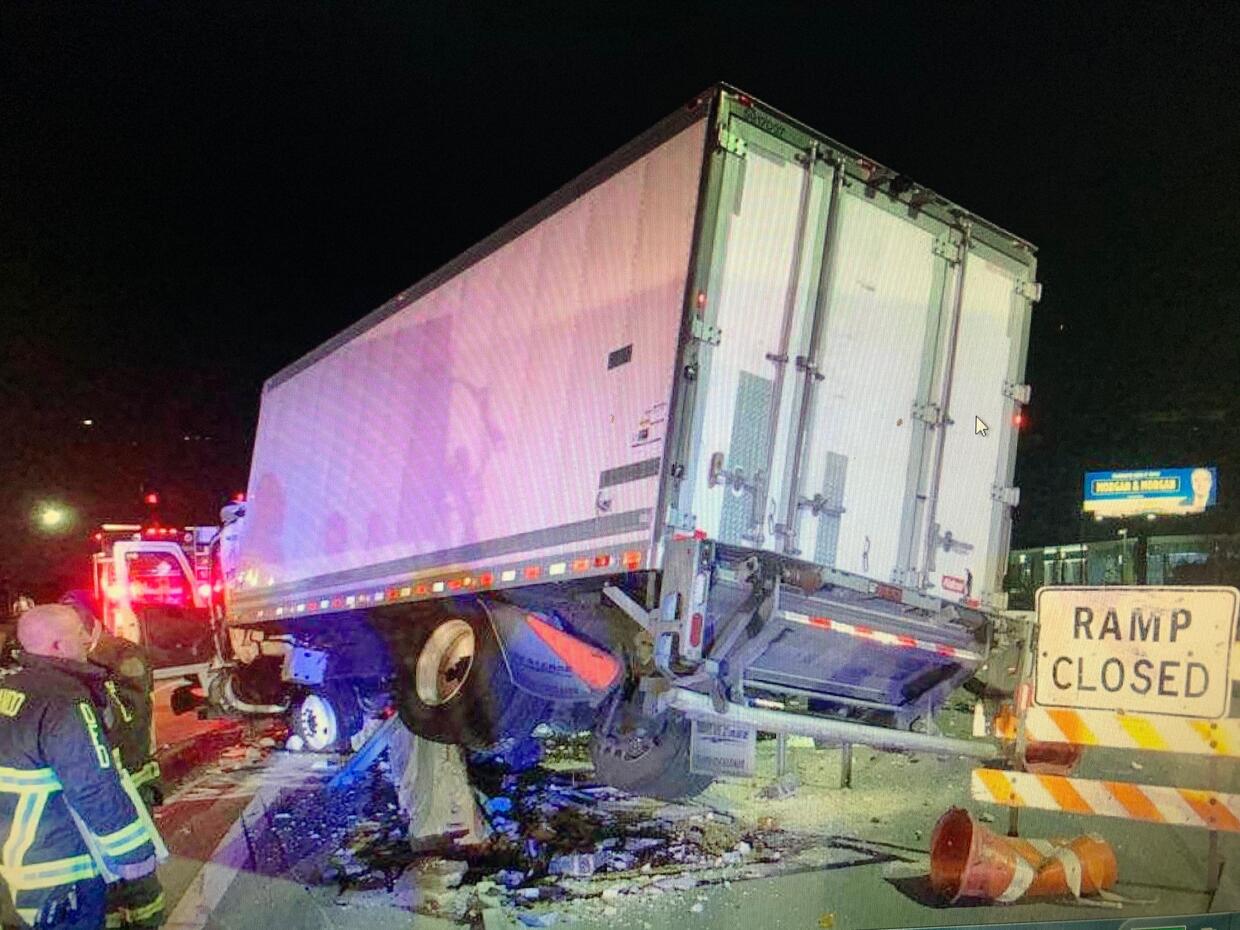
As we reported last year states and provinces are reporting that there is a significant increase in the number of vehicles that are speeding at a high rate of speed and driving recklessly since the start of COVID-19. That combined with the fact that we are now in the middle of work zone season and speeding is one of the top three contributors to work zone accidents places a higher exposure of these accidents. This is an issue that you need to discuss with your professional drivers today. They need to be aware that this condition exists and will likely increase as states relax shelter in place enforcement. They will need to be on the watch for these vehicles as they drive daily.
Speeding Triples the Odds of Being Involved in an Accident
The AAA Foundation for Traffic Safety recently released a report on the results of a traffic study to identify relative risks associated with driving behaviors.
The report highlights four driving behaviors that directly impact and significantly increase the risk of a crash:
- Speeding: Driving at inappropriate speeds was associated with nearly tripling the odds of being involved in a crash or near-crash, relative to driving at appropriate speeds.
NTSB Adopts List of Most Wanted Safety Improvements for 2021-22
The National Transportation Safety Board has updated its Most Wanted List of Transportation Safety Improvements for 2021-22. The list serves as the agency’s primary advocacy tool to help save lives, prevent injuries, and reduce property damage resulting from transportation accidents. The NTSB is primarily an accident investigation agency and has no regulatory authority of its own, however.
Regarding highway transportation, the top safety objectives are:
- Implement a Comprehensive Strategy to Eliminate Speeding-Related Crashes.
- Protect Vulnerable Road Users through a Safe System Approach.
- Prevent Alcohol- and Other Drug-Impaired Driving.
- Require Collision-Avoidance and Connected-Vehicle Technologies on all Vehicles.
- Eliminate Distracted Driving.
As to speeding, the NTSB assets that speeding is typically defined as exceeding a speed limit, but it can also mean driving at the speed limit but too fast for road conditions. Between 2009 and 2018, speeding-related crashes resulted in nearly 100,000 fatalities-that is close to one-third of all traffic fatalities in the United States.
Speeding can result in loss of vehicle control, which increases both the likelihood of a crash and the severity of injuries sustained. Higher vehicle speeds lead to larger changes in velocity, which, in turn, lead to higher injury severity–that’s just basic science.
The NTSB argues that speed-limiters on large trucks, automated enforcement, expert speed analysis tools, and education campaigns are underused in our communities. The agency wants these to be implemented to address this safety problem.

CVSA Operation Safe Driver Week Set for July 11-17 with Focus on Speeding
The Commercial Vehicle Safety Alliance has scheduled Operation Safe Driver Week for July 11-17 with an emphasis on speeding. During Operation Safe Driver Week, law enforcement personnel will be on the lookout for commercial motor vehicle drivers and passenger vehicle drivers engaging in risky driving behaviors in or around a commercial motor vehicle. Identified unsafe drivers will be pulled over and issued a citation or warning.
CVSA stated it selected speeding as its focus this year because despite a drop in roadway travel last year due to the pandemic, nationally, traffic fatalities increased. According to the National Safety Council’s preliminary estimates, the rate of death on roads last year increased 24% over the previous 12-month period, despite miles driven dropping 13%. The increase in the rate of death is the highest estimated year-over-year jump NSC has calculated in 96 years.
In addition to speeding, law enforcement personnel will be tracking other dangerous driver behaviors throughout Operation Safe Driver Week, such as reckless or aggressive driving, distracted driving, following too closely, improper lane change, failure to obey traffic control devices, failure to use a seat belt, evidence of drunk or drugged driving, etc.

https://whiparound.com/blog/importance-post-trip-inspection
International Roadcheck Set for May 4-6 with Emphasis on Lighting and Hours of Service
Inspectors will primarily be conducting the North American Standard Level I Inspection, which is the most thorough roadside inspection. It is a 37-step procedure that includes an examination of both driver operating requirements and vehicle mechanical fitness. Drivers are required to provide items such as their driver’s license, hours-of-service documentation, motor carrier registration and shipping documentation, and inspectors will be checking drivers for seat belt usage and the influence of alcohol and/or drugs. The vehicle inspection includes checking items such as the brake systems, cargo securement, coupling devices, driveline/driveshaft, exhaust systems, frames, fuel systems, lighting devices (required lamps), steering mechanisms, suspensions, tires, van and open-top trailer bodies, wheels, rims and hubs, windshield wipers, and emergency exits (on buses).
International Roadcheck is the largest targeted enforcement program on commercial motor vehicles in the world, with nearly 17 trucks or buses inspected, on average, every minute in Canada, the United States and Mexico during a 72-hour period. Since its inception, more than 1.5 million roadside inspections have been conducted during International Roadcheck campaigns.
International Roadcheck is a CVSA program with participation by the U.S. Federal Motor Carrier Safety Administration, Canadian Council of Motor Transport Administrators, Transport Canada, and the Secretariat of Communications and Transportation (Mexico).
How are You Retaining Strong Fleet Drivers?
April 9, 2021 | Safety | By Tri-County International Trucks
How are You Retaining Strong Fleet Drivers?
In January, the Heavy-Duty Trucking Magazine released its 2021 Economic Outlook with four items that they see will have an impact in 2021 for the trucking industry.
The first one on their list is that in 2021 there will be fewer drivers available: Fewer drivers, more stimulus funding will continue to reduce truckload capacity.
Reduced commercial driver training and licensing due to the pandemic, plus the Drug & Alcohol Clearinghouse, have resulted in nearly 200,000 fewer drivers as we enter 2021. Additional government stimulus dollars could keep even more from starting a driving career or coming back to the trucking industry. This will likely result in decreased capacity and more driver pay increases.
The average age of a commercial truck driver today is 55. This expected reduction in drivers available in 2021 will not help the current driver shortage situation. It is estimated that around 89,000 new drivers will have to be hired each year for the next decade. A large percentage (45%) of these new drivers will be required merely to meet the shortfall created due to current drivers retiring; 33% will be required just to keep up with an increase in demand. With the supply of qualified drivers at this considerable low, driver salaries are expected to keep rising as an incentive to retain existing drivers, with many transport companies looking into innovative measures to entice old drivers to stay and new drivers to join the business. You cannot sit on the sideline and let other companies entice your drivers away from your company. A proactive driver retention program is vital in retaining the good drivers you have. Here are some tips for consideration to retain the good drivers you have:
- Review for your company policies and procedures for honesty with your drivers. Make sure the policies are forthright and achievable by your drivers. The number one reason a driver leaves the employment of a motor carrier is that the driver feels that the company has been dishonest with them.
- Drivers need to be recognized as an asset to the company and a valued part of the company in all aspects of their operations and performance. Look at your driver policy and procedures manual. I have seen manuals where in the first few pages it is already explaining to the new driver what will happen when the driver is terminated or quits.
Does your culture forecast to a new driver that they will not be with the company very long or is it a company culture where it is expected that all new employees will retire from your company?
- Involve drivers in the operations of your company on a regular basis, i.e.: equipment selection, accident review committees, policy and procedure issues, customer service relationships etc. Develop a relationship with your drivers, know who they are, show a genuine concern for their welfare and longevity with the company. This relationship should be consistent from the top management and ownership down.
- Review your pay and benefit programs to make sure they are competitive in the industry.
- Keep your vehicle maintained with a systematic maintenance and inspection program that insures a safe operating unit for your driver.
- Provide ongoing training. It has been proven that drivers that receive training and are elevated in position are less likely to leave your company.
- Strictly adhere to your driver hiring and selection standards. Qualified, experienced drivers to not want to be associated with a company that hires substandard drivers.
- Provide a structured and comprehensive new driver orientation-training program. Drivers need to know the policies and procedures of the company prior to being placed into service.
- Recognize drivers for their achievements and performance. Safe driving awards, longevity awards, customer service, etc. Provide the drivers with recognition that they cannot get anywhere else. The recognition should be personalized to the driver. Coats with their name and achievement, decals for the side of their units with their first name and achievement, plaques, etc. All driver recognition should take place with other drivers as their peers in attendance.
- When a driver terminates employment, conduct an exit interview. This can be done in person or send a self-addressed stamped envelope to the driver with a written evaluation to be completed. Try to determine what the actual reason for the driver leaving your employment.
Do you need a commercial driver’s license (CDL) to operate a straight truck less than 26,001 pounds GVWR with air brakes?
This is a question that I receive a lot during the safety seminars and from our lease and rental managers. The definition of a Commercial Motor Vehicle for the purpose of requiring a CDL as described in CFR 383.5 is as follows:
Commercial motor vehicle (CMV) means a motor vehicle, or a combination of motor vehicles used in commerce to transport passengers or property if the motor vehicle-
- Has a gross combination weight rating of 11,794 kilograms or more (26,001 pounds or more) inclusive of the towed unit(s) with a gross weight rating of more than 4,536 kilograms (10,000 pounds)
- Has a gross vehicle weight rating of 11,794 or more kilograms (26,001 pounds or more)
- Is designed to transport 16 or more passengers, including the driver.
- Is of any size and is used in the transportation of hazardous materials as defined in CFR 383.5.
So, the answer is NO. However, your state may require a chauffeur’s license for a vehicle with a GVWR 10,000 pounds or more and less than 26,001 pounds, i.e., Michigan and Illinois.
Also keep in mind that there is no such thing as an air brake endorsement!!! In reference to a Class A or B CDL there is an air brake restriction only. This means that the license holder either failed the air brake section of their CDL examination or they used a CMV without air brakes for their skills test.

May is Motorcycle Safety Awareness Month
Motorist awareness is an important component of the National Highway Traffic Safety Administration's comprehensive motorcycle safety program. Over two-thirds of fatal motorcycle crashes involve a motorcycle and another vehicle. The motorist either does not see the oncoming motorcycle at all or does not see the motorcycle in time to avoid a crash. It is important for motorists to know that their actions affect the safety of motorcyclists. A motorist and a motorcyclist may take different actions for the same driving or highway situation. For example, a motorist may ignore a piece of road debris; however, that same piece of road debris may be deadly for a motorcyclist.
As a motorist or a passenger there are some steps to become more aware of motorcyclists.
Respect the motorcyclist: Remember the motorcycle is a vehicle with all the privileges of any vehicle on the roadway. Give the motorcyclist a full lane of travel.
Look out: Look for the motorcyclist on the highway, at intersections, when a motorcyclist may be making a left turn, and when a motorcyclist may be changing lanes. Clearly signal your intentions.
Anticipate a motorcyclist's maneuver: Obstructions (debris, potholes, etc.) that you may ignore or not notice can be deadly for a motorcyclist. Predict evasive actions.
Allow plenty of space: Do not follow a motorcycle too closely. Allow enough room for the motorcyclist to take evasive actions.
International Roadcheck Set for May 4-6 with Emphasis on Lighting and Hours of Service
Inspectors will primarily be conducting the North American Standard Level I Inspection, which is the most thorough roadside inspection. It is a 37-step procedure that includes an examination of both driver operating requirements and vehicle mechanical fitness. Drivers are required to provide items such as their driver’s license, hours-of-service documentation, motor carrier registration and shipping documentation, and inspectors will be checking drivers for seat belt usage and the influence of alcohol and/or drugs. The vehicle inspection includes checking items such as the brake systems, cargo securement, coupling devices, driveline/driveshaft, exhaust systems, frames, fuel systems, lighting devices (required lamps), steering mechanisms, suspensions, tires, van and open-top trailer bodies, wheels, rims and hubs, windshield wipers, and emergency exits (on buses).
International Roadcheck is the largest targeted enforcement program on commercial motor vehicles in the world, with nearly 17 trucks or buses inspected, on average, every minute in Canada, the United States and Mexico during a 72-hour period. Since its inception, more than 1.5 million roadside inspections have been conducted during International Roadcheck campaigns.
International Roadcheck is a CVSA program with participation by the U.S. Federal Motor Carrier Safety Administration, Canadian Council of Motor Transport Administrators, Transport Canada, and the Secretariat of Communications and Transportation (Mexico).
Does Your Driver Know the Difference Between A "Defect" and a "Safety Sensitive" Defect?
March 26, 2021 | Safety | By Tri-County International Trucks
The Drivers Daily Vehicle Inspection (DVIR) is part of a driver’s daily responsibility to protect themselves, the motoring public, and the equipment they operate. But does your driver know the difference between a “defect” and a “safety sensitive” defect?
Drivers and technicians need to understand the Federal Motor Carrier Safety Regulations contained in CFR 399 Appendix G that defines “safety sensitive” defects that would render the unit out of service during a pre or post-trip inspection.
Here is the Guidance for FMCSA CFR 396.11:
Question 6: Does §396.11(c) require a motor carrier to effect repairs of all items listed on a DVIR prepared by a driver before the vehicle is subsequently driven?
Guidance: The motor carrier must effect repairs of defective or missing parts and accessories listed in Appendix G to the FMCSRs before allowing the vehicle to be driven.
The Drivers Daily Inspection Processes are a requirement of the Federal Motor Carrier Safety Regulations to insure the vehicle is in safe operating condition.
A crucial part of each and every driver’s daily operation is to inspect the commercial vehicle they are operating. Over the years there has been confusion regarding pre and post trip inspections. Let’s start with the pre-trip inspection. FMCSA regulations CFR 396.13 state that before driving a motor vehicle, the driver shall:
(a) Be satisfied that the vehicle is in safe operating condition;
(b) Review the last driver vehicle inspection report; and
(c) Sign the report, only if the driver who prepared the report, to acknowledge that the driver has reviewed it and that there is a certification that the required repairs have been performed, noted defects or deficiencies. The signature requirement does not apply to listed defects on a towed unit, which is no longer part of the vehicle combination.
Does the pre-trip inspection need to be documented? Although the pre-trip is not required by regulation to be documented, it is a good idea to document the inspection; I recommend that the pre-trip inspection be “flagged” on the driver’s record of duty status in the “Grid” section.
Now let’s take a look at the post trip inspection. The FMCSA CFR 396.11 requires that every driver report, and prepare a report in writing at the completion of each day’s work on each vehicle operated and that report (DVIR) shall cover the following parts and accessories:
(a) Service brakes including trailer brake connections
(b) Parking (hand) brake
(c) Steering Mechanism
(d) Lighting devices and reflectors
(e) Tires
(f) Horn
(g) Windshield Wipers
(h) Rear vision mirrors
(i) Coupling devices
(j) Wheels and rims
(k) Emergency equipment
The report shall identify the vehicle and list any defect or deficiency in the vehicle that would affect the safe operation of the vehicle or cause a mechanical breakdown. If there are no defects or deficiencies the driver shall so indicate on the DVIR. In all instances the driver is required to sign the DVIR upon completion.
Now if there are defects or deficiencies noted by the driver the motor carrier is required to correct or cause to have corrected the defects or deficiencies of the CMV prior to allowing or permitting the operation of the vehicle. Does this mean all defects and deficiencies have to be corrected? NO, only those as outlined in appendix G of the FMCSR that would directly affect the safe operation of the CMV. Technicians, drivers and service managers should all become familiar with appendix G to determine which defect/deficiencies must be corrected immediately and which can be held off until the next PM or later date. Once the defect /deficiency(s) have been corrected the original DVIR is required to be “certified” as corrected or that the correction was unnecessary. The DVIR is then to be signed by the repairing technician. The “certification” is required to be on all copies of the DVIR. The driver is to retain the previous days DVIR on the CMV and the motor carrier is required to maintain all DVIRs for ninety days.
If you have not reviewed Appendix G of FMCSA CFR 399 with your drivers I would recommend that you include this information in your next driver safety meeting.
Click here to view Appendix G.
Do Your Drivers Need Training on Performing a Proper Pre and Post Trip Inspection?
Idealease has this training available for you!
English:
Tractor Trailer
Straight Truck
Spanish:
Straight Truck
Tractor Trailer
Turn Around, Don’t Drown!
The South has been inundated in the past month with unprecedented storms that have brought tornados, high winds, and torrential rains.
Whether you are driving or walking, if you come to a flooded road, Turn Around, Don't Drown. You will not know the depth of the water, nor will you know the condition of the road under the water.
- If flooding occurs, get to higher ground. Get out of areas subject to flooding. This includes dips, low spots, canyons, washes etc.
- Avoid areas already flooded, especially if the water is flowing fast. Do not attempt to cross flowing streams. Turn Around Don't Drown
- Road beds may be washed out under flood waters. NEVER drive through flooded roadways. Turn Around Don't Drown If your vehicle is suddenly caught in rising water, leave it immediately and seek higher ground.
- Do park your vehicle along streams and washes, particularly during threatening conditions.
- Be especially cautious at night when it is harder to recognize flood dangers
- Avoid low water crossings.
- Use alternate routes to avoid flood prone areas.
- Leave your vehicle immediately if it stalls in flood waters.
- Move to higher ground if you can do so safely.
- Most cars and light trucks will begin to float in as little as 1 to 2 feet of water.
- 6” of fast moving water can knock and adult down and carry them away
- 12” of fast moving water can take a small car and carry it away
- 18”-24” of fast moving water can take a large SUV and carry it way
To check on weather conditions and flooding, go the National Weather Service website.
FMCSA Releases More Entry-Level Driver Training Information
The Federal Motor Carrier Safety Administration (FMCSA) has released new information related to the new entry-level driver training (ELDT) requirements, set to go into effect in less than a year.
With the opening of the ELDT Training Provider Registry (TPR) slated for this summer, FMCSA has released details on what information a training provider will be required to submit to be listed on the TPR. Being listed on the TPR is a requirement to provide ELDT as of February 7, 2022.
When registering on the TPR, information training providers will need to provide includes:
Provider name and contact information;
Facility name and contact information;
Type of provider (for-hire/not-for-hire, in-house/not-in-house);
Type of training provided;
·Average training hours;
Third-party affiliations, certifications, or accreditations;
Average training cost; and
Self-certification that the provider meets all requirements.
If a training provider operates more than one location, each location will need to register. No fee will be required to register on the TPR.
Additional information on the TPR may be accessed via the ELDT website.
Key to remember: As of February 7, 2022, to provide instruction to an individual wanting to obtain Class A or B CDL, upgrade from a Class B to Class A CDL, or obtain a passenger, school bus, or hazmat endorsement, an entity must meet all of the ELDT requirements and must be listed on the TPR. Without this listing, an entity's training program will not be recognized when an individual attempts to register for the CDL skills test, passenger or school bus endorsement skills test, or hazmat endorsement written test. The individual will be denied the test until he or she has proof of successfully completing a course of instruction, provided by an entity listed on the TPR.
New Aftermarket Parts Product Line Launched by Navistar
March 15, 2021 | News | By Tri-County International Trucks
Navistar International Corporation (NYSE: NAV) is launching a new aftermarket product line, Diamond Advantage™ Diesel Parts, which will provide high-quality aftermarket parts for Class 2-5 diesel engines and engine components.
The products served will include Ford Power Stroke Diesel, GM Duramax and Dodge RAM Cummins. Diamond Advantage parts will be distributed through Navistar's parts distribution centers (PDCs) to warehouse distributors, diesel parts specialists and the International® dealer network.
"We are excited about the opportunity to serve this complementary Class 2 through 5 market for aftermarket diesel parts," said T.J. O'Hanlon, general manager, Diamond Advantage. "Building on our strong track record in Class 6-8 diesel parts, this new product line will leverage our extensive distribution capabilities in delivering high quality parts to new and existing customers."
Ted Linhart, owner and president of Virgina-based wholesale distributor Dominion Parts Distributors believes Diamond Advantage will fill a void in the diesel automotive aftersales business. He contributed, "Diamond Advantage Diesel Parts provides the customer with a comprehensive diesel parts solution for all Class 2-5 platforms. This type of parts program is one that does not exist and has been needed for a good period of time."
"Our scale, expertise and relationships offer parts customers in this segment a compelling value proposition that supports Navistar's commitment to improved customer uptime and reduced total cost of ownership," added Josef Kory, Navistar senior vice president, Aftersales. "This new product line reflects our commitment to support our customers on the road better than anyone else, through unsurpassed responsiveness and an extensive Class 2-8 product offering."
Diamond Advantage all-makes diesel parts will be available for purchase effective March 15. For additional information, visit www.DiamondAdvantageParts.com.
Cargo Securement Regulations
February 12, 2021 | Safety | By Tri-County International Trucks
Anything and everything carried on a truck must be properly secured to prevent loss of control or falling cargo from injuring drivers, passengers, or pedestrians. While safe cargo securement principles (and of course regulations) apply to every single item carried for delivery, they also apply to anything else on the truck, including dunnage, tools, and equipment you need to get your job done. Shovels, blocks, webbing, chains, spare tires, brooms, forklifts, pallet jacks, winches, ratchets, etc., all must be secured.
- Know the regulations—Cargo securement standards represent the minimum safety requirements for general cargo and some specific commodities. They are available at no charge from FMCSA in the U.S. and from Canadian Council of Motor Transport Administrators in Canada.
- Invest in the illustrated cargo securement handbook, which includes both U.S. and Canadian regulations for reference. Click on CVSA’s store at www.cvsa.org and order a copy of Practical Cargo Securement: Guidelines for Drivers, Carriers & Shippers, 406 pages, USD$30
- Download the FMCSA Driver’s Handbook on Cargo Securement and provide a copy to your drivers. Integrate the handbook sections that apply to your type of operation in your Driver’s policy and procedures manual.
- Properly secure all equipment as well as your load—one of the most frequently cited violations is for improper securement of dunnage or equipment, such as tarps, blocks, chains or other tie downs, spare tires, brooms, forklifts, pallet jacks, winches, ratchets, etc.
- Inspect tie downs for wear and damage. CVSA’s North American Standard Out-of-Service Criteria includes the tie down defect tables for chain, wire rope, cordage, synthetic webbing, steel strapping, fittings or attachments and anchor points. If worn out, tie downs should be discarded.
- Brace and block cargo properly within sided or van trailers. Loads that shift can cause not only crashes but damage to your equipment. And they indicate violations that will affect your company’s safety rating.
- Use best practices or due diligence. There may be best practices, established by consensus by those who haul what you’re hauling, that are worth following. If your shipment is more unique, do your research, as the rules are established for a reason. Ensure your load is contained, immobilized or secured so that it cannot: (a) leak, spill, blow off, fall from, fall through or otherwise be dislodged from the vehicle, or (b) shift upon or within the vehicle to such an extent that the vehicle’s stability or maneuverability is affected. If needed, hire a professional specializing in vehicle loading.
CDL Drug and Alcohol Clearinghouse Stats from 2020
The CDL Drug and Alcohol Clearinghouse has been around for a little over a year. The number of portal accounts, requested queries, and data submissions continue to increase.
The Federal Motor Carrier Safety Administration (FMCSA) provided Clearinghouse statistics as of January 1, 2021, to summarize its busy first year of operation.
Number of accounts
The Clearinghouse has 1,767,885 unique accounts, with some users registering as multiple roles. The following summarizes the accounts based on role:
| User role | Number of accounts |
| Driver | 1,599,868 |
| Employer | 197,212 |
| consortia/third-party administrators (C/TPA) | 14,098 |
| Medical review officer (MRO) | 2,791 |
| Substance abuse professionals (SAP) | 3,036 |
In many cases, more than one user account is associated with a single organization.
Queries requested since launch
Effective January 6, 2020, employers are required to query in the Clearinghouse when hiring someone in safety-sensitive position under Part 382, and annually thereafter.
The first annual query of the Clearinghouse for current drivers (who were in a motor carrier’s Part 382 program as of January 6, 2020) was due no later than January 5, 2021.
Queries since January 6, 2020
| Type | Number of queries |
| Full pre-employment | 1,429,842 |
| Limited | 2,701,763 |
| Full, not pre-employment | 136,806 |
Reported violations
Employers, designated C/TPAs, or MROs, depending on the specific violation, are required to report drug and alcohol violations occurring since January 6, 2020, under Part 382.
Part 382 drug violations
| Violation | Number reported |
| Actual knowledge of a violation | 1,330 |
| Refusals to test | 7,803 |
| Positive | 45,822 |
Part 382 alcohol violations
| Violation | Number reported |
| Actual knowledge of a violation | 177 |
| Refusals to test | 287 |
| BAC of .04 or greater | 739 |

Out of the positive drug tests reported, the drug of choice was marijuana with 29,511 positive test results. Cocaine was a distant second with 7,940 positive tests.
Return-to-duty process
As of January 1, 2021, almost 52,000 drivers had at least one violation entered in the Clearinghouse.
Of those drivers:
- 45,475 currently remain in a prohibited status; and
- 6,513 were no longer in a prohibited status.
A driver is in a prohibited status if there is no record in the database of both a completed SAP evaluation and treatment and negative return-to-duty test. The Clearinghouse reports 34,769 of the 45,475 drivers in a prohibited status have yet to start the return-to-duty process. In other words, the SAP has not entered a record of an assessment.
Of the 6,513 drivers who are no longer in the prohibited status, none have completed their follow-up testing plan.
Roadcheck 2021 to Emphasize HOS and Vehicle Lights
Each year during International Roadcheck, the Commercial Vehicle Safety Alliance (CVSA), through its member jurisdictions, captures and reports data on specific areas of motor carrier compliance. This year's event will focus on two areas, hours-of-service (HOS) compliance and lighting.
Roadcheck 2021 is scheduled May 4-6. Inspectors will use the North American Standard Out-of-Service Criteria to help identify vehicle and driver-related out-of-service conditions. Vehicles that are placed out of service cannot be operated until the identified out-of-service conditions have been corrected.
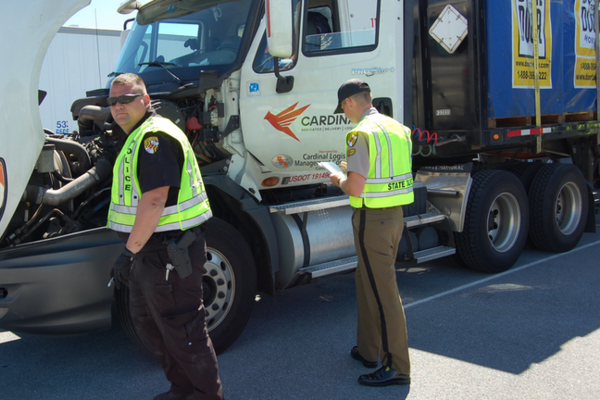
Areas of focus
During last year’s Roadcheck, 34 percent of driver out-of-service conditions were the result of HOS violations.
According roadside inspection data from CY 2020, HOS violations accounted for half of the top 20 driver violations. They include:
- 395.8E, False report of drivers record of duty status
- 395.8, Record of Duty Status violation (general/form and manner)
- 395.8AELD, No record of duty status (ELD Required)
- 395.24D, ELD cannot transfer ELD records electronically
- 395.22H2, Driver failing to maintain ELD instruction sheet
- 395.22H4,Driver failed to maintain supply of blank drivers records of duty status graph-grids
- 395.8F01, Drivers record of duty status not current
- 395.22G, Portable ELD not mounted in a fixed position and visible to driver
- 395.22H1, Driver failing to maintain ELD user's manual
- 395.24C2III, Driver failed to manually add shipping document number
In addition, the top two critical violations discovered during audits in 2020 were:
| 1. | 395.8A1, Not using the appropriate method to record hours of service |
| 2. | 395.8E1, False reports of records of duty status |
In respect to vehicle components, commercial motor vehicle lighting is consistently a concern. Section 393.9, inoperable required lamp, was the top vehicle violation discovered during roadside inspections in CY 2020, followed by inoperative turn signal (393.9TS) at number 6, and no or defective lighting devices or reflective material as required (393.11) at number 7.
How will COVID-19 affect 2021 Roadcheck inspections?
Similar to 2020 Roadcheck, enforcement will conduct inspections following regional health and safety protocols during this year’s event.
Another priority during the enforcement campaign is to make sure COVID-19 vaccine shipments continue to their destination, quickly and safely. Vaccine shipments will not be held up for inspections, unless there is an obvious serious violation that is an imminent hazard.
Navistar Shares Vision Of Opportunity For Service Technicians
February 9, 2021 | Navistar | By Tri-County International Trucks
LISLE, Ill., Feb. 9, 2021 /PRNewswire/ -- Navistar International Corporation (NYSE: NAV) and its International® dealer network are building momentum through their TECH EmPOWERment initiative, which is supplying accredited technical schools with valuable training equipment, real-world advisory counsel and insights into the opportunities available to aspiring technicians.
The program's new website, www.internationaltrucks.com/support/tech-empowerment, shares valuable information on the great career opportunities available to service technicians in the transportation industry. The site provides information on becoming a technician; applying to dealership jobs; dealer/school partnerships; and military recruitment placement, including the company's Service Allies initiative.
"We're excited about the accelerating pace of equipment donations and other support that Navistar and our dealer network are providing to qualified technical schools nationwide," said Ana Salcido, manager, Technician Recruitment, Navistar. "This new website complements that support with useful information aimed at those entering the workforce, showcasing the opportunities and benefits of this profession."
The site includes statistics and information about this career path, as well as testimonials from service managers, instructors and service technicians. The site also offers recent graduates and qualified technicians the opportunity to search and apply directly for open service positions throughout the International® truck and IC Bus® dealer networks.
On top of the new website, Salcido cited the accelerating pace of dealer equipment donations to participating technical schools in recent months. During the fourth quarter of Navistar's 2020 fiscal year, donations were made to four educational institutions:
- University of Northwestern Ohio in Lima, Ohio, by West Michigan International;
- Owens Community College in Perrysburg, Ohio, by Selking International;
- Minnesota State Community & Technical College in Fergus Falls, Minn., by Nelson Leasing; and
- St. Cloud Minnesota State College in Alexandria, Minn., by Nelson Leasing.
"In all, nine institutions received donations during fiscal 2020," Salcido said.
During the first quarter of the company's 2021 fiscal year, donations have already been made to 10 institutions, including:
- Forsyth Technical Community College in Winston-Salem, N.C., by White International;
- Odessa College in Odessa, Texas, by Roberts Truck Center;
- Eastland-Fairfield Career Center in Groveport, Ohio, by Rush Truck Center-Columbus;
- Johnsburg High School in Johnsburg, Ill., by Rush Truck Center, Huntley, Ill.;
- Blackhawk Community College in Janesville, Wis., by Lakeside Janesville;
- Madison Area Technical College in Madison, Wis., by Lakeside International Milwaukee;
- Tidewater Community College in Hampton Roads, Va., by Norfolk Truck Center; and
- Truckee Meadows Community College in Reno, Nev., by Silver State International.
- Texas A&M in College Station, Texas, and Universal Technical Institute (UTI) in Lisle, Ill., both donations being from Navistar itself.
Building on this commitment to technical schools, Salcido cited the importance of getting the word out to a new generation of technicians and potential technicians.
"Our Navistar 4.0 business strategy includes a strong commitment to customer uptime, and we know that having skilled technicians in the service department is a key component of that uptime promise," Salcido said. "The new TECH EmPOWERment site will drive more recruitment to the company's dealer network, educating prospective technicians about the benefits of working at any of over 700 International® truck and IC Bus® dealer locations."
Visit www.InternationalTrucks.com/dealernetwork to find a nearby dealer.
About Navistar
Navistar International Corporation (NYSE: NAV) is a holding company whose subsidiaries and affiliates produce International® brand commercial trucks, proprietary diesel engines, and IC Bus® brand school and commercial buses. An affiliate also provides truck and diesel engine service parts. Another affiliate offers financing services. Additional information is available at www.Navistar.com.
All marks are trademarks of their respective owners.
SOURCE Navistar International Corporation

For further information: Media contact: Bre Whalen, Breana.Whalen@Navistar.com, 331-332-3056, Investor contact: Marty Ketelaar, Marty.Ketelaar@Navistar.com, 331-332-2706, Web site: Navistar.com/News