ProDriver Steps to Cross Railroad Tracks Safely
November 4, 2025 | Safety | By Tri-County International Trucks
Safety Tips for Truck Drivers
Five ProDriver Steps to Safely Cross Railroad Tracks
- Eliminate distractions. Turn off noisy fans and radios. Look and listen carefully for trains.
- Stop safely. Stop no closer than 15 feet and no farther than 50 feet from the crossing.
- Look carefully in both directions for approaching trains before crossing. If your view is obstructed, do not attempt to cross. Look both ways twice before proceeding.
- Know the law. Trucks carrying hazardous materials must stop at all crossings unless an “Exempt” sign is posted.
- Cross without hesitation. Once you begin crossing, continue without stopping. If your vehicle becomes stuck or stalls on the tracks, evacuate immediately and call the number on the blue and white sign. Provide the crossing identification number so the railroad can locate you.
Note: Refer to state and local laws, as well as company policies, for additional information.
Know Your Railroad Crossing Signs and Signals
Additional Recommendations for Navigating Train Crossings:
Trains and trucks don’t mix. Never race a train to the crossing — even if you tie, you lose.
- The train you see is closer and moving faster than it appears. Wait for it to pass completely before crossing.
- Be aware that trains cannot stop quickly. A freight train traveling at 55 mph can take a mile or more (about 18 football fields) to stop after brakes are applied.
- Never drive around lowered gates — it’s illegal and deadly. If you suspect a signal malfunction, call the 1-800 number posted near the crossing or contact local law enforcement.
- Do not get trapped on the tracks. Proceed only when you are certain you can completely clear the crossing. Remember, trains are approximately three feet wider than the tracks on both sides.
- If your vehicle stalls on the tracks and a train is approaching, exit immediately and move away from the tracks in the direction from which the train is coming. This prevents injury from flying debris. Then call local law enforcement for assistance.
- At multiple-track crossings, always check for a second train coming from either direction before proceeding.
- Only cross at designated crossings. Look both ways and cross quickly without stopping. Never stop closer than 15 feet from the rails.
- Always expect a train! Freight trains do not follow set schedules.
- If you get stuck on the tracks, exit your vehicle, call the 800 number posted at the crossing, or contact local police to alert the railroad of your position.
(Information provided by Operation Lifesaver.)
About Operation Lifesaver
Operation Lifesaver, Inc. is a national non-profit safety education organization dedicated to eliminating deaths and injuries at railroad crossings and along railroad rights-of-way. The organization operates in all 50 states with trained and certified presenters who provide free safety talks to community groups, school bus drivers, truck drivers, and student drivers.
For more information, or to request a free safety presentation, visit www.oli.org.
Halloween Driving Tricks to Keep Everyone Safe
October 24, 2025 | Safety | By Tri-County International Trucks
To help everyone bring home treats — not tragedies — follow these tips for a safe Halloween:
- Focus on your driving. A single distraction could lead to a tragedy.
- Stay well below the posted speed limit.
- Pay attention to what’s happening on sidewalks and roadways. Watch for children darting across streets, especially between parked cars.
- Be extra alert when pulling in and out of driveways.
- Do not assume children can see you or are paying attention. You need to take that responsibility.
- Drivers should also check that all lights on their vehicle are working properly.
- Do not pass other vehicles that have stopped in the roadway. They may be dropping off children.
- If you’re driving a group of children but staying in the running vehicle at the curb, turn on your hazard lights to alert other motorists.
- If you’re driving to a Halloween party, put your mask on after you park the car.
Parents can help motorists, too:
- Make sure drivers can see the children. Give them flashlights and glow sticks, and dress kids in bright, reflective clothing or use reflective tape on their costumes.
- Use makeup rather than masks, so children have a clear, unobstructed view of their surroundings.
- Be sure children know how to cross a street — look left, right, and left again before crossing.
- Instruct children to stay on sidewalks and to cross only at corners or crosswalks.
- Accompany your children as they trick-or-treat.
Safely Getting In or Out of a Commercial Motor Vehicle
Now is a good time to remind drivers to follow the Three-Point Rule when getting in and out of their trucks. During the winter months, footing conditions are often compromised, and the chance of slipping or falling increases.
The Three-Point Rule simply means keeping three of your four contact points (hands and feet) secured at all times to prevent slips and falls.
For example, when exiting a truck:
- Keep one hand on the cab handle,
- One hand on the interior door handle, and
- One foot on a step while the other foot is in transition.
By doing this, you always maintain three points of contact.
CVSA Brake Safety Week
July 15, 2025 | Safety | By Tri-County International Trucks
The enforcement campaign is part of Brake Safety Awareness Month, which takes place throughout August.
During CVSA’s annual enforcement event, roadside inspectors will:
-
Conduct North American Standard Inspections with a focus on brake systems and components.
-
Pay special attention this year to brake drums and rotors.
The CVSA will issue a report on its findings later this year.
Brake Safety Week also serves as an important opportunity for motor carriers to educate their drivers and maintenance service providers on the critical importance of brake safety.
CVSA's Operation Safe Driver Week
June 26, 2025 | Safety | By Tri-County International Trucks
During this week, law enforcement officers in Canada, Mexico, and the United States will be watching for both commercial motor vehicle drivers and passenger vehicle drivers who are engaging in unsafe driving behaviors, including:
-
Speeding
-
Distracted driving
-
Following too closely
-
Driving under the influence of drugs or alcohol
-
Other reckless or dangerous actions
Drivers observed engaging in these behaviors will be pulled over and may receive a warning or citation.
Focus Area: Reckless, Careless, and Dangerous Driving
This year’s campaign will place special emphasis on reckless, careless, or dangerous driving:
-
Reckless driving: Willful or wanton disregard for the safety of people or property
-
Careless/dangerous driving: Operating a vehicle without due care and attention or reasonable consideration for others on the road
The Need for Action
Traffic crash data highlights the urgency of this initiative:
-
U.S.: 42,514 fatalities in 2022 (NHTSA)
-
Canada: 1,931 motor vehicle deaths in 2022 (Transport Canada)
-
Mexico: 15,979 road deaths in 2022
Operation Safe Driver Week aims to reduce these alarming numbers by targeting unsafe driving behaviors that lead to crashes.
Education and Outreach
In addition to enforcement, the initiative includes robust driver education efforts. CVSA offers:
-
Resources for teen and new drivers
-
Tools and materials for commercial motor vehicle operators
-
Public service announcement videos available for download and distribution
For more information and resources, visit the CVSA Operation Safe Driver Program page.
International Roadcheck is May 13-15
May 7, 2025 | News | By Tri-County International Trucks
This annual initiative is a high-visibility, high-volume enforcement event focused on commercial motor vehicle inspections and regulatory compliance across Canada, Mexico, and the United States.
During the 72-hour period, CVSA-certified law enforcement officials will conduct inspections at weigh stations, temporary inspection sites, and through mobile patrols. These inspections are designed to verify compliance with federal, state, provincial, or territorial regulations. The data collected will be analyzed and shared later this summer.
Each year, International Roadcheck highlights a specific focus area. For 2025, the focus areas are:
-
Tractor protection systems
-
Alcohol and controlled substance possession
Controlled substance and alcohol possession/use continue to be serious concerns for carriers, drivers, and the general public. The growing number of drivers listed in the U.S. Drug and Alcohol Clearinghouse (DACH) is an alarming trend that threatens the safety of roadways throughout North America.
Throughout Roadcheck, inspectors will perform the North American Standard Level I Inspection—a comprehensive, 37-step procedure that includes a detailed examination of vehicle components as well as a review of driver credentials and documentation.
March 21, 2025 | Safety | By Tri-County International Trucks
10 Tips for Driving Safely in Work Zones:
• EXPECT THE UNEXPECTED! (Normal speed limits may be reduced, traffic lanes may change, and workers may be present on or near the road.)
• SLOW DOWN! (Speeding is one of the leading causes of work zone crashes.)
• DON'T TAILGATE! KEEP A SAFE DISTANCE FROM THE VEHICLE AHEAD. (The most common crash in a highway work zone is a rear-end collision. Avoid tailgating.)
• KEEP A SAFE DISTANCE FROM CONSTRUCTION WORKERS AND EQUIPMENT.
• PAY ATTENTION TO THE SIGNS! (Warning signs help drivers navigate safely through the work zone. Follow posted signs until you see the one indicating you have exited the work zone.)
• OBEY ROAD CREW FLAGGERS! (Flaggers have the same authority as regulatory signs, and failure to obey their instructions can result in a citation.)
• STAY ALERT AND MINIMIZE DISTRACTIONS! (Dedicate your full attention to the roadway and avoid using cell phones or adjusting the radio while driving in a work zone.)
• KEEP UP WITH THE TRAFFIC FLOW. (Merge as soon as possible and avoid last-minute lane changes near closures.)
• SCHEDULE ENOUGH TIME TO DRIVE SAFELY AND CHECK TRAFFIC INFORMATION. (Expect delays and leave early to arrive on time. Check the National Work Zone Safety Information Clearinghouse for nationwide work zone updates.)
• BE PATIENT AND STAY CALM. (Work zones are there to improve roads, making future travel safer and more efficient.)
FMCSA Crash Preventability Program
January 15, 2025 | News | By Tri-County International Trucks
Motor carriers and drivers can challenge the preventability of certain crashes through the Federal Motor Carrier Safety Administration’s (FMCSA) Crash Preventability Determination Program (CPDP). Approved non-preventable DOT-recordable crashes can be removed from your CSA scoring, offering significant benefits.
How the Program Works:
FMCSA’s CPDP reviews 21 specific crash types and updates information in the Agency’s Safety Measurement System (SMS) to identify crashes as "Not Preventable." If you were involved in an eligible crash, you can submit a Request for Data Review (RDR) through the Agency’s DataQs system. This submission must include:
- The required police accident report
- Supporting documents, photos, or videos
Once the FMCSA determines a crash is "Not Preventable":
- Crash Indicator BASIC Adjustment: The crash is removed from the calculation of the Crash Indicator Behavior Analysis and Safety Improvement Category (BASIC) in the SMS.
- Visibility of Determinations: Although removed from scoring, "Not Preventable" crashes will still be listed on the FMCSA website, with the determination noted.
- Pre-Employment Screening Program (PSP) Updates: A note is added to the PSP indicating the crash was not preventable, improving employment prospects for drivers with these incidents in their history.
Benefits of a Non-Preventable Determination:
If a crash is deemed "Not Preventable," the FMCSA will:
- Improve Carrier Scores: Remove the crash from the carrier’s "Crash Indicator" score in the CSA system, reducing the likelihood of targeted enforcement actions.
- Enhance Driver Employability: Add a note in the PSP indicating the crash was "Not Preventable," reducing the risk that the driver will be overlooked for employment due to their crash history.
Communicating with Other Drivers and Pedestrians While Driving
January 7, 2025 | Events | By Tri-County International Trucks
The following communication devices are part of your “execution arsenal”:
- Turn signals should be used to let other drivers know that you are turning, changing lanes, pulling out of a parking space, or pulling out from the curb. You should signal at least four seconds before you plan to take action.
- Emergency signals should be used to warn other drivers that you are experiencing vehicle trouble or when you must park on the shoulder of the roadway due to an emergency. This serves as a warning to other drivers to give you more space.
- The horn should be tapped lightly when trying to gain the attention of another driver or pedestrian. It should not be used to vent frustration at other drivers’ actions.
- Headlights: Many new trucks have daytime running lights that turn on automatically, helping other drivers see you. You can flash your lights at oncoming traffic to warn them of dangers ahead, such as accidents or obstructions in the roadway
Turn Signals
Use your turn signals first to indicate your intent to change lanes. Next, visually scan for adjacent traffic and road hazards, and then execute a safe lane change. By signaling your intentions well in advance, you will be in a safer position to communicate with surrounding drivers and will be able to safely execute the desired driving maneuver. A good safety practice is to signal at least four seconds prior to making a turning maneuver.
Did You Know? A recent study reported that there are approximately 630,000 lane-change crashes annually, including both large trucks and passenger vehicles.
While you certainly wouldn't know it from watching the majority of drivers, using a turn signal to indicate a lane change is generally the law.
Emergency Signals (4 Ways)
FMCSA 392.22 – Emergency signals; stopped commercial motor vehicles:
Whenever a commercial motor vehicle is stopped on the traveled portion of a highway or the shoulder of a highway for any cause other than necessary traffic stops, the driver of the stopped commercial motor vehicle must immediately activate the vehicular hazard warning signal flashers and continue flashing them until the driver has placed the warning devices required by CFR 395.22. The flashing signals should be used while the warning devices are being picked up for storage before the commercial motor vehicle is moved. The flashing lights may be used at other times while the commercial motor vehicle is stopped, in addition to, but not in place of, the warning devices required by this section.
Horn
The horn on a commercial motor vehicle is a safety device that can sometimes be the only item preventing an accident by sounding an alarm and communicating your presence to another vehicle. However, we all know of drivers who have abused the use of the horn, potentially causing an accident by startling another motorist. There have been documented instances of road rage that started with the misuse of a horn. The sounding of a horn is one of the few actions a driver can take that makes an intrusion into the driving compartment of another vehicle. Horns on commercial vehicles vary in size, from small electric (city horns) to large, exterior-mounted chrome-trumpeted air horns. Novelty horns are also popular and can play familiar tunes, such as college football fight songs.
So, what does the Federal Motor Carrier Safety Administration (FMCSA) say about a horn?
The answer is found in CFR §393.81:
Every bus, truck, truck-tractor, and every driven motor vehicle in driveaway-towaway operations shall be equipped with a horn and actuating elements, which shall be in such condition as to give an adequate and reliable warning signal.
§393.81 DOT Interpretations
Question 1: Do the FMCSRs specify what type of horn is to be used on a CMV?
Guidance: No.
Question 2: Are there established criteria in the FMCSRs to determine the minimum sound level of horns on CMVs?
Guidance: No.
Can I drive my commercial motor vehicle if the horn is not operational?
Answer: No.
Answer: CFR §392.7
Equipment, Inspection and Use.
No commercial motor vehicle shall be driven unless the driver is satisfied that the following parts and accessories are in good working order, nor shall any driver fail to use or make use of such parts and accessories when and as needed:
- Service brakes, including trailer brake control
- Parking (hand) brake
- Steering mechanism
- Lighting devices and reflectors
- Tires
- Horn
- Windshield wiper or wipers
- Rear-vision mirror or mirrors
- Coupling devices
Headlights
Many companies now have their trucks programmed to keep the low beam headlights on whenever the engine is running. Many states also have laws requiring headlights to be on whenever the windshield wipers are in use. Both of these are good safety practices.
Are your headlights on your truck "fogged" or dirty?
Do you ensure that your headlights, turn signals, and brake lights are clean during your pre- and post-trip inspections?
According to the National Institute for Traffic and Highway Safety, the number one cause of severe nighttime accidents and reduced driving safety is dim, cloudy, or improperly lit
headlights. If a headlight has ineffective or diminished light output, your nighttime driving safety is greatly at risk. A study by the University of Iowa found that a 20-50% reduction in headlight output leads to a 90% increase in the likelihood of an accident. This is a very unnecessary risk, as it is easy to either clean, replace, or fix these headlights.
Dim it!
Is flashing high beams at cars illegal?
Someone told me that flashing your headlights at a vehicle in front of you, particularly if it is going slow in the fast lane, is a citable offense. Is this true?
Yes, in some states, that is true.
The main concern with flashing headlights at an oncoming motorist is that they may be temporarily blinded, which could create blind spots for other motorists while operating their vehicles, thus creating an obviously hazardous situation.
Proper Steps to Take in Preparing for Winter Driving Conditions
December 17, 2024 | Safety | By Tri-County International Trucks
Step 1: Prepare Your Truck for Winter Driving
Tires are the most important factor in maintaining control of your vehicle in snowy and icy conditions. Traction tires on the drive axle(s) with adequate tread depth provide the best control. The tread depth and condition of the steer axle tires are also crucial for maintaining control of steering. If you are operating in areas with chain laws, ensure your chains are in good condition and ready to be installed if necessary. Additionally, make sure that all mirrors and glass on the truck are clean for optimal visibility.
Step 2: Turn Your Lights On
Turn on your lights to improve your visibility to other motorists.
Step 3: Avoid Using Cruise Control
Do not use cruise control on snowy or icy roads.
Step 4: Be Cautious on Bridges, Overpasses, and Infrequently Traveled Roads
Exercise extra caution on bridges, overpasses, and infrequently traveled roads, as these areas freeze first. Even if the temperature is above freezing, you may encounter ice on shaded areas or exposed roadways, such as bridges.
Step 5: Don’t “Pump” the Brakes
If your truck is equipped with ABS brakes, do not "pump" the brakes. Let the system function as designed.
Step 6: Drive Slowly
Driving too quickly is a leading cause of winter accidents. Just because you are driving a large truck with a heavy load doesn't make you invincible. Be sure to drive slowly and cautiously on snow- and ice-covered roads.
Step 7: Stay Alert
Maneuvering is more challenging in snowy conditions. Anticipate your next move, giving yourself plenty of room for turns and stops.
Step 8: Don’t Tailgate
Tailgating is dangerous under normal conditions, but it is especially hazardous in winter weather. Stopping takes longer on snow and ice compared to dry pavement. Leave plenty of space between your vehicle and the one in front of you. A good rule of thumb is to maintain four vehicle lengths for every 10 mph you are driving.
Step 9: Brake Before Making Turns
It is difficult to steer while applying the brakes in snowy conditions. Smoothly apply the brakes to reduce speed before entering a turn. Once you have rounded the corner, you can accelerate again.
Step 10: Drive Smoothly
Snowy and icy roads are much less forgiving than dry pavement. Avoid abrupt turns or stops, as they can cause your vehicle to lose control and skid.
Step 11: Be Familiar with Your Vehicle
It’s essential to understand your vehicle's handling characteristics, especially when driving on snow or ice. Be aware of your truck’s load and weight. As the load decreases, the vehicle’s handling on snow and ice will change.
Step 12: Learn How to Control Skids
While it’s best to practice skid control in a driving school or on a closed course, it’s also helpful to know how to react if you experience a skid under real-world conditions. When skidding, counteract your natural instincts by turning into the skid and accelerating gently. Taking your foot off the brakes and gently accelerating during a skid helps transfer weight from the front to the rear, often allowing you to regain control.
For additional information on weather and road conditions, visit the FHWA's website at http://www.fhwa.dot.gov/trafficinfo/index.htm, which provides links to weather and road condition resources, travel websites, and 511 services.
Overhead Damage: How Not to Make a Convertible Out of Your Truck or Trailer!
November 27, 2024 | Safety | By Tri-County International Trucks
Here are some tips for drivers to prevent this type of damage:
- When you call your customer for directions to their facility, keep in mind that the person giving you directions drives there every day in a car. They may not realize that the bridges and overpasses you will encounter might not be high enough for your truck. Specifically ask if the directions they provided are on a truck route and if there are any low clearances. Regardless of the information you receive, proceed with caution, as you are the one responsible for any damage caused.
- Overhead clearances are often posted in advance of most underpasses and tunnels, but be aware that new asphalt may have been laid on the road, reducing clearance by a couple of inches. Stay alert for road construction near underpasses, bridges, and tunnels.
- Just because other trucks are passing through doesn't mean your truck will fit under the bridge, tunnel, etc.
- If a marked or unmarked overpass looks low, slow down immediately, turn on your four-way flashers, and carefully approach the overpass. Stop and check your actual clearance.
- Many bridges and overpasses are not perfectly straight; the sides are often lower than the center. If possible, cross under in the inside lane.
- If you can, check the road elevation on the other side of the bridge. A sharp incline or decline could cause trouble. You may fit under the bridge while entering, but as you exit, the body or trailer could be pushed up into the bridge due to the change in road elevation.
- In winter, snow and ice on the roadway can reduce the clearance enough to cause damage.
- If you find you cannot proceed through a low overhead and traffic is congested around you, it’s better to call the police for assistance in backing out of the situation. Backing against traffic to maneuver could cause an accident.
Preparing for the Cold Weather
October 3, 2024 | Safety | By Tri-County International Trucks
Fuel Additive Use during Cold Weather Conditions
To prevent fuel jelling, additives should be added whenever the ambient temperature falls below 32°F. Power Service and Penray are two popular manufacturers of fuel additives, each offering a range of products available through Navistar and Idealease locations.
Power Service:
- The "Red Bottle," known as Power Service 911, should be used only when the fuel in a unit has already jelled.
- 911 is NOT to be used as a fuel additive that you would regularly put in the fuel tank to keep the fuel from jelling.
- Power Service Diesel Fuel Supplement + Cetane "White Bottle" is to be added to the fuel at each fill when the ambient temperature is < 30 degrees F.
- This is the additive you should use on a regular basis during the winter months.
Penray:
Winter Than Emergency Diesel Fuel Supplement
- Dissolves already gelled fuel fast and reduces clogging of fuel filters. Prevents ice crystal build-up in fuel lines and filters by disbursing moisture.
- Eliminates hard starting, pounding, excessive smoking and helps improve combustion. 100% compatible with low sulfur fuel and fuel blends.
Winter Pow-R Plus Diesel Fuel Supplement
- ULSD compliant
- Prevents diesel fuel gelling
- Prevents ice crystal formation
- Reduces cold filter plug point by up to 30 degrees
- Enhances cetane levels
- Improves fuel economy
- Utilizes HAFI® technology
- Aids cold weather starting
- Stabilizes fuel and prevents corrosion
- Helps reduce emissions
- Improves lubricity
How to Make a Cold Weather Survival Kit
Everyone should carry a Winter Survival Kit in their truck. In an emergency, it could save your life. Here is what you need:
- A shovel
- Windshield scraper and small broom
- Flashlight with extra batteries
- Battery powered radio
- Water
- Snack food including energy bars, raisins, and mini candy bars
- Cold Weather Survival Kit
- Matches and small candles
- Disposable Hand/Foot warmers
- Extra hats, socks and mittens
- First aid kit with pocket knife
- Necessary medications
- Blankets or sleeping bag
- Tow chain or rope
- Road salt, sand, or cat litter for traction
- Booster cables
- Fluorescent distress flag and whistle to attract attention
- Cell phone adapter to plug into lighter and or extra battery supply
International S13 Integrated Powertrain Hits the Road for Interactive Training Tour
July 24, 2024 | Events | By Tri-County International Trucks
The International S13 Integrated Powertrain Mobile Training Tour began on April 2 and will visit Tri-County International Trucks on August 20. To date, the trailers have visited more than 48 dealer locations, trained more than 486 sales professionals, and educated more than 1,311 customers.
Doug Bradley on the Sales Enablement team was the key architect behind the S13 trailer tour with input and support from numerous stakeholders across Navistar. The preparation for the tour began in 2022 and encompassed:
- Designing and selecting a vendor to build the trailers.
- Selecting drivers and facilitators.
- Developing the learning content and training facilitators.
- Managing the logistics to visit more than 100 locations across North America.
During the customer portion of the ongoing training, a mix of fleet owners, state and municipal highway superintendents and technicians, dealers, and other customers are given the chance to explore the advanced powertrain and its components hands-on.
When walking through the training trailers, various components of the S13 engine, T14 transmission, and dual-stage aftertreatment system are highlighted so customers and dealer sales professionals could learn more about the intentional design of the powertrain. International subject matter experts and sales professionals are on-hand to provide interactive training exercises for dealer sales professionals and fleet end users. And the key part of it all is that at some locations customers had the chance to get behind the wheel and experience the powertrain’s performance first-hand.
Dealer Sales Professionals Weigh In
Since the start of the tour, Navistar’s Sales Enablement team has been collecting feedback from International dealer principals and sales professionals. Overall, dealers are very satisfied with the training, noting that the tour is a positive representation of both their dealerships and Navistar. They also indicated that the training equipped them with the information needed to inform customers about the benefits of the S13 Integrated Powertrain.
Pliler International, for instance, said: “We really enjoyed the training/trainers/trailer, etc. All the guys received great takeaways, gave them confidence to sell the product, and generated some excitement behind the new powertrain. Also, it proved to be extremely beneficial to showcase to the customers!”
A representative from Rechtien International Trucks said: "What I really like is the T14 transmission. It's going to crush competition product line, especially in the line-haul application."
Kyrish Truck Centers of Houston pointed out that they would have had more customers attend if they had a better understanding of how impactful the training was going to be. This is the “best training that Navistar has had in years,” according to Kyrish.
Waters Truck and Tractor in Columbus, Mississippi, provided some constructive feedback, calling for better planning, communication, and coordination among the trainers and back-office staff.
“There was some disconnect in communication between back-office staff and the dealership and the trainers. It worked out, but that could have been better,” Waters noted.
“I liked that it was hands-on training, that we weren't just watching a slideshow or a video,” Waters added. “I like how the instructors kept it entertaining and informative. The component breakdown was very helpful.”
Customers Tout Fuel Efficiency, Performance
During one stop at International dealer Arkel Motors in New Windsor, New York, current and potential customers in the area stopped by the dealership to explore the S13 Integrated training trailer and have their questions answered. Arkel Motors is an authorized, full-service International dealer located in the southeastern part of the state. The dealership carries the complete line of new International trucks, tractors, and chassis, as well as a full inventory of used trucks, full-service leasing, and rental trucks.

Keith Watts, a third-party consultant for Navistar, who helps facilitate training events like last summer’s S13 Bootcamp, and is one of four facilitators assigned to the S13 Training Trailer Tour, has ensured the training is consistent on both units going around North America. Keith explained that the point of this training is to educate the sales professionals on the components of the S13 engine, T14 transmission and dual-stage aftertreatment, and how these components contribute to superior operating economy, stellar performance, simplicity, and serviceability. This information helps sales professionals develop talking points based on their customers' “hot button” needs and enhance their credibility when talking to current and prospective customers.
“It’s about pulling off valve covers and explaining to people along the tour why we don’t have certain parts anymore,” Keith said. “They are seeing what we have simplified and why.”
“The S13 Integrated powertrain is new to this market, but not the world,” Keith added. “Truckers here know that Scania is synonymous with quality, and I am hearing them embrace this powertrain.”

One International customer who attended the Arkel Motors event is Dane Mannese. Dane owns Mannese Distribution in Milton, New York, and runs a fleet of International HX 520 Series trucks that haul general freight across five states in the Northeastern part of the U.S. Mannese’s less-than-truckload freight operations generally run about 85,000 lb. of loaded weight every day.
This summer, Dane ran the Arkel Motors rental LT equipped with the S13 Integrated Powertrain to compare with the fuel usage he sees in his current fleet powered by a competitor’s engines. He was immediately impressed by the early fuel savings he experienced with the S13 Integrated Powertrain.
“We run the same lanes and I see the report at the end of every day,” Dane said. “When my drivers leave, my computer tells me how many miles the truck had on it. And when they fill up, the computer tells me how many miles the truck has. I get immediate reports to my phone, and when I saw the S13 numbers, I texted my Arkel rental representative and said, ‘I think something’s wrong. This truck is getting 8.8 MPG today.’ Then, I ran it again the next day and it got 9 MPG.”
Dane added that a typical run to Allentown, Pennsylvania, from Milton, New York, takes 43 gallons of diesel for every truck in his fleet. With the S13 Integrated, the run took just 28 gallons.
When it comes to purchasing, however, although Dane said he is impressed with the fuel savings the S13 Integrated Powertrain delivers, he needs to make sure that savings will outweigh vehicle depreciation when it comes to resale value or any other potential loss that can occur on the backend.
“I’m curious about what International is offering for the S13 warranty,” Dane said. “My fleet doesn’t do all that much mileage, so we have been doing the Cummins six-year, 600,000-mile warranties. We have been selling the truck after about four years, with a little more than 200,000 miles on the warranty left for the resale. Someone is more apt to buy a four-year-old truck with 200,000 miles still covered than they are with a truck that’s got no miles covered.”
Although Dane had already tested the S13 Integrated Powertrain, he attended the mobile training tour at Arkel Motors to learn more about vocational offerings and warranties for the product.
Another potential customer, James Vananden, owner-operator of JVE Trucking, was also interested in spec’ing the S13 Integrated Powertrain for the HX Series. He hauls products like stone and topsoil via a 48-ft. drop-deck flatbed and needs the power the HX 520 offers. That said, James tested the rental LT to see what the S13 Integrated Powertrain was all about.
“I’ve been at this 37 years and I am set in my ways,” James said. “I have driven them all—name an engine. That truck right there [he pointed to the LT equipped with the S13 Integrated Powertrain]—it’s the engine and transmission combined—I have never driven anything in my life with an engine brake that good. Ever.”
Help Your Fleet Drivers Avoid Rear-end Collisions
July 8, 2024 | Safety | By Tri-County International Trucks
By failing to allow ample following distance, drivers rob themselves of time needed to react in an emergency, such as the car in front braking suddenly for an animal. The odds of a collision are even greater when tailgating behavior is combined with speeding or distracted driving.
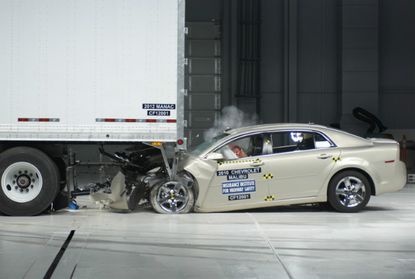 A good rule of thumb to gauge following distance
Your fleet drivers can help to avoid rear-end crashes by slowing down, increasing the distance from the vehicle in front, or passing that vehicle if it is safe to do so. They need to know that tailgating is not an option.
A common tool used to determine proper following distance is the 3-second rule. To use it, choose a fixed point that is even with the car in front of you, such as a road sign or building. If you reach that fixed point before you can count to three, you are following too closely.
Prepare your drivers before they take the wheel
While most of your drivers are aware of the importance of maintaining proper following distance, it’s beneficial to remind them periodically of your safety-first policy with timely tips such as:
Use the 3-second rule. When the road is dry and straight, the 3-second rule is a simple way to give yourself enough time to react if a car or truck in front of you stops unexpectedly.
Be aware of the weather. If the road is wet, snowy, or icy, the 3-second rule won’t apply, and you’ll need more room to stop. You must also be prepared in case a vehicle in front of you skids.
Factor in visibility. If you are traveling dusk-to-dawn, that underscores the need for headlights that are clean and work properly, and for clean and clear windshields to minimize the impact of glare.
Know the vehicle you are driving. Does it have freshly adjusted brakes and ample tire tread? If not, you’ll need more space between your vehicle and the one in front of you to slow down.
Do not engage in Distracted driving activities. Distracted driving is any activity that diverts attention from driving, including talking or texting on your phone, eating and drinking, talking to people in your vehicle, fiddling with the stereo, entertainment, or navigation system—anything that takes your attention away from the task of safe driving.
Beware - We are now in the busiest time of year for Road Construction
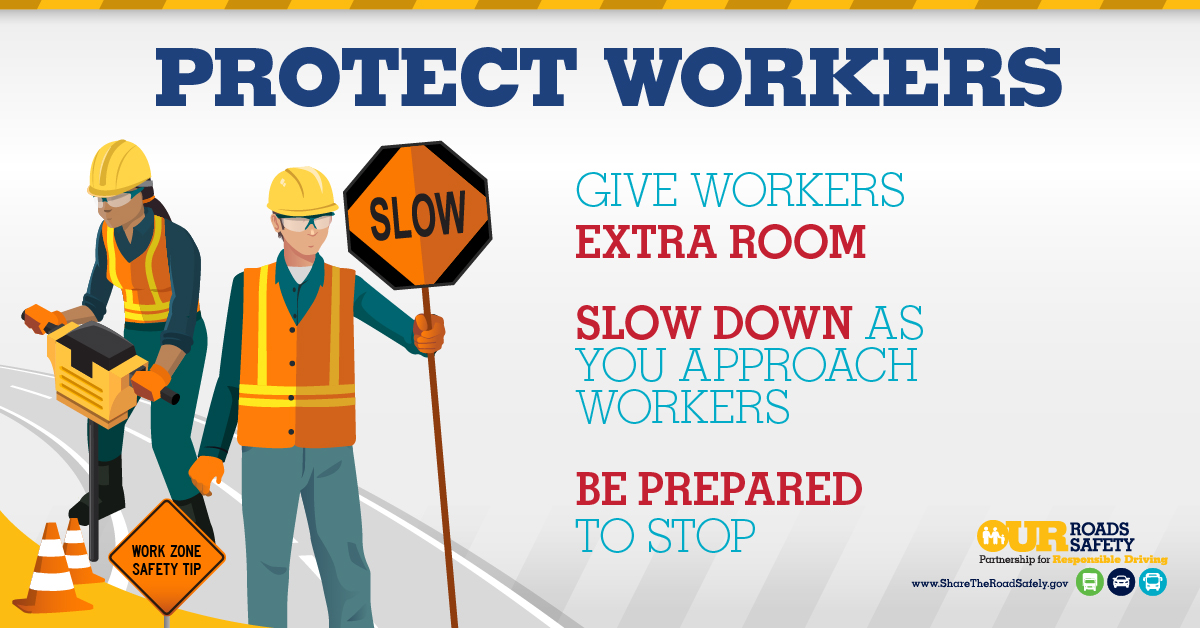 Drivers need to be especially cautious of construction zones this summer. States are making a concentrated effort to raise the awareness of the dangers in these zones. Here are some safety tips you can share with your drivers regarding construction zones:
- SLOW DOWN and be alert when approaching a “construction zone.” Get into the correct lane well in advance. Where traffic is merging into a single lane, be cautious of other motorists racing to get ahead of slowing traffic.
- Get OFF of the phone…. even Hands Free phones are distracting your ability to safely operate your truck
- PAY ATTENTION to what those orange and black warning signs are telling you to do.
- BE ALERT for the actions of other drivers.
- PAY CLOSE ATTENTION to construction equipment and workers. You never know their next move, so be prepared to stop.
- WATCH SPEED LIMITS and don’t tailgate. Double your following distance. Rear-end collisions are the most common kind of construction zone accident.
- WATCH FOR CONSTRUCTION VEHICLES entering and exiting the road in or near the construction area, as they may enter and exit at a slower speed than other traffic.
- TURN YOUR HEADLIGHTS ON as you approach a work-zone, alerting both the construction workers and other traffic around you of your presence.
- GIVE CONSTRUCTION WORKERS A BRAKE.
CVSA's Brake Safety Week Scheduled for Aug. 25-31
June 11, 2024 | Safety | By Tri-County International Trucks
Brake Safety Week is a commercial motor vehicle and driver inspection and regulatory compliance enforcement initiative, a brake-safety awareness and outreach opportunity, and a brake-related inspection and violation data-collection project.
Inspection and Enforcement
CVSA-certified inspectors will conduct routine commercial motor vehicle inspections throughout the week, with a focus on brake systems and components. Any commercial motor vehicles found to have brake-related out-of-service violations will be removed from roadways until those violations are corrected.
For this year’s Brake Safety Week, inspectors will focus on the condition of brake linings and pads. Brake lining and pad issues may result in vehicle violations and could affect a motor carrier’s safety rating.
In addition, some jurisdictions have performance-based brake testers (PBBT) and will be using them during Brake Safety Week. A PBBT is a machine that assesses the braking performance of a vehicle.
Spring Into Summer Driving
May 22, 2024 | Safety | By Tri-County International Trucks
This time of year presents its own set of challenges for professional and casual drivers alike, as the start of May brings the beginning of the deadliest driving season of the year (through September).
Our anticipation of early ETAs and easy miles can quickly be put in check by construction, breakdowns, and extreme weather. So, when you’re planning for the road ahead, it’s worth taking a moment to refresh your memory on tips, best practices, and safe strategies for driving and arriving with all your pieces in place.
It helps to be prepared—physically, mentally, and mechanically.
d = rt
Not to get all algebraic on you, but while distance may equal rate times time, the rate at which you travel and the time you take to do it can be affected by factors beyond your control—decreasing your rate and increasing the distance and time to reach your destination.
Map your route with a GPS-based travel app to give yourself an idea of the time it’ll take to get where you’re going and what delays you can expect along the way. Wherever there is construction and/or an accident you can see it plain as day and adjust your path in real time.
Even with the most meticulous planning, once you hit the road things can change quickly. Conditions can degrade from moment to moment and it’s always a great idea to anticipate and expect the unexpected to happen—the key to defensive driving.
Safety Is an Attitude
While traffic fatalities have been declining recently—the latest estimate for 2023 is more than 40,000—drivers are at risk more frequently, racking up a 2.1% increase in total miles driven.
And when you factor in more than 2 million life-altering injuries happening each year, it’s clear that any improvement in compliance, good habits and etiquette will have a profound effect on each of our lives.
No matter which mode of transportation you regularly use, please take a few minutes to brush up and read through the FMCSA’s tips for trucks and buses, passenger vehicles, as well as bicyclists and pedestrians.
As part of the overall Our Roads, Our Safety campaign, the FMCSA also offers valuable resourcees focusing on different elements of safe travel—speeding, distracted driving, work zones, seat belts, and health for drivers.
It’s Up to All of Us
Practicing road safety isn’t just a legal issue—it’s also a matter of respect and etiquette that is well worth being aware of because over the past decade, road rage related shooting incidents have surged over 400%!
Whether we are driving to make an on-time delivery or to have a great time at the beach—whatever the reason—we all deserve to arrive safely by being smart, taking care, and respectfully sharing the roads with each other.
Today, over the next few weeks, and throughout the year, we enthusiastically encourage you to read, print, post, and forward the valuable information in the links above—share it freely with your team, your teens, your partners, and your parents so that everyone arrives uneventfully!
Our fleet has the ideal truck to meet your needs
April 30, 2024 | News | By Tri-County International Trucks
With rental vehicles from Idealease of Detroit & Flint, you can handle a short-term peak in your business, or rent extra trucks when your vehicles are in the shop. Idealease of Detroit & Flint helps you meet your customers’ expectations with the right truck rental for the job—when you need it. We provide flexible daily, weekly, or monthly rental programs tailored to fit your needs. Visit our rentals page.
We're excited to offer sleeper and day cab demos featuring the new S13 engine and T14 automated transmission. These cutting-edge components work in unison to deliver superior fuel economy. Contact us today to schedule a free, one-week test drive and experience the power of innovation firsthand. Call (313) 584-7090, or click here to schedule a test drive.
Tri-County International Trucks Service Advisor Katheryn Mitchell Receives Navistar's March 2024 Service of Excellence Award
April 1, 2024 | News | By Tri-County International Trucks
Katheryn started as a cashier at Tri-County International Trucks. She did so well with the customers at the front office that she was transitioned to service administrator, and recently was promoted to service advisor. She now handles all big accounts, along with Idealease of Detroit/Flint. She does all of the Cummins and International warranties and can look up parts for technicians.
Most of the large customers will only call Katheryn on her cell phone. They love the communication level she has with them, so much so that she has received Excellent Service in all the customer reviews. If we cannot get a part, she takes the initiative to contact their service departments to see if they can help expedite getting the truck repaired in a timely manner. She has stepped up as our top service advisor. Large fleet customers come to her for her knowledge of truck issues; she knows a lot about the trucks due to doing all of the warranties for Cummins and International. Customers only want to talk to her, and most of the trust is due to the continuous communication she has with the customers all day long. Katheryn takes care of most of the 360 documentation daily to keep her customers aware. She is willing to stay in constant contact with management via e-mail or face-to-face on all the situations that she has going on with the customers so that we stay in the loop.
She is a team player, she is willing to help anyone in the office, and she is willing to help when the afternoon service advisor takes a vacation. She helps the parts department as well as any of the techs who need her to look up warranties or parts if they are busy. Tri-County International Trucks is lucky to have Katheryn on the team.
CVSA’s International Roadcheck Is Scheduled for May 14-16
February 27, 2024 | News | By Tri-County International Trucks
During the International Roadcheck, law enforcement personnel certified by CVSA will conduct inspections of commercial motor vehicles and drivers at weigh/inspection stations, temporary sites, and through mobile patrols to ensure adherence to federal, state, provincial, or territorial regulations. The data collected over the 72-hour period of the International Roadcheck will be compiled, analyzed, and the results will be made available during the summer.
Each year, International Roadcheck highlights specific categories of violations. In 2024, the focus areas will be tractor protection systems and alcohol and controlled substance possession.
The issue of controlled substance and alcohol possession/use remains a significant concern for motor carriers, drivers, and the public at large. The increasing number of prohibited drivers listed in the U.S. Drug and Alcohol Clearinghouse (DACH) underscores the severity of this issue and poses a threat to all motorists traveling on North American roadways.
Throughout the three days of International Roadcheck, inspectors will conduct their routine North American Standard Level I Inspection, a comprehensive 37-step inspection procedure that covers vehicle components and driver documentation and requirements.
For more information on Roadcheck 2024, visit: cvsa.org.
Time to Finalize Your Accident Documentation for 2023
January 23, 2024 | News | By Tri-County International Trucks
Motor carriers operating CMVs over 10,000 lbs. MGVWR, transporting hazardous materials (HM) in placardable quantities, or transporting passengers are mandated to record accidents on a register by calendar year as defined in 49 CFR 390.51. Even if no accidents occurred, an accident register is required.
Firstly, let's establish the definition of an accident according to the Federal Motor Carrier Safety regulations: An occurrence involving a commercial motor vehicle (>10,000 lbs MGVWR, HM, or Passengers) operating on a highway in interstate or intrastate commerce that results in:
- A fatality;
- Bodily injury to a person requiring immediate medical treatment away from the scene.
- One or more motor vehicles incurring disabling damage, requiring towing away from the scene.
The term "accident" does not include:
- Boarding and alighting from a stationary motor vehicle.
- Loading or unloading of cargo.
When an accident occurs, it must be recorded on an accident register with the following information:
- Date of accident.
- City or town and State where the accident occurred.
- Driver Name.
- Number of injuries.
- Number of fatalities.
- Whether hazardous materials, other than fuel from the vehicle's tanks, were released.
Motor carriers must maintain the accident register for three years and also keep copies of required accident reports from State or other entities or insurers. The register is not sent to the FMCSA or State but is kept for review during compliance reviews or investigations.
As a best practice, motor carriers are recommended to maintain two accident registers by calendar year:
- DOT recordable accidents only.
- Non-DOT recordable accidents.
This practice helps provide the FMCSA with requested information during a compliance review. A second register with all accidents allows for proactive analysis and training to reduce frequency. Accident registers can be kept electronically, with a hard copy available for the FMCSA upon request.
To ensure register accuracy with the FMCSA, view recordable accidents on the FMCSA Compliance, Safety, and Accountability (CSA) Safety Measurement System (SMS) at FMCSA SMS.
For accidents involving the release of hazardous materials, carriers must complete a hazardous incident report (see 49 CFR 171.15 and 49 CFR 171.16). The accident registers can be kept in either paper or electronic format.
Winter Safety Tips for Drivers and Vehicles
Protecting Your Driver:
Cold weather poses risks of hypothermia and frostbite. To prevent hypothermia, take these precautions:
- Wear layers of warm, loose-fitting clothes, especially those that wick moisture.
- Use gloves and knit caps for heat retention.
- Change wet clothing promptly.
- Keep an emergency kit with a change of clothes, a blanket, hand warmers, and snacks.
- Consume hot, nutritious meals and stay hydrated.
- Avoid alcoholic beverages.
- Ensure communication for drivers in case of breakdowns in rural areas.
Prescription drugs may increase sensitivity to cold; consult with a healthcare professional.
Frostbite prevention:
- Shield skin from cold air and extreme temperatures.
- Recognize frostbite symptoms like skin color changes, numbness, and stiffness.
Protecting the Truck:
- Add diesel supplement to ultra-low sulfur diesel below 32°F.
- Plug in the engine block heater below 32°F; start unused trucks daily.
- Follow a startup procedure for optimal engine performance.
- Purge air tanks daily for trucks with air brakes.
- Apply brakes lightly in wintry conditions before parking to prevent freezing.
- Maintain full windshield washer solvent and clean windows.
- Remove ice-snow build-up from steps and grab handles.
- Use the 3-point method for entering/exiting the cab.
- Avoid parking in areas prone to snow accumulation, preventing roof collapse.
Handling Diesel Exhaust Fluid (DEF) in Cold Months:
The winter season brings unique challenges for equipment using diesel exhaust fluid (DEF). Comprising a blend of technically pure urea and purified water, DEF freezes at 11 degrees Fahrenheit and -11 degrees Celsius. Proper maintenance and dispensing are essential to uphold its quality, according to the American Petroleum Institute. Similar to water, DEF expands by up to 7% when frozen, posing a risk of damage to the storage tank if it is at or near full capacity during freezing conditions. It is advisable to keep the DEF tank less than full in cold temperatures to mitigate potential issues.
Chains for Winter Operations:
If you are driving in a state that mandates carrying chains, ensure they are of the right size, securely fastened, clean, and free from damage for easy application when needed. If you're uncertain about your state's chain laws, visit:
New Trucks, Used Trucks and All of the Parts You Need
September 25, 2023 | News | By Tri-County International Trucks
Used and NEW TRUCKS now IN STOCK!
Click Here - View Inventory
Join Our Team

If you're ready for an exciting employment opportunity in the transportation industry, click here to view our job openings.
Truck Parts Specials

These offers won't last long, so visit our Parts page page today!
Tri-County Celebrates National Truck Driver Appreciation Week
September 8, 2023 | Events | By Tri-County International Trucks
Celebrated annually, this year’s National Truck Driver Appreciation Week runs from September 10-16. Professional truck drivers always step up when they are needed most and have kept the economy on its feet despite facing unprecedented obstacles.
There are roughly 3.5 million professional truck drivers nationwide – delivering the essential goods our families rely on – from food to fuel to medicine to clothing. The hardworking men and women behind the wheel safely transport almost 11.5 billion tons of goods and products every year, which account for more than 70% of America’s total annual freight. 80% of U.S. communities depend solely on trucking to deliver goods.
This year, Tri-County International Trucks asks you to join us and ATA in recognizing the significant contributions our professional truck drivers make to our lives. Their efforts contribute greatly to our quality of life and truly move America forward.
To learn more about how essential the trucking industry is, and for more information on NTDAW 2023, please visit www.ntdaw.org.
HX Series Top 50 Products
May 12, 2021 | Trucks | By Tri-County International Trucks
When we set out to build the next great International® severe-duty truck, we knew we had to start from the beginning. To look beyond what was needed, to deliver beyond what was expected.
From the ground up, the HX™ Series was designed and engineered to endure the most punishing of jobsites. Built to take on whatever challenges you could throw at it, and to look great while doing it.
Every consideration - from its huck-bolted frame and three-piece Metton hood, to the spacious DriverFirst™ inspired cab and exceptional power options - has been made, tested and proven to perform well past class-leading standards. Bringing unmatched uptime, durability and driver comfort to any work site.
Now our commitment to building the best severe-duty truck on the market has been recognized by equipment owners and end users as one of Equipment Today Contractor's Top 50 products for 2016.
International Truck Launches The New International® HX® Series
November 17, 2020 | Trucks | By Tri-County International Trucks
LISLE, Ill., Nov. 17, 2020 /PRNewswire/ -- Today, International Truck launched the new International® HX® Series, the next-generation of its HX Series vehicles. The new HX Series is the first product released under the company's Navistar 4.0 strategy and its Project Compass initiative – which focuses on flexible, modular design to meet customer needs, streamline the customer experience and deliver the very best support and service in the industry.
"The new HX Series represents our most comfortable, durable, technologically integrated and driver-focused Severe Service truck ever," said Mark Stasell, vice president, Vocational Truck, Navistar. "It is the physical representation of our Navistar 4.0 strategy – putting the customer at the center of everything we do."
The new HX Series is available in both a set-forward axle HX520 and a set-back axle HX620. Both vehicles are now available for order and deliveries will start early next year.
Extreme Duty Cab
The new HX Series features a redesigned cab that is designed and validated to perform in even the most punishing vocational applications. It comes with a durable three-piece hood that is crack-resistant, strong and specifically engineered to offer outstanding front-forward visibility. Backed by rigorous testing, the extreme duty cab is structurally reinforced in key locations to ensure long life and is now protected by ChemGuard, LineX and International Truck's own topcoat process making it nearly impenetrable to salt – all done with an intelligent design of high-strength steel, resulting in no weight penalty. Demonstrating the corrosion resistance of the cab, the new HX Series is backed by the confidence of a 10-year perforation warranty.
The new HX Series also comes with functional dual external air cleaners, offering increased filtration which is critical when running in dusty environments. All marker lights have been replaced with LEDs which provide superior nighttime visibility and safety while reducing the frequency of repair. To add your own personal touch, the new HX Series is easily customizable with optional stainless-steel visors, bright finish mirrors and additional stainless-steel options.
Inside, the focus was on the driver. The new extreme duty cab improves driver safety, comfort and productivity. To start, the overall cab size has been increased. With a focus on comfort, the cab now features best-in-class HVAC and larger power windows, creating a view with improved visibility.
The expanded cab also comes laid out with International Truck's newest and highest trim package Diamond Elite. Included in this package is a new line of premium heated and ventilated seats offering complete comfort at all times and allowing drivers to stay focused and effective. Integrated driver assist technology from Bendix also helps improve driver's awareness and safety.
"The cab interior is the driver's command center, so every inch needs to be attuned to their needs," said Stasell. "Designed directly from driver feedback, the new HX Series is built to be the most driver-oriented vehicle in your fleet."
Improved Performance
On a job site, maneuverability is paramount. For improved performance, the new HX Series is available with dual steering gears and advanced anti-lock braking systems that result in superior turning, traction and control. To help maximize your delivered payload, the HX620 also comes standard with the International® A26 engine, delivering up to 500 horsepower for top tier performance in a lightweight package.
The HX Series continues to offer an industry-leading, high strength 12.5" x 0.5" single rail frame option delivering 3.5M RBM, meaning it is capable of withstanding even the heaviest loads.
To further enhance performance, International Truck also includes a Huck-bolted frame and cross members on the chassis that minimize movement and wear, a wide range of factory-installed lift axles, and for the rare occasions a driver does get stuck, a front tow pin option rated up to 150,000 lbs.
Proven Partners
The new HX Series features proven component technology from key partners. Both the HX520 and HX620 models can be ordered with the Cummins® X15 engine, delivering the power to perform in a variety of ratings up to 605hp and 2,050 lb-ft of torque.
It also features the new Hendrickson HAULMAAX® HMX-EX Suspension, bringing improved reliability and increased job site ratings.
A wide range of steerable lift axles are also offered for the new HX Series. All lift axle combinations are available from the factory; most notably, International Truck now offers the option for all controls to be placed in the wing panel of the dashboard for improved ergonomics and quality appearance.
With a comprehensive offering of manual, automated manuals and automatic transmissions for any application, the new HX Series features the Eaton Fuller manual transmissions, Eaton Ultrashift® automated manual transmissions or the Allison 4000 Series Transmissions. The automated manual and automatic transmissions are controlled through International Truck's intuitive, driver-friendly stalk shifter control that allow the driver to keep their eyes on the job.
A Truly Connected Truck
To maximize uptime, International Truck has integrated the Diamond Logic® electrical system into the new HX Series. Diamond Logic offers fleets an integrated, easily programmable and customizable electrical system that operates directly from the dash. It decreases body installation labor, increases uptime and safety and allows drivers to operate the truck's body with unmatched confidence.
The new HX Series is supported through OnCommand® Connection – the company's real-time remote diagnostics system, offering the industry's most comprehensive portfolio of connected vehicle services. All HX Series customers will have visibility into the health of their fleet, making it easier to manage maintenance and repair. This technology allows International Truck and its service network to predict parts needs, so dealers have inventory on shelves where and when you need it.
The new HX Series is also backed by International® 360 – the service communications and fleet management platform that makes it easier than ever to seamlessly communicate with the International service network for fleets of all makes.
"Navistar 4.0 and Project Compass are focused on putting the customer at the center of everything that we do, and that customer focus is crystal clear in our brand new HX Series," said Friedrich Baumann, president, Sales, Marketing and Aftersales. "I can truly say without hesitation that the new HX Series is built entirely around our customers, designed to help them reach new levels of success."
About Navistar
Navistar International Corporation (NYSE: NAV) is a holding company whose subsidiaries and affiliates produce International® brand commercial and military trucks, proprietary diesel engines, and IC Bus® brand school and commercial buses. An affiliate also provides truck and diesel engine service parts. Another affiliate offers financing services. Additional information is available at www.Navistar.com.
All marks are trademarks of their respective owners.
SOURCE Navistar International Corporation

For further information: Media contact: Darwin Minnis, Darwin.Minnis@Navistar.com, 331-332-5243. Investor contact: Marty Ketelaar, Marty.Ketelaar@Navistar.com, 331-332-7206; Web site: www.Navistar.com/newsroom