Help Your Fleet Drivers Avoid Rear-end Collisions
July 8, 2024 | Safety | By Tri-County International Trucks
By failing to allow ample following distance, drivers rob themselves of time needed to react in an emergency, such as the car in front braking suddenly for an animal. The odds of a collision are even greater when tailgating behavior is combined with speeding or distracted driving.
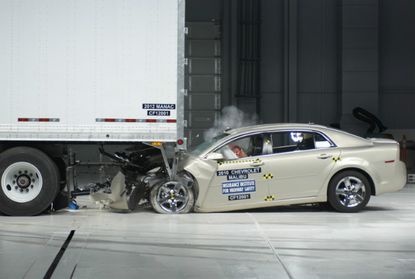 A good rule of thumb to gauge following distance
Your fleet drivers can help to avoid rear-end crashes by slowing down, increasing the distance from the vehicle in front, or passing that vehicle if it is safe to do so. They need to know that tailgating is not an option.
A common tool used to determine proper following distance is the 3-second rule. To use it, choose a fixed point that is even with the car in front of you, such as a road sign or building. If you reach that fixed point before you can count to three, you are following too closely.
Prepare your drivers before they take the wheel
While most of your drivers are aware of the importance of maintaining proper following distance, it’s beneficial to remind them periodically of your safety-first policy with timely tips such as:
Use the 3-second rule. When the road is dry and straight, the 3-second rule is a simple way to give yourself enough time to react if a car or truck in front of you stops unexpectedly.
Be aware of the weather. If the road is wet, snowy, or icy, the 3-second rule won’t apply, and you’ll need more room to stop. You must also be prepared in case a vehicle in front of you skids.
Factor in visibility. If you are traveling dusk-to-dawn, that underscores the need for headlights that are clean and work properly, and for clean and clear windshields to minimize the impact of glare.
Know the vehicle you are driving. Does it have freshly adjusted brakes and ample tire tread? If not, you’ll need more space between your vehicle and the one in front of you to slow down.
Do not engage in Distracted driving activities. Distracted driving is any activity that diverts attention from driving, including talking or texting on your phone, eating and drinking, talking to people in your vehicle, fiddling with the stereo, entertainment, or navigation system—anything that takes your attention away from the task of safe driving.
Beware - We are now in the busiest time of year for Road Construction
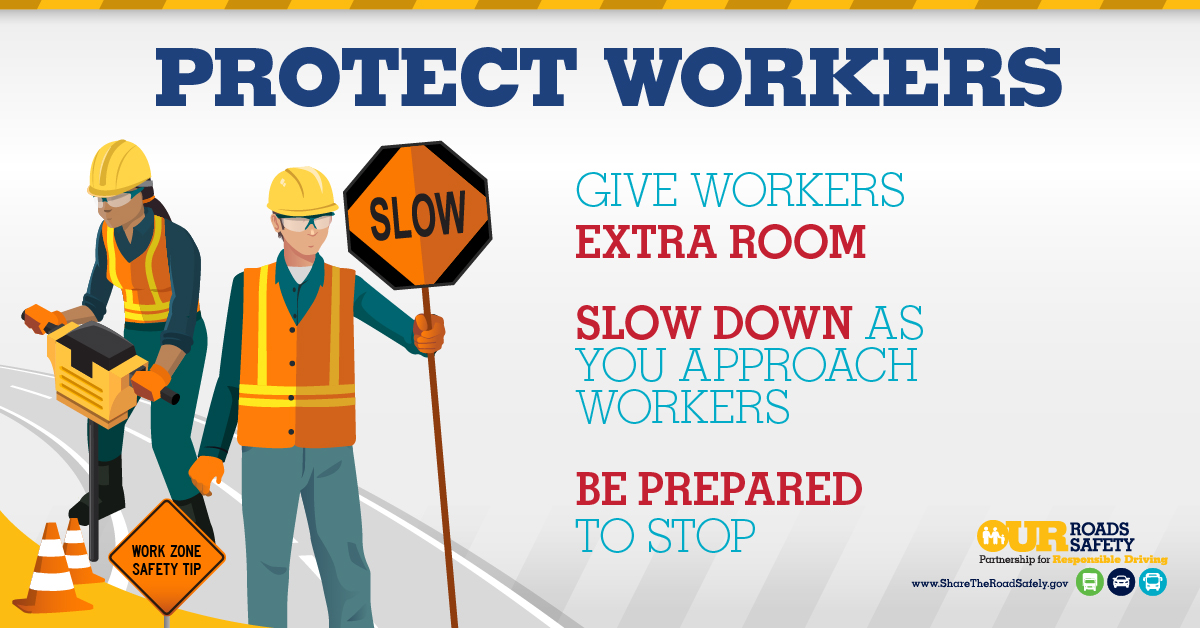 Drivers need to be especially cautious of construction zones this summer. States are making a concentrated effort to raise the awareness of the dangers in these zones. Here are some safety tips you can share with your drivers regarding construction zones:
- SLOW DOWN and be alert when approaching a “construction zone.” Get into the correct lane well in advance. Where traffic is merging into a single lane, be cautious of other motorists racing to get ahead of slowing traffic.
- Get OFF of the phone…. even Hands Free phones are distracting your ability to safely operate your truck
- PAY ATTENTION to what those orange and black warning signs are telling you to do.
- BE ALERT for the actions of other drivers.
- PAY CLOSE ATTENTION to construction equipment and workers. You never know their next move, so be prepared to stop.
- WATCH SPEED LIMITS and don’t tailgate. Double your following distance. Rear-end collisions are the most common kind of construction zone accident.
- WATCH FOR CONSTRUCTION VEHICLES entering and exiting the road in or near the construction area, as they may enter and exit at a slower speed than other traffic.
- TURN YOUR HEADLIGHTS ON as you approach a work-zone, alerting both the construction workers and other traffic around you of your presence.
- GIVE CONSTRUCTION WORKERS A BRAKE.