National School Bus Safety Week is Oct. 21-25
September 24, 2024 | Safety | By Tri-County International Trucks
The U.S. Department of Transportation’s National Highway Traffic Safety Administration (NHTSA) is urging drivers to slow down and be aware of school buses in their communities. Although school buses are one of the safest modes of transportation, injuries and fatalities do occur outside of or near the buses. Most often, these tragedies happen because motorists have failed to slow down and obey the bus’s stop sign or follow local traffic laws.
Nationwide, passing a school bus when it is stopped is illegal and poses a deadly risk to bus riders and their caretakers. Drivers should always come to a complete stop when a school bus's stop-arm is extended and its red lights are flashing. From 2013 to 2022, there were 1.5 times more fatalities among pedestrians (169) than occupants of school buses (111) in school-bus-related crashes. A total of 111 school-age children (18 and younger) died in school-bus-related crashes during that period, whether as occupants of school buses or other vehicles, or while on foot or bike. Of these 111 deaths, 25 were children who were walking.
From 2000 to 2022, there were 55 fatalities in crashes involving a driver illegally passing a stopped school bus. Almost half of these fatalities (25) were pedestrians aged 18 years or younger. When a school bus’s red lights are flashing and the stop-arm is extended, drivers must slow down and come to a complete stop. This is not a suggestion — it’s the law. Yellow flashing lights indicate that the bus is preparing to stop to load or unload children, so motorists should begin to slow down and prepare to stop their vehicles. Motorists may only start moving again when the red flashing lights are turned off, the stop-arm is withdrawn, and the bus begins to move. School bus riders and their caretakers are relying on drivers to follow the law to keep them safe.
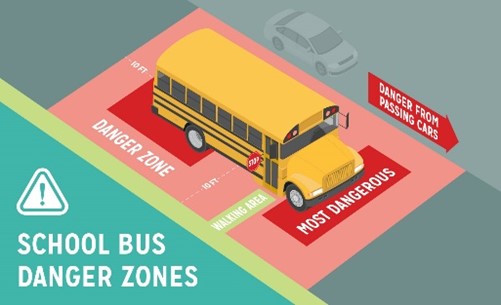
Respect the "Danger Zone"
The area around a school bus where children are at the highest risk is known as the “Danger Zone.” Specifically, this includes any area around the bus where the driver may not be able to see a child, making it particularly hazardous. The Danger Zone encompasses:
- 10 feet in front of the bus, where the driver may be too high up to see a child.
- 10 feet on either side of the bus, where a child may be in the driver’s blind spots.
- Behind the school bus.
For more information about school bus stop safety, please visit https://www.nhtsa.gov/road-safety/school-bus-safety#the-topic-bus-stop-safety