Halloween Driving Tricks to Keep Everyone Safe
October 24, 2025 | Safety | By Tri-County International Trucks
To help everyone bring home treats — not tragedies — follow these tips for a safe Halloween:
- Focus on your driving. A single distraction could lead to a tragedy.
- Stay well below the posted speed limit.
- Pay attention to what’s happening on sidewalks and roadways. Watch for children darting across streets, especially between parked cars.
- Be extra alert when pulling in and out of driveways.
- Do not assume children can see you or are paying attention. You need to take that responsibility.
- Drivers should also check that all lights on their vehicle are working properly.
- Do not pass other vehicles that have stopped in the roadway. They may be dropping off children.
- If you’re driving a group of children but staying in the running vehicle at the curb, turn on your hazard lights to alert other motorists.
- If you’re driving to a Halloween party, put your mask on after you park the car.
Parents can help motorists, too:
- Make sure drivers can see the children. Give them flashlights and glow sticks, and dress kids in bright, reflective clothing or use reflective tape on their costumes.
- Use makeup rather than masks, so children have a clear, unobstructed view of their surroundings.
- Be sure children know how to cross a street — look left, right, and left again before crossing.
- Instruct children to stay on sidewalks and to cross only at corners or crosswalks.
- Accompany your children as they trick-or-treat.
Safely Getting In or Out of a Commercial Motor Vehicle
Now is a good time to remind drivers to follow the Three-Point Rule when getting in and out of their trucks. During the winter months, footing conditions are often compromised, and the chance of slipping or falling increases.
The Three-Point Rule simply means keeping three of your four contact points (hands and feet) secured at all times to prevent slips and falls.
For example, when exiting a truck:
- Keep one hand on the cab handle,
- One hand on the interior door handle, and
- One foot on a step while the other foot is in transition.
By doing this, you always maintain three points of contact.
Idealease of Detroit/Flint sponsors the 34th Annual Golf Classic
August 5, 2025 | Events | By Tri-County International Trucks
We were honored to support such a fantastic fundraising event, which took place on Monday, August 4 at Warwick Hills Golf and Country Club. Proceeds from the event support the Hospitality House at McLaren, an organization that provides vital support to families and patients in need. We are proud to be a part of such a wonderful cause and look forward to continuing our support in the future.
CVSA's Operation Safe Driver Week
June 26, 2025 | Safety | By Tri-County International Trucks
During this week, law enforcement officers in Canada, Mexico, and the United States will be watching for both commercial motor vehicle drivers and passenger vehicle drivers who are engaging in unsafe driving behaviors, including:
-
Speeding
-
Distracted driving
-
Following too closely
-
Driving under the influence of drugs or alcohol
-
Other reckless or dangerous actions
Drivers observed engaging in these behaviors will be pulled over and may receive a warning or citation.
Focus Area: Reckless, Careless, and Dangerous Driving
This year’s campaign will place special emphasis on reckless, careless, or dangerous driving:
-
Reckless driving: Willful or wanton disregard for the safety of people or property
-
Careless/dangerous driving: Operating a vehicle without due care and attention or reasonable consideration for others on the road
The Need for Action
Traffic crash data highlights the urgency of this initiative:
-
U.S.: 42,514 fatalities in 2022 (NHTSA)
-
Canada: 1,931 motor vehicle deaths in 2022 (Transport Canada)
-
Mexico: 15,979 road deaths in 2022
Operation Safe Driver Week aims to reduce these alarming numbers by targeting unsafe driving behaviors that lead to crashes.
Education and Outreach
In addition to enforcement, the initiative includes robust driver education efforts. CVSA offers:
-
Resources for teen and new drivers
-
Tools and materials for commercial motor vehicle operators
-
Public service announcement videos available for download and distribution
For more information and resources, visit the CVSA Operation Safe Driver Program page.
Communicating with Other Drivers and Pedestrians While Driving
January 7, 2025 | Events | By Tri-County International Trucks
The following communication devices are part of your “execution arsenal”:
- Turn signals should be used to let other drivers know that you are turning, changing lanes, pulling out of a parking space, or pulling out from the curb. You should signal at least four seconds before you plan to take action.
- Emergency signals should be used to warn other drivers that you are experiencing vehicle trouble or when you must park on the shoulder of the roadway due to an emergency. This serves as a warning to other drivers to give you more space.
- The horn should be tapped lightly when trying to gain the attention of another driver or pedestrian. It should not be used to vent frustration at other drivers’ actions.
- Headlights: Many new trucks have daytime running lights that turn on automatically, helping other drivers see you. You can flash your lights at oncoming traffic to warn them of dangers ahead, such as accidents or obstructions in the roadway
Turn Signals
Use your turn signals first to indicate your intent to change lanes. Next, visually scan for adjacent traffic and road hazards, and then execute a safe lane change. By signaling your intentions well in advance, you will be in a safer position to communicate with surrounding drivers and will be able to safely execute the desired driving maneuver. A good safety practice is to signal at least four seconds prior to making a turning maneuver.
Did You Know? A recent study reported that there are approximately 630,000 lane-change crashes annually, including both large trucks and passenger vehicles.
While you certainly wouldn't know it from watching the majority of drivers, using a turn signal to indicate a lane change is generally the law.
Emergency Signals (4 Ways)
FMCSA 392.22 – Emergency signals; stopped commercial motor vehicles:
Whenever a commercial motor vehicle is stopped on the traveled portion of a highway or the shoulder of a highway for any cause other than necessary traffic stops, the driver of the stopped commercial motor vehicle must immediately activate the vehicular hazard warning signal flashers and continue flashing them until the driver has placed the warning devices required by CFR 395.22. The flashing signals should be used while the warning devices are being picked up for storage before the commercial motor vehicle is moved. The flashing lights may be used at other times while the commercial motor vehicle is stopped, in addition to, but not in place of, the warning devices required by this section.
Horn
The horn on a commercial motor vehicle is a safety device that can sometimes be the only item preventing an accident by sounding an alarm and communicating your presence to another vehicle. However, we all know of drivers who have abused the use of the horn, potentially causing an accident by startling another motorist. There have been documented instances of road rage that started with the misuse of a horn. The sounding of a horn is one of the few actions a driver can take that makes an intrusion into the driving compartment of another vehicle. Horns on commercial vehicles vary in size, from small electric (city horns) to large, exterior-mounted chrome-trumpeted air horns. Novelty horns are also popular and can play familiar tunes, such as college football fight songs.
So, what does the Federal Motor Carrier Safety Administration (FMCSA) say about a horn?
The answer is found in CFR §393.81:
Every bus, truck, truck-tractor, and every driven motor vehicle in driveaway-towaway operations shall be equipped with a horn and actuating elements, which shall be in such condition as to give an adequate and reliable warning signal.
§393.81 DOT Interpretations
Question 1: Do the FMCSRs specify what type of horn is to be used on a CMV?
Guidance: No.
Question 2: Are there established criteria in the FMCSRs to determine the minimum sound level of horns on CMVs?
Guidance: No.
Can I drive my commercial motor vehicle if the horn is not operational?
Answer: No.
Answer: CFR §392.7
Equipment, Inspection and Use.
No commercial motor vehicle shall be driven unless the driver is satisfied that the following parts and accessories are in good working order, nor shall any driver fail to use or make use of such parts and accessories when and as needed:
- Service brakes, including trailer brake control
- Parking (hand) brake
- Steering mechanism
- Lighting devices and reflectors
- Tires
- Horn
- Windshield wiper or wipers
- Rear-vision mirror or mirrors
- Coupling devices
Headlights
Many companies now have their trucks programmed to keep the low beam headlights on whenever the engine is running. Many states also have laws requiring headlights to be on whenever the windshield wipers are in use. Both of these are good safety practices.
Are your headlights on your truck "fogged" or dirty?
Do you ensure that your headlights, turn signals, and brake lights are clean during your pre- and post-trip inspections?
According to the National Institute for Traffic and Highway Safety, the number one cause of severe nighttime accidents and reduced driving safety is dim, cloudy, or improperly lit
headlights. If a headlight has ineffective or diminished light output, your nighttime driving safety is greatly at risk. A study by the University of Iowa found that a 20-50% reduction in headlight output leads to a 90% increase in the likelihood of an accident. This is a very unnecessary risk, as it is easy to either clean, replace, or fix these headlights.
Dim it!
Is flashing high beams at cars illegal?
Someone told me that flashing your headlights at a vehicle in front of you, particularly if it is going slow in the fast lane, is a citable offense. Is this true?
Yes, in some states, that is true.
The main concern with flashing headlights at an oncoming motorist is that they may be temporarily blinded, which could create blind spots for other motorists while operating their vehicles, thus creating an obviously hazardous situation.
Proper Steps to Take in Preparing for Winter Driving Conditions
December 17, 2024 | Safety | By Tri-County International Trucks
Step 1: Prepare Your Truck for Winter Driving
Tires are the most important factor in maintaining control of your vehicle in snowy and icy conditions. Traction tires on the drive axle(s) with adequate tread depth provide the best control. The tread depth and condition of the steer axle tires are also crucial for maintaining control of steering. If you are operating in areas with chain laws, ensure your chains are in good condition and ready to be installed if necessary. Additionally, make sure that all mirrors and glass on the truck are clean for optimal visibility.
Step 2: Turn Your Lights On
Turn on your lights to improve your visibility to other motorists.
Step 3: Avoid Using Cruise Control
Do not use cruise control on snowy or icy roads.
Step 4: Be Cautious on Bridges, Overpasses, and Infrequently Traveled Roads
Exercise extra caution on bridges, overpasses, and infrequently traveled roads, as these areas freeze first. Even if the temperature is above freezing, you may encounter ice on shaded areas or exposed roadways, such as bridges.
Step 5: Don’t “Pump” the Brakes
If your truck is equipped with ABS brakes, do not "pump" the brakes. Let the system function as designed.
Step 6: Drive Slowly
Driving too quickly is a leading cause of winter accidents. Just because you are driving a large truck with a heavy load doesn't make you invincible. Be sure to drive slowly and cautiously on snow- and ice-covered roads.
Step 7: Stay Alert
Maneuvering is more challenging in snowy conditions. Anticipate your next move, giving yourself plenty of room for turns and stops.
Step 8: Don’t Tailgate
Tailgating is dangerous under normal conditions, but it is especially hazardous in winter weather. Stopping takes longer on snow and ice compared to dry pavement. Leave plenty of space between your vehicle and the one in front of you. A good rule of thumb is to maintain four vehicle lengths for every 10 mph you are driving.
Step 9: Brake Before Making Turns
It is difficult to steer while applying the brakes in snowy conditions. Smoothly apply the brakes to reduce speed before entering a turn. Once you have rounded the corner, you can accelerate again.
Step 10: Drive Smoothly
Snowy and icy roads are much less forgiving than dry pavement. Avoid abrupt turns or stops, as they can cause your vehicle to lose control and skid.
Step 11: Be Familiar with Your Vehicle
It’s essential to understand your vehicle's handling characteristics, especially when driving on snow or ice. Be aware of your truck’s load and weight. As the load decreases, the vehicle’s handling on snow and ice will change.
Step 12: Learn How to Control Skids
While it’s best to practice skid control in a driving school or on a closed course, it’s also helpful to know how to react if you experience a skid under real-world conditions. When skidding, counteract your natural instincts by turning into the skid and accelerating gently. Taking your foot off the brakes and gently accelerating during a skid helps transfer weight from the front to the rear, often allowing you to regain control.
For additional information on weather and road conditions, visit the FHWA's website at http://www.fhwa.dot.gov/trafficinfo/index.htm, which provides links to weather and road condition resources, travel websites, and 511 services.
Overhead Damage: How Not to Make a Convertible Out of Your Truck or Trailer!
November 27, 2024 | Safety | By Tri-County International Trucks
Here are some tips for drivers to prevent this type of damage:
- When you call your customer for directions to their facility, keep in mind that the person giving you directions drives there every day in a car. They may not realize that the bridges and overpasses you will encounter might not be high enough for your truck. Specifically ask if the directions they provided are on a truck route and if there are any low clearances. Regardless of the information you receive, proceed with caution, as you are the one responsible for any damage caused.
- Overhead clearances are often posted in advance of most underpasses and tunnels, but be aware that new asphalt may have been laid on the road, reducing clearance by a couple of inches. Stay alert for road construction near underpasses, bridges, and tunnels.
- Just because other trucks are passing through doesn't mean your truck will fit under the bridge, tunnel, etc.
- If a marked or unmarked overpass looks low, slow down immediately, turn on your four-way flashers, and carefully approach the overpass. Stop and check your actual clearance.
- Many bridges and overpasses are not perfectly straight; the sides are often lower than the center. If possible, cross under in the inside lane.
- If you can, check the road elevation on the other side of the bridge. A sharp incline or decline could cause trouble. You may fit under the bridge while entering, but as you exit, the body or trailer could be pushed up into the bridge due to the change in road elevation.
- In winter, snow and ice on the roadway can reduce the clearance enough to cause damage.
- If you find you cannot proceed through a low overhead and traffic is congested around you, it’s better to call the police for assistance in backing out of the situation. Backing against traffic to maneuver could cause an accident.
Preparing for the Cold Weather
October 3, 2024 | Safety | By Tri-County International Trucks
Fuel Additive Use during Cold Weather Conditions
To prevent fuel jelling, additives should be added whenever the ambient temperature falls below 32°F. Power Service and Penray are two popular manufacturers of fuel additives, each offering a range of products available through Navistar and Idealease locations.
Power Service:
- The "Red Bottle," known as Power Service 911, should be used only when the fuel in a unit has already jelled.
- 911 is NOT to be used as a fuel additive that you would regularly put in the fuel tank to keep the fuel from jelling.
- Power Service Diesel Fuel Supplement + Cetane "White Bottle" is to be added to the fuel at each fill when the ambient temperature is < 30 degrees F.
- This is the additive you should use on a regular basis during the winter months.
Penray:
Winter Than Emergency Diesel Fuel Supplement
- Dissolves already gelled fuel fast and reduces clogging of fuel filters. Prevents ice crystal build-up in fuel lines and filters by disbursing moisture.
- Eliminates hard starting, pounding, excessive smoking and helps improve combustion. 100% compatible with low sulfur fuel and fuel blends.
Winter Pow-R Plus Diesel Fuel Supplement
- ULSD compliant
- Prevents diesel fuel gelling
- Prevents ice crystal formation
- Reduces cold filter plug point by up to 30 degrees
- Enhances cetane levels
- Improves fuel economy
- Utilizes HAFI® technology
- Aids cold weather starting
- Stabilizes fuel and prevents corrosion
- Helps reduce emissions
- Improves lubricity
How to Make a Cold Weather Survival Kit
Everyone should carry a Winter Survival Kit in their truck. In an emergency, it could save your life. Here is what you need:
- A shovel
- Windshield scraper and small broom
- Flashlight with extra batteries
- Battery powered radio
- Water
- Snack food including energy bars, raisins, and mini candy bars
- Cold Weather Survival Kit
- Matches and small candles
- Disposable Hand/Foot warmers
- Extra hats, socks and mittens
- First aid kit with pocket knife
- Necessary medications
- Blankets or sleeping bag
- Tow chain or rope
- Road salt, sand, or cat litter for traction
- Booster cables
- Fluorescent distress flag and whistle to attract attention
- Cell phone adapter to plug into lighter and or extra battery supply
Our fleet has the ideal truck to meet your needs
April 30, 2024 | News | By Tri-County International Trucks
With rental vehicles from Idealease of Detroit & Flint, you can handle a short-term peak in your business, or rent extra trucks when your vehicles are in the shop. Idealease of Detroit & Flint helps you meet your customers’ expectations with the right truck rental for the job—when you need it. We provide flexible daily, weekly, or monthly rental programs tailored to fit your needs. Visit our rentals page.
We're excited to offer sleeper and day cab demos featuring the new S13 engine and T14 automated transmission. These cutting-edge components work in unison to deliver superior fuel economy. Contact us today to schedule a free, one-week test drive and experience the power of innovation firsthand. Call (313) 584-7090, or click here to schedule a test drive.
Tri-County International Trucks Service Advisor Katheryn Mitchell Receives Navistar's March 2024 Service of Excellence Award
April 1, 2024 | News | By Tri-County International Trucks
Katheryn started as a cashier at Tri-County International Trucks. She did so well with the customers at the front office that she was transitioned to service administrator, and recently was promoted to service advisor. She now handles all big accounts, along with Idealease of Detroit/Flint. She does all of the Cummins and International warranties and can look up parts for technicians.
Most of the large customers will only call Katheryn on her cell phone. They love the communication level she has with them, so much so that she has received Excellent Service in all the customer reviews. If we cannot get a part, she takes the initiative to contact their service departments to see if they can help expedite getting the truck repaired in a timely manner. She has stepped up as our top service advisor. Large fleet customers come to her for her knowledge of truck issues; she knows a lot about the trucks due to doing all of the warranties for Cummins and International. Customers only want to talk to her, and most of the trust is due to the continuous communication she has with the customers all day long. Katheryn takes care of most of the 360 documentation daily to keep her customers aware. She is willing to stay in constant contact with management via e-mail or face-to-face on all the situations that she has going on with the customers so that we stay in the loop.
She is a team player, she is willing to help anyone in the office, and she is willing to help when the afternoon service advisor takes a vacation. She helps the parts department as well as any of the techs who need her to look up warranties or parts if they are busy. Tri-County International Trucks is lucky to have Katheryn on the team.
Cargo Securement Regulations
February 15, 2024 | News | By Tri-County International Trucks
Ensuring the safety of transported goods is paramount to prevent accidents and injuries. All items carried on a truck, from general cargo to equipment essential for operations, must be properly secured to avoid potential hazards.
- Familiarize with Regulations: Cargo securement standards outline the minimum safety requirements for various commodities. Obtain these regulations at no cost from the FMCSA in the U.S. or the Canadian Council of Motor Transport Administrators in Canada.
- Refer to Illustrated Handbook: Invest in a comprehensive cargo securement handbook, containing regulations from both the U.S. and Canada. Order "Practical Cargo Securement: Guidelines for Drivers, Carriers & Shippers" from CVSA’s store for detailed reference.
- Driver’s Handbook Access: Download the Driver’s Handbook on Cargo Securement and distribute copies to your drivers. Incorporate relevant sections into your company's Driver’s policy and procedures manual. Access the handbook at: Driver's Handbook on Cargo Securement
- Secure all Equipment and Load: Improper securement of equipment and cargo is a common violation. Ensure proper fastening of items like dunnage, tarps, blocks, chains, and other tie-downs.
- Tie Downs Inspection: Regularly inspect tie downs for wear and damage. CVSA’s North American Standard Out-of-Service Criteria provides guidelines for identifying defects. Discard worn-out tie downs promptly.
- Brace and Block Cargo: Proper bracing and blocking of cargo within trailers prevent shifting, which can lead to accidents and equipment damage. Shifted loads indicate violations affecting safety ratings.
- Adopt Best Practices: Follow established best practices for cargo securement, especially for unique shipments. Ensure proper containment, immobilization, or securing of the load to maintain vehicle stability and maneuverability. Consider hiring professionals for specialized vehicle loading if necessary.
- Access Regulations Online: Access FMCSA cargo securement regulations at: FMCSA Cargo Securement Regulations
Adhering to cargo securement guidelines enhances safety and minimizes risks during transportation operations.
Time to Finalize Your Accident Documentation for 2023
January 23, 2024 | News | By Tri-County International Trucks
Motor carriers operating CMVs over 10,000 lbs. MGVWR, transporting hazardous materials (HM) in placardable quantities, or transporting passengers are mandated to record accidents on a register by calendar year as defined in 49 CFR 390.51. Even if no accidents occurred, an accident register is required.
Firstly, let's establish the definition of an accident according to the Federal Motor Carrier Safety regulations: An occurrence involving a commercial motor vehicle (>10,000 lbs MGVWR, HM, or Passengers) operating on a highway in interstate or intrastate commerce that results in:
- A fatality;
- Bodily injury to a person requiring immediate medical treatment away from the scene.
- One or more motor vehicles incurring disabling damage, requiring towing away from the scene.
The term "accident" does not include:
- Boarding and alighting from a stationary motor vehicle.
- Loading or unloading of cargo.
When an accident occurs, it must be recorded on an accident register with the following information:
- Date of accident.
- City or town and State where the accident occurred.
- Driver Name.
- Number of injuries.
- Number of fatalities.
- Whether hazardous materials, other than fuel from the vehicle's tanks, were released.
Motor carriers must maintain the accident register for three years and also keep copies of required accident reports from State or other entities or insurers. The register is not sent to the FMCSA or State but is kept for review during compliance reviews or investigations.
As a best practice, motor carriers are recommended to maintain two accident registers by calendar year:
- DOT recordable accidents only.
- Non-DOT recordable accidents.
This practice helps provide the FMCSA with requested information during a compliance review. A second register with all accidents allows for proactive analysis and training to reduce frequency. Accident registers can be kept electronically, with a hard copy available for the FMCSA upon request.
To ensure register accuracy with the FMCSA, view recordable accidents on the FMCSA Compliance, Safety, and Accountability (CSA) Safety Measurement System (SMS) at FMCSA SMS.
For accidents involving the release of hazardous materials, carriers must complete a hazardous incident report (see 49 CFR 171.15 and 49 CFR 171.16). The accident registers can be kept in either paper or electronic format.
Winter Safety Tips for Drivers and Vehicles
Protecting Your Driver:
Cold weather poses risks of hypothermia and frostbite. To prevent hypothermia, take these precautions:
- Wear layers of warm, loose-fitting clothes, especially those that wick moisture.
- Use gloves and knit caps for heat retention.
- Change wet clothing promptly.
- Keep an emergency kit with a change of clothes, a blanket, hand warmers, and snacks.
- Consume hot, nutritious meals and stay hydrated.
- Avoid alcoholic beverages.
- Ensure communication for drivers in case of breakdowns in rural areas.
Prescription drugs may increase sensitivity to cold; consult with a healthcare professional.
Frostbite prevention:
- Shield skin from cold air and extreme temperatures.
- Recognize frostbite symptoms like skin color changes, numbness, and stiffness.
Protecting the Truck:
- Add diesel supplement to ultra-low sulfur diesel below 32°F.
- Plug in the engine block heater below 32°F; start unused trucks daily.
- Follow a startup procedure for optimal engine performance.
- Purge air tanks daily for trucks with air brakes.
- Apply brakes lightly in wintry conditions before parking to prevent freezing.
- Maintain full windshield washer solvent and clean windows.
- Remove ice-snow build-up from steps and grab handles.
- Use the 3-point method for entering/exiting the cab.
- Avoid parking in areas prone to snow accumulation, preventing roof collapse.
Handling Diesel Exhaust Fluid (DEF) in Cold Months:
The winter season brings unique challenges for equipment using diesel exhaust fluid (DEF). Comprising a blend of technically pure urea and purified water, DEF freezes at 11 degrees Fahrenheit and -11 degrees Celsius. Proper maintenance and dispensing are essential to uphold its quality, according to the American Petroleum Institute. Similar to water, DEF expands by up to 7% when frozen, posing a risk of damage to the storage tank if it is at or near full capacity during freezing conditions. It is advisable to keep the DEF tank less than full in cold temperatures to mitigate potential issues.
Chains for Winter Operations:
If you are driving in a state that mandates carrying chains, ensure they are of the right size, securely fastened, clean, and free from damage for easy application when needed. If you're uncertain about your state's chain laws, visit:
Idealease Safety Seminar, Employment Opportunities and National Truck Driver Appreciation Week
August 23, 2023 | Events | By Tri-County International Trucks
Idealease Safety Seminar
Tuesday, September 26
8 a.m.-4 p.m.
Idealease of Detroit/Flint will host a one-day transportation safety and compliance seminar at the Hilton Garden Inn. This event will provide you with the most current industry safety rules and regulations, and help you prepare for federal compliance interventions and reviews. Attendance to the Idealease Safety Seminar is valued at $395, but we are offering free admission to all attendees. Lunch and snacks will also be provided, and we'll have giveaways and raffles as well! All you have to do is click here to register in advance. We look forward to seeing you there!
Employment Opportunities
If you're ready for a career in the transportation industry, click here to view our job openings. We're hiring drivers, managers, mechanics and more at all Tri-County Locations.
National Truck Driver Appreciation Week
September 10-16 is National Truck Driver Appreciation Week! Read our blog and follow @tricotruck on social media for more information and announcements.
Idealease of Detroit/Flint sponsors the 32nd Annual Golf Classic
August 9, 2023 | Events | By Tri-County International Trucks
We at Idealease of Detroit/Flint are thrilled to announce our sponsorship of the 32nd Annual McLaren Golf Classic! We were honored to support such a fantastic fundraising event, which took place on Monday, August 7 at Warwick Hills Golf and Country Club. Proceeds from the event support the Hospitality House at McLaren, an organization that provides vital support to families and patients in need. We are proud to be a part of such a wonderful cause and look forward to continuing our support in the future.
Free Transportation Safety and Compliance Seminar for Truck Fleet Professionals
July 27, 2023 | Events | By Tri-County International Trucks
Free Idealease Safety Seminar
(Dearborn, Michigan, Monday, July 27) – Idealease of Detroit/Flint is sponsoring a truck fleet safety and compliance seminar from 8 a.m. to 4 p.m. on Tuesday, September 26 at the Hilton Garden Inn, located at 26000 American Dr. in Southfield. The one-day seminar will help truck fleet professionals maintain a safe fleet, provide current best practices training to their managers, reduce violations and accidents, and satisfy annual Federal Motor Carrier Safety Administration (FMCSA) compliance requirements.
The seminar is presented by Idealease, Inc. in partnership with the National Private Truck Council (NPTC). Idealease is a fully integrated transportation solutions provider that delivers expertise, responsiveness and stability to the truck transportation industry. Idealease is the leader in comprehensive safety and compliance seminars for private fleets.
The seminar provides a simplified, step-by-step approach to help attendees understand how to comply with FMCSA regulations, manage commercial motor vehicle safety, and control liability exposures. Virtually all aspects of commercial truck operation are covered, including: FMCSA driver screening tools, driving qualifications, hours of service (drivers’ daily logs), drug and alcohol testing rules, vehicle maintenance and inspection, accident recordkeeping and CSA.
After attending the seminar, private truck fleet professionals will have current information to help manage fleet safety for all major areas scrutinized during state and federal compliance interventions and reviews. The seminar’s step-by-step approach simplifies compliance with federal and state regulations, hours of service (drivers’ daily logs), drug and alcohol testing rules, vehicle maintenance and inspection, accident recordkeeping, and driver qualifications. Attendees also learn about new and proposed regulatory changes and how to enhance their safety programs above and beyond regulation requirements.
All seminar attendees receive the Idealease Guide to Transportation Safety and Compliance, a manual that assists fleet managers with safety and compliance documentation, the Idealease Pre- and Post-Trip Inspection DVD for driver education, and a subscription to the Idealease Safety Bulletin, a weekly safety and compliance e-mail publication. The seminar, valued at $395, is free for attendees who register in advance.
About Idealease of Detroit/Flint
Idealease of Detroit/Flint is a subsidiary of Tri-County International Trucks with locations across southeastern Michigan. Idealease provides commercial truck full-service lease and rental, mobile and dedicated maintenance services, and a complete portfolio of support services including: 24/7 roadside assistance, safety and compliance information and training, fuel tax reporting, licensing and permitting, and more. Idealease of Detroit/Flint operates and maintains a fleet of more than 200 vehicles with locations in Dearborn, Warren, Jackson, Flint and Livonia. Additional information is available at tricotruck.com and facebook.com/tricotruck.
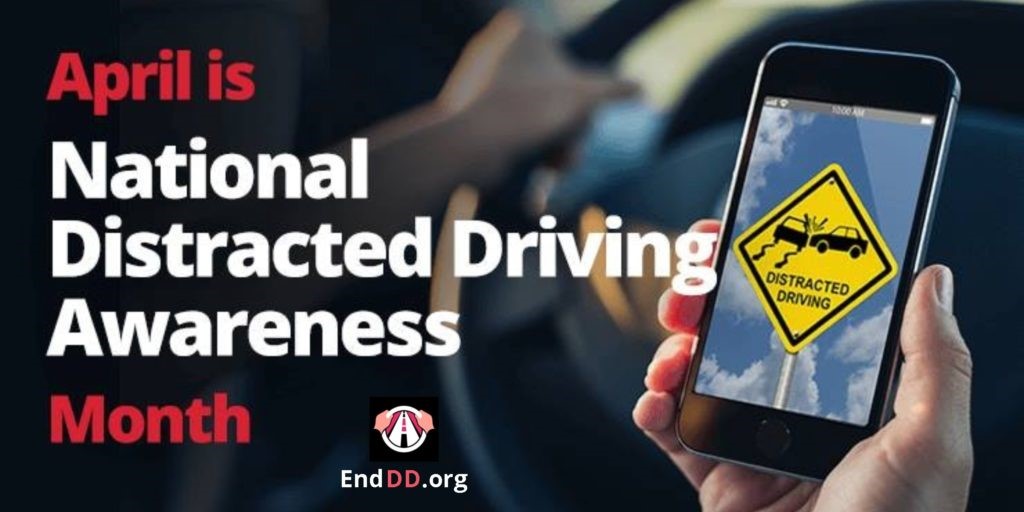
April is Distracted Driving Awareness Month
March 24, 2022 | Safety | By Tri-County International Trucks
Did you know your brain can miss seeing up to 50% of your driving environment when you talk on a cell phone? And that according to research, drivers talking on cell phones had slower reaction times than drivers with a .08 blood alcohol content. April is Distracted Driving Awareness Month and is the perfect time for motor carriers to reinforce to their drivers the dangers of distracted driving and the rules and regulations being enforced by the FMCSA.

According to these regulations, Commercial Motor Vehicle (CMV) drivers are prohibited from texting or using hand-held mobile phones while operating their vehicles. Violations can result in fines and/or disqualifications and will impact a motor carrier’s and/or driver’s Safety Management System (SMS) results. Texting means manually entering alphanumeric text into, or reading text from, an electronic device. The rules also restrict a CMV driver from reaching for or holding a mobile phone to conduct voice communication, as well as dialing by pressing more than a single button. CMV drivers who use a mobile phone while driving can only operate a hands-free phone located in proximity. In short, the rule prohibits unsafely reaching for a device, holding a mobile phone, or pressing multiple buttons.
The rules impose sanctions for driver offenses, including civil penalties up to $2,750 and disqualification for multiple offenses. It also prohibited motor carriers from requiring or allowing their drivers to text or use a hand-held mobile phone while driving and may be subject to civil penalties up to $11,000. Violations will impact SMS results.
This month reinforce to your drivers the dangers of distracted driving.
It’s very easy to comply with the rules: No REACHING No HOLDING No DIALING No TEXTING No READING
Banning Distracted Driving: An Employer's Guide to Protect Employees and Liability
- Implement a clear policy indicating that the employer does not require employees to answer calls while they are on the road. This includes the employer placing calls to employees while they are driving.
- Encourage your employees to plan their trips to include stops so they can safely return calls and emails.
- Establish a company policy that makes it unnecessary for employees to text while driving to fulfill their job duties.
- Eliminate any incentives that may encourage employees to text/talk while operating a vehicle.
- Communicate your state's regulations and associated fines to employees.
- Encourage employees to sign an anti-distracted driving pledge.
- Designate company vehicles as "distraction-free zones."
For additional information on distracted driving click here
Truck Driver Daily Vehicle Inspection Reporting
January 25, 2022 | Safety | By Tri-County International Trucks
The Driver Daily Vehicle Inspection (DVIR) is part of a driver’s daily responsibility to protect themselves, the motoring public, and the equipment they operate. But does your driver know the difference between a “defect” and a “safety sensitive” defect?
Drivers and technicians need to understand the Federal Motor Carrier Safety Regulations contained in CFR 399 Appendix G that defines “safety-sensitive” defects that would render the unit out of service during a pre-or post-trip inspection.
Here is the Guidance for FMCSA CFR 396.11:
Question 6: Does §396.11(c) require a motor carrier to effect repairs of all items listed on a DVIR prepared by a driver before the vehicle is subsequently driven?
Guidance: The motor carrier must affect repairs of defective or missing parts and accessories listed in Appendix G to the FMCSRs before allowing the vehicle to be driven.
The Drivers Daily Inspection Processes are a requirement of the Federal Motor Carrier Safety Regulations to ensure the vehicle is in safe operating condition.
A crucial part of each driver’s daily operation is to inspect the commercial vehicle they are operating. Over the years there has been confusion regarding pre-and post-trip inspections. Let us start with the pre-trip inspection. FMCSA regulations CFR 396.13 state that before driving a motor vehicle, the driver shall:
- Be satisfied that the vehicle is in safe operating condition
- Review the last driver vehicle inspection report
- Sign the report, only if it's the driver who prepared the report, to acknowledge that the driver has reviewed it and that there is a certification that the required repairs have been performed, noted defects or deficiencies. The signature requirement does not apply to listed defects on a towed unit, which is no longer part of the vehicle combination.
Does the pre-trip inspection need to be documented? Although the pre-trip is not required by regulation to be documented, it is a good idea to document the inspection; I recommend that the pre-trip inspection be “flagged” on the driver’s record of duty status in the “Grid” section.
Now let us take a look at the post-trip inspection. The FMCSA CFR 396.11 requires that every driver report, and prepare a report in writing at the completion of each day’s work on each vehicle operated, and that report (DVIR) shall cover the following parts and accessories:

https://whiparound.com/blog/importance-post-trip-inspection
- Service brakes including trailer brake connections
- Parking (hand) brake
- Steering Mechanism
- Lighting devices and reflectors
- Tires
- Horn
- Windshield Wipers
- Rear vision mirrors
- Coupling devices
- Wheels and rims
- Emergency equipment
The report shall identify the vehicle and list any defect or deficiency in the vehicle that would affect the safe operation of the vehicle or cause a mechanical breakdown. 95% of all driver inspections do not have defects. In 2014 the Obama administration, to save trees, removed the regulation that a driver documents the post-trip inspection even if there are no defects. However, most companies still require the driver to complete and sign the DVIR upon completion even with no defects.
Now if there are defects or deficiencies noted by the driver the motor carrier is required to correct or cause to have corrected the defects or deficiencies of the CMV prior to allowing or permitting the operation of the vehicle. Does this mean all defects and deficiencies must be corrected? NO, only those as outlined in appendix G of the FMCSR that would directly affect the safe operation of the CMV. Technicians, drivers, and service managers should all become familiar with Appendix G to determine which defect/deficiencies must be corrected immediately and which can be held off until the next PM or later date. Once the defect /deficiency(s) have been corrected the original DVIR is required to be “certified” as corrected or that the correction was unnecessary. The DVIR is then to be signed by the repairing technician. The “certification” is required to be on all copies of the DVIR. The driver is to retain the previous days' DVIR on the CMV and the motor carrier is required to maintain all DVIRs for ninety days.
If you have not reviewed Appendix G of FMCSA CFR 399 with your drivers, I would recommend that you include this information in your next driver safety meeting.
Click here to read Appendix G.
To further assist your drivers with a quality pre-post trip inspection our Idealease Pre-Post Trip inspection driver training videos are available for both straight trucks and tractor-trailers in both English and Spanish on YouTube.
Use the following links to access the training videos:
Does Your Driver Know the Difference Between A "Defect" and a "Safety Sensitive" Defect?
March 26, 2021 | Safety | By Tri-County International Trucks
The Drivers Daily Vehicle Inspection (DVIR) is part of a driver’s daily responsibility to protect themselves, the motoring public, and the equipment they operate. But does your driver know the difference between a “defect” and a “safety sensitive” defect?
Drivers and technicians need to understand the Federal Motor Carrier Safety Regulations contained in CFR 399 Appendix G that defines “safety sensitive” defects that would render the unit out of service during a pre or post-trip inspection.
Here is the Guidance for FMCSA CFR 396.11:
Question 6: Does §396.11(c) require a motor carrier to effect repairs of all items listed on a DVIR prepared by a driver before the vehicle is subsequently driven?
Guidance: The motor carrier must effect repairs of defective or missing parts and accessories listed in Appendix G to the FMCSRs before allowing the vehicle to be driven.
The Drivers Daily Inspection Processes are a requirement of the Federal Motor Carrier Safety Regulations to insure the vehicle is in safe operating condition.
A crucial part of each and every driver’s daily operation is to inspect the commercial vehicle they are operating. Over the years there has been confusion regarding pre and post trip inspections. Let’s start with the pre-trip inspection. FMCSA regulations CFR 396.13 state that before driving a motor vehicle, the driver shall:
(a) Be satisfied that the vehicle is in safe operating condition;
(b) Review the last driver vehicle inspection report; and
(c) Sign the report, only if the driver who prepared the report, to acknowledge that the driver has reviewed it and that there is a certification that the required repairs have been performed, noted defects or deficiencies. The signature requirement does not apply to listed defects on a towed unit, which is no longer part of the vehicle combination.
Does the pre-trip inspection need to be documented? Although the pre-trip is not required by regulation to be documented, it is a good idea to document the inspection; I recommend that the pre-trip inspection be “flagged” on the driver’s record of duty status in the “Grid” section.
Now let’s take a look at the post trip inspection. The FMCSA CFR 396.11 requires that every driver report, and prepare a report in writing at the completion of each day’s work on each vehicle operated and that report (DVIR) shall cover the following parts and accessories:
(a) Service brakes including trailer brake connections
(b) Parking (hand) brake
(c) Steering Mechanism
(d) Lighting devices and reflectors
(e) Tires
(f) Horn
(g) Windshield Wipers
(h) Rear vision mirrors
(i) Coupling devices
(j) Wheels and rims
(k) Emergency equipment
The report shall identify the vehicle and list any defect or deficiency in the vehicle that would affect the safe operation of the vehicle or cause a mechanical breakdown. If there are no defects or deficiencies the driver shall so indicate on the DVIR. In all instances the driver is required to sign the DVIR upon completion.
Now if there are defects or deficiencies noted by the driver the motor carrier is required to correct or cause to have corrected the defects or deficiencies of the CMV prior to allowing or permitting the operation of the vehicle. Does this mean all defects and deficiencies have to be corrected? NO, only those as outlined in appendix G of the FMCSR that would directly affect the safe operation of the CMV. Technicians, drivers and service managers should all become familiar with appendix G to determine which defect/deficiencies must be corrected immediately and which can be held off until the next PM or later date. Once the defect /deficiency(s) have been corrected the original DVIR is required to be “certified” as corrected or that the correction was unnecessary. The DVIR is then to be signed by the repairing technician. The “certification” is required to be on all copies of the DVIR. The driver is to retain the previous days DVIR on the CMV and the motor carrier is required to maintain all DVIRs for ninety days.
If you have not reviewed Appendix G of FMCSA CFR 399 with your drivers I would recommend that you include this information in your next driver safety meeting.
Click here to view Appendix G.
Do Your Drivers Need Training on Performing a Proper Pre and Post Trip Inspection?
Idealease has this training available for you!
English:
Tractor Trailer
Straight Truck
Spanish:
Straight Truck
Tractor Trailer
Turn Around, Don’t Drown!
The South has been inundated in the past month with unprecedented storms that have brought tornados, high winds, and torrential rains.
Whether you are driving or walking, if you come to a flooded road, Turn Around, Don't Drown. You will not know the depth of the water, nor will you know the condition of the road under the water.
- If flooding occurs, get to higher ground. Get out of areas subject to flooding. This includes dips, low spots, canyons, washes etc.
- Avoid areas already flooded, especially if the water is flowing fast. Do not attempt to cross flowing streams. Turn Around Don't Drown
- Road beds may be washed out under flood waters. NEVER drive through flooded roadways. Turn Around Don't Drown If your vehicle is suddenly caught in rising water, leave it immediately and seek higher ground.
- Do park your vehicle along streams and washes, particularly during threatening conditions.
- Be especially cautious at night when it is harder to recognize flood dangers
- Avoid low water crossings.
- Use alternate routes to avoid flood prone areas.
- Leave your vehicle immediately if it stalls in flood waters.
- Move to higher ground if you can do so safely.
- Most cars and light trucks will begin to float in as little as 1 to 2 feet of water.
- 6” of fast moving water can knock and adult down and carry them away
- 12” of fast moving water can take a small car and carry it away
- 18”-24” of fast moving water can take a large SUV and carry it way
To check on weather conditions and flooding, go the National Weather Service website.
FMCSA Releases More Entry-Level Driver Training Information
The Federal Motor Carrier Safety Administration (FMCSA) has released new information related to the new entry-level driver training (ELDT) requirements, set to go into effect in less than a year.
With the opening of the ELDT Training Provider Registry (TPR) slated for this summer, FMCSA has released details on what information a training provider will be required to submit to be listed on the TPR. Being listed on the TPR is a requirement to provide ELDT as of February 7, 2022.
When registering on the TPR, information training providers will need to provide includes:
Provider name and contact information;
Facility name and contact information;
Type of provider (for-hire/not-for-hire, in-house/not-in-house);
Type of training provided;
·Average training hours;
Third-party affiliations, certifications, or accreditations;
Average training cost; and
Self-certification that the provider meets all requirements.
If a training provider operates more than one location, each location will need to register. No fee will be required to register on the TPR.
Additional information on the TPR may be accessed via the ELDT website.
Key to remember: As of February 7, 2022, to provide instruction to an individual wanting to obtain Class A or B CDL, upgrade from a Class B to Class A CDL, or obtain a passenger, school bus, or hazmat endorsement, an entity must meet all of the ELDT requirements and must be listed on the TPR. Without this listing, an entity's training program will not be recognized when an individual attempts to register for the CDL skills test, passenger or school bus endorsement skills test, or hazmat endorsement written test. The individual will be denied the test until he or she has proof of successfully completing a course of instruction, provided by an entity listed on the TPR.
The Drivers Daily Vehicle Inspection (DVIR)
February 19, 2021 | Safety | By Tri-County International Trucks
The Drivers Daily Vehicle Inspection (DVIR) is part of a driver’s daily responsibility to protect themselves, the motoring public, and the equipment they operate. But does your driver know the difference between a “defect” & a “safety sensitive” defect?
Drivers and technicians need to understand the Federal Motor Carrier Safety Regulations contained in CFR 399 Appendix G that defines “safety sensitive” defects that would render the unit out of service during a pre- or post-trip inspection.
Here is the Guidance for FMCSA CFR 396.11:
Question 6: Does §396.11(c) require a motor carrier to effect repairs of all items listed on a DVIR prepared by a driver before the vehicle is subsequently driven?
Guidance: The motor carrier must affect repairs of defective or missing parts and accessories listed in Appendix G to the FMCSRs before allowing the vehicle to be driven.
The Drivers Daily Inspection Processes are a requirement of the Federal Motor Carrier Safety Regulations to ensure the vehicle is in safe operating condition.
A crucial part of each driver’s daily operation is to inspect the commercial vehicle they are operating. Over the years there has been confusion regarding pre- and post-trip inspections. Let us start with the pre-trip inspection. FMCSA regulations CFR 396.13 state that before driving a motor vehicle, the driver shall:
(a) Be satisfied that the vehicle is in safe operating condition.
(b) Review the last driver vehicle inspection report; and
(c) Sign the report, only if the driver who prepared the report, to acknowledge that the driver has reviewed it and that there is a certification that the required repairs have been performed, noted defects or deficiencies. The signature requirement does not apply to listed defects on a towed unit, which is no longer part of the vehicle combination.
Does the pre-trip inspection need to be documented? Although the pre-trip is not required by regulation to be documented, it is a good idea to document the inspection; I recommend that the pre-trip inspection be “flagged” on the driver’s record of duty status in the “Grid” section.
Now let us take a look at the post trip inspection. The FMCSA CFR 396.11 requires that every driver report, and prepare a report in writing at the completion of each day’s work on each vehicle operated and that report (DVIR) shall cover the following parts and accessories:

(a) Service brakes including trailer brake connections
(b) Parking (hand) brake
(c) Steering Mechanism
(d) Lighting devices and reflectors
(e) Tires
(f) Horn
(g) Windshield Wipers
(h) Rear vision mirrors
(i) Coupling devices
(j) Wheels and rims
(k) Emergency equipment
The report shall identify the vehicle and list any defect or deficiency in the vehicle that would affect the safe operation of the vehicle or cause a mechanical breakdown. 95% of all driver inspections do not have defects. In 2014 the Obama administration to save trees, removed the regulation that a driver documents the post trip inspection even if there are no defects. However, most companies still require the driver to complete and sign the DVIR upon completion even with no defects.
Now if there are defects or deficiencies noted by the driver the motor carrier is required to correct or cause to have corrected the defects or deficiencies of the CMV prior to allowing or permitting the operation of the vehicle. Does this mean all defects and deficiencies must be corrected? NO, only those as outlined in appendix G of the FMCSR that would directly affect the safe operation of the CMV. Technicians, drivers and service managers should all become familiar with appendix G to determine which defect/deficiencies must be corrected immediately and which can be held off until the next PM or later date. Once the defect /deficiency(s) have been corrected the original DVIR is required to be “certified” as corrected or that the correction was unnecessary. The DVIR is then to be signed by the repairing technician. The “certification” is required to be on all copies of the DVIR. The driver is to retain the previous days DVIR on the CMV and the motor carrier is required to maintain all DVIRs for ninety days.
If you have not reviewed appendix G of FMCSA CFR 399 with your drivers, I would recommend that you include this information in your next driver safety meeting.
Click here to read Appendix G.
To further assist your drivers with a quality pre-post trip inspection our Idealease Pre-Post Trip inspection driver training videos are available for both straight trucks and tractor trailers in both English and Spanish on YouTube.
Use the following links to access the training videos:

Question of the Week
Will Commercial Vehicle Safety Alliance (CVSA) inspectors be checking the newly established FMCSA Drug and Alcohol Clearing House to check the status of your driver during a roadside inspection?
Answer: Yes, click here to see the bulletin that was sent by the CVSA to enforcement personnel.
FMCSA Extends Emergency Declaration to May 31
The Federal Motor Carrier Safety Administration has extended its Emergency Declaration related to the COVID-19 national emergency through May 31, 2021.
Under the Emergency Declaration, motor carriers and drivers providing direct assistance in support of relief efforts related to the COVID-19 public health emergency are granted emergency relief from Parts 390 through 399 of the FMCSRs, except as otherwise restricted.
The extension of the expanded modified Emergency Declaration No. 2020-002 provides regulatory relief for commercial motor vehicle operations providing direct assistance in support of emergency relief efforts related to COVID-19 and is limited to transportation of:
- livestock and livestock feed;
- medical supplies and equipment related to the testing, diagnosis and treatment of COVID-19;
- vaccines, constituent products, and medical supplies and equipment including ancillary supplies/kits for the administration of vaccines, related to the prevention of COVID-19;
- supplies and equipment necessary for community safety, sanitation, and prevention of community transmission of COVID-19 such as masks, gloves, hand sanitizer, soap and disinfectants; and
- food, paper products and other groceries for emergency restocking of distribution centers or stores. Direct assistance does not include routine commercial deliveries, including mixed loads with a nominal quantity of qualifying emergency relief added to obtain the benefits of this emergency declaration.
Direct assistance means transportation and other relief services provided by a motor carrier or its driver(s) incident to the immediate restoration of essential services (such as medical care) or essential supplies related to COVID-19 during the emergency.
FMCSA Extends and Modifies COVID-19 Waiver for CDLs and Med Cards
In response to the continued COVID-19 health emergency, the Federal Motor Carrier Safety Administration (FMCSA) is extending and modifying a waiver that covers expired drivers' licenses and medical certification.
The revised waiver is in effect March 1, 2021, and expires May 31, 2021, or upon the revocation of the Declaration of National Emergency, whichever is sooner. The previous waiver is due to expire on February 28, 2021.
Terms of the licensing waiver
The licensing portion of the waiver applies to interstate and intrastate commercial driver's license (CDL) and learner's permit (CLP) holders.
The waiver permits, but does not require, states to extend the validity of licenses due to the COVID-19 public health emergency. The final decision is left to the discretion of individual states. Carriers and drivers should dialog with the state driver's licensing agency (SDLA) to learn whether FMCSA's waiver is applicable.
States opting to implement the relief provided by the waiver may extend licenses until May 31, 2021, delaying the requirements in §§383.73 and 383.25.
The waiver permits states to:
- Extend CDLs due for renewal on or after March 1, 2020, beyond the 8-year maximum period;
- Extend CLPs due for renewal on or after March 1, 2020, beyond the 1-year maximum without requiring the driver to retake the general and endorsement knowledge tests; and
- Waive the 14-day waiting period for CLP holders to take the CDL skills test.
- The waiver does not apply to a CDL or CLP holder if the driver's privileges have been suspended or withdrawn for traffic offenses or if the driver is otherwise disqualified to operate a CMV.
- Terms of the medical certification waiver
- Drivers who are required to have a medical card (i.e., CDL holders, CLP holders, and non-CDL drivers) must meet specific criteria in order to extend their medical certification through May 31, 2021.
Under the revised waiver, a driver can qualify to get an extension on an expiring medical card if:
- His or her existing medical card expired on or after December 1, 2020;
- The existing medical card was issued for at least 90 days;
- The driver has not been diagnosed with a disqualifying medical condition since the previous medical exam; and
- The driver carries a copy of his or her expired medical certificate and any required variance.
- CDL and CLP holders that qualify also are waived from the requirement to provide their SDLA with a copy of a new medical examiner's certificate before the previous certification expires. SDLAs have been waived from having to downgrade a CDL or CLP holder's license for failure to provide this proof of current medical qualifications.

Reporting accidents
Each motor carrier must notify FMCSA within five business days of an accident (as defined in §390.5), involving any CDL holder, CLP holder, or non-CDL driver operating under the terms of this waiver.
FMCSA reserves the right to revoke this waiver for drivers' involvement in accidents, motor carriers' failure to report accidents, and drivers' failure to comply with the restrictions of this waiver.
FAQ's Idealease V1
January 1, 2021 | Safety | By Tri-County International Trucks
What documentation is required to be kept in the vehicle of units I have from Idealease showing that the vehicle is a lease or rented vehicle?
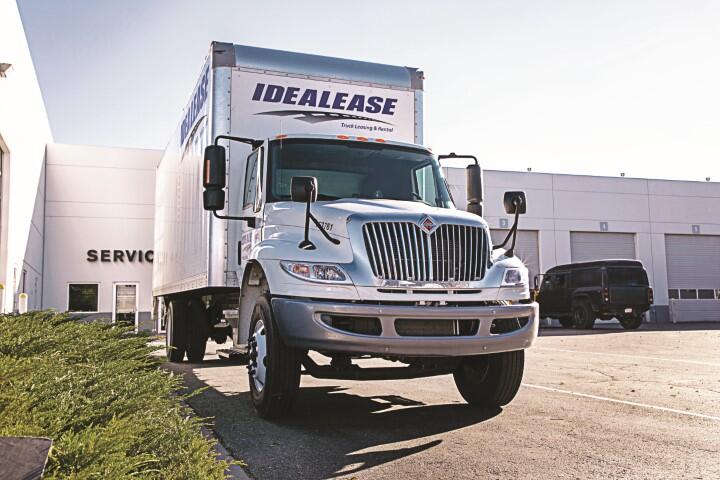
Answer: If the vehicle is subject to the Federal Motor Carrier Safety (FMCSA) regulations (greater than 10,000 lbs MGVWR) then a document is required to be in the unit for the duration of the lease or rental.
Lease vehicles are subject to the FMCSA regulation CFR 376.11(c) stating that a copy of the lease or certified statement of lease with the required information is to be kept on the unit during the lease period.
Rental vehicles are subject to the FMCSA regulation CFR 390.21(e)(2)(iv) stating that a copy of the rental agreement is to be carried on the unit for the duration of the rental.
My driver is complying with the ELD regulations, and the commercial vehicle they are driving becomes disabled, so they need to operate a rental. What are the ELD exemptions that would allow them to complete paper logs for operating a rental unit?
Answer:
1. Drivers who have a rental vehicle for 8 days or less (FMCSA letter of exemption must be available to an officer upon request)
2. Drivers who use paper logs for not more than 8 days during any rolling 30-day period
3. Drivers who conduct driveaway-towaway operations, where the vehicle is the product being delivered
4. Drivers of vehicles manufactured before model year 2000
5. Drivers who operate using the logbook exception (i.e. short-haul 100 air mile CDL and 150 air miles Non-CDL drivers) and can comply to the exception 22 days out of a rolling 30 day period
6. INTRAstate operations (Depending on your states timeline for adopting the ELD regulation)
I use a driver leasing company; who is responsible for the compliance with the Federal Motor Carrier regulations?
Answer: Driver services and driver leasing companies are not motor carriers and are not responsible for compliance with the regulations. The driver service or leasing company may complete activities such as driver qualification files, annual reviews, road tests, etc. at the direction of the motor carrier. However, keep in mind that you the motor carrier are responsible for any non-compliance with the FMCSA regulations.
As a driver, am I responsible to see that the cargo in my truck is properly secured even if I do not load it?
Answer: YES, The FMCSA Regulations state in CFR 392.9(a)(1) a) General. A driver may not operate a commercial motor vehicle and a motor carrier may not require or permit a driver to operate a commercial motor vehicle unless-(a)(1) The commercial motor vehicle's cargo is properly distributed and adequately secured as specified in §§ 393.100 through 393.142 of this subchapter.
Do I need a CDL license to operate that truck?
Answer: The regulations that address this question are found in FMCSA CFR 383.3.
§383.3 Applicability:
(a) The rules in this part apply to every person who operates a commercial motor vehicle (CMV) in interstate, foreign, or intrastate commerce, to all employers of such persons, and to all States.
The definition for a commercial motor vehicle for this regulation is as follows:
Commercial motor vehicle (CMV) means a motor vehicle or combination of motor vehicles used in commerce to transport passengers or property if the motor vehicle-
(a) Has a gross combination weight rating of 11,794 kilograms or more (26,001 pounds or more) inclusive of a towed unit(s) with a gross vehicle weight rating of more than 4,536 kilograms (10,000 pounds); or
(b) Has a gross vehicle weight rating of 11,794 or more kilograms (26,001 pounds or more); or
(c) Is designed to transport 16 or more passengers, including the driver; or
(d) Is of any size and is used in the transportation of hazardous materials as defined in this section.
What are the disqualifications that would prevent a driver from receiving clearance in the security threat assessment process for a Hazardous Materials endorsement?
Answer: Conviction of any of the following crimes will disqualify a driver from being eligible for a hazmat endorsement:
- Terrorism, Assault with intent to murder, Murder, Espionage, Sedition, Kidnapping or hostage-taking, Treason, Rape or aggravated sexual abuse, Extortion, Robbery, Arson, Bribery, Smuggling, Immigration violations, RICO (Racketeer Influenced and Corrupt Organizations Act) violations, Unlawful possession, use, sale, distribution, or manufacture of an explosive device, firearm, or other weapon ,Distribution of, intent to distribute, possession, or importation of a controlled substance, Dishonesty, fraud, or misrepresentation, including identity fraud, Crimes involving a severe transportation security incident, Improper transportation of a hazardous material, Conspiracy or attempt to commit any of these crimes
All drivers who need to renew their hazardous material endorsement or apply for a new HM endorsement on their CDL need to complete the “Security Threat Assessment” process. It is recommended that drivers start this process 90 days prior to the expiration of their license. To start the assessment process, click here.
What do the FMCSA regulations say about my driver who has a current medical certificate but has developed a medical condition that would make the operation of a commercial motor vehicle (CMV) questionable and possibly unsafe?
FMCSA regulations prohibit a driver from beginning or continuing to drive if their ability and/or alertness is impaired by: fatigue, illness, or any cause that makes it unsafe to begin (continue) to drive a commercial vehicle.
Even if a driver currently has a valid medical certificate, the driver is prohibited from driving a CMV with any medical condition that would be disqualifying or may interfere with the safe operation of a CMV. Once a disqualifying medical condition is resolved, and before resuming operation of CMV, a driver is responsible for obtaining re-certification from a Medical Examiner. FMCSA CFR 391.45

Alcohol, Drivers, and the Holidays
Now is a good time to remind your drivers of the consequences of drinking during the holiday season and what effect their actions can have on their CDL or operator's license and ultimately their employment with your company. Advise your drivers to use caution when indulging in alcoholic beverages and have a designated driver to not only protect their license and job but the motoring public. The FMCSA regulations are specific that a CDL driver while operating any type of motor vehicle is convicted of being under the influence of alcohol as described by state law will be disqualified from operating a commercial motor vehicle for one year. A second conviction would disqualify the driver from operating a commercial motor vehicle for life.
When is Alcohol Use Prohibited for a commercial driver?
Answer: Alcohol is a legal substance; therefore, the rules define specific prohibited alcohol-related conduct. Performance of a safety-sensitive function such as driving is prohibited:
- While using alcohol
- While having a blood alcohol concentration of 0.04 percent or greater as indicated by a breathalyzer test
- Within four hours after using alcohol
In addition, refusing to submit to an alcohol test or consuming alcohol within eight hours after an accident or until tested (for drivers required to be tested) are prohibited.
Do you or your drivers have a CDL or medical card that expired due to the COVID pandemic this year? If so, you only have a few more weeks to renew them.
Although the commercial drivers’ license and medical card waivers that FMCSA issued in the spring were extended once, the agency is not expected to issue a further extension. This means that anyone who is currently driving with a CDL or medical card that expired on or after March 1, 2020 must have those documents renewed by the end of the year.
Any driver found driving with an expired CDL or medical card after the waiver expiration date of December 31, 2020 could be issued a fine and pulled from service.
Are Your Drivers Operating Their Liftgate Safely?
December 23, 2020 | Safety | By Tri-County International Trucks
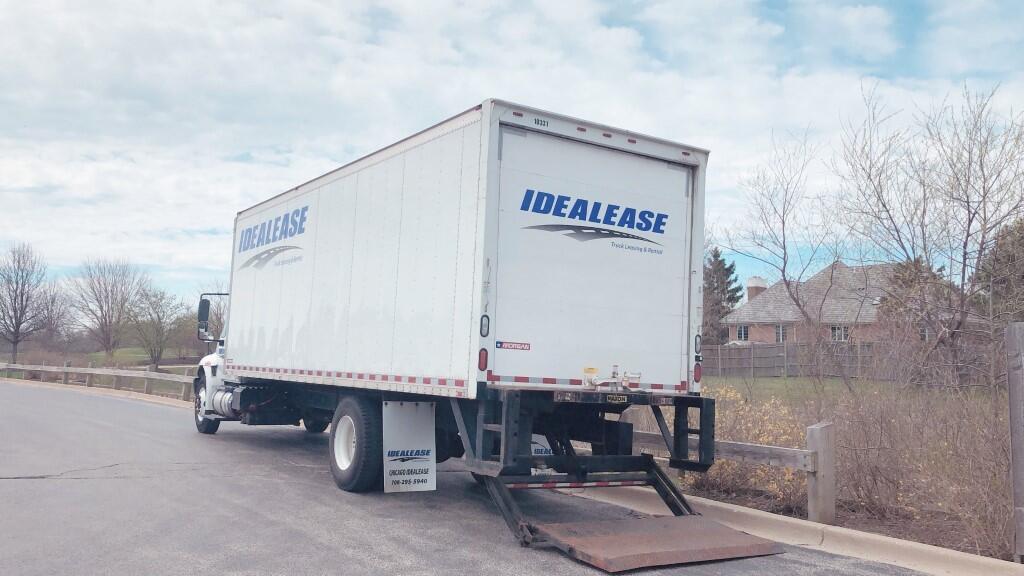
When we are training our drivers regarding safety, one area that is often overlooked is the safe operation of the liftgate. Like any other piece of powered, automated equipment, drivers must learn to safely operate liftgates. There are numerous types of liftgates, and each may have its own unique hazards. Liftgates are potentially hazardous and should only be used by employees who have been trained or familiarized to operate them safely. Common injuries include amputated fingers and toes; crushed feet; a runaway load that falls over or off the liftgate onto an employee trying to steady it either next to or below the load. It is always important to read the specific manual for your make and model, however, here are some Best Practices safety tips for liftgate operation.
LIFTGATE SAFETY: DOs and DON'Ts
DO:
Make sure all drivers or operators of the liftgate are properly trained before being allowed to operate the liftgate.
Be certain vehicle is properly and securely braked before using the lift gate.
Choose a level surface area whenever possible to operate the gate.
Consider the safety and location of bystanders and location of nearby objects when operating the liftgate. Stand to one side of platform while operating the liftgate.
Make sure the platform surface is clear of ice, snow, and is kept slip resistant.
Keep hands and feet clear of all pinch points. There is a shear or pinch point exposure during lift-gate operations. Take note of where the lift-gate and the truck bed meet. Feet and hands are particularly vulnerable, during raising and lowering of the lift-gate.
Use chocks to prevent loads from rolling off the gate.
Secure top-heavy loads with strapping to prevent the item from tipping or rolling off.
Correctly stow platform when not in use. Extended platforms could create a hazard for people and vehicles passing by.
Make certain platform is properly latched when in transit.
Operate the lift gate with the control switches only.
Read and follow WARNING DECALS, OPERATION DECALS and OWNER’S MANUAL.
Visually inspect the lift gate daily as part of your pre-trip inspection.
Write up any defects to the liftgate on your daily vehicle inspection report and report to Idealease maintenance personnel immediately.
Tell Idealease maintenance personnel when adjustment to the liftgate is needed.
Keep all decals in place and legible and retain the Owner’s Manual in the Vehicle.
DON’T:
Allow the lift gate to be used by persons not familiar with its operation.
Use the lift-gate for any purpose other than to lift or lower cargo from the truck. Never use lift-gates as a personnel lift.
Use the lift gate if unit shows signs of abuse or fails to operate freely.
Permit the motor to run after the lift gate is raised to bed level.
Overload the lift gate. (Refer to the capacity chart for proper capacity of lift gate.)
Allow any part of your body to be placed under, within, or around any portion of the moving liftgate or its mechanisms, or in a position that would trap them between the platform and the floor of truck body (or between platform and the ground) when liftgate is operating.
Drive a forklift on the liftgate platform.
Drive with the lift-gate down. It must be folded up and secured before the truck moves.
Allow the lift gate to be used by persons not familiar with its operation.
Use the lift-gate for any purpose other than to lift or lower cargo from the truck. Never use lift-gates as a personnel lift.
Use the lift gate if unit shows signs of abuse or fails to operate freely.
Permit the motor to run after the lift gate is raised to bed level.
Overload the lift gate. (Refer to the capacity chart for proper capacity of lift gate.)
Allow any part of your body to be placed under, within, or around any portion of the moving liftgate or its mechanisms, or in a position that would trap them between the platform and the floor of truck body (or between platform and the ground) when liftgate is operating.
Drive a forklift on the liftgate platform.
Drive with the lift-gate down. It must be folded up and secured before the truck moves.
In addition, all our Idealease preferred liftgate suppliers have safe operating videos available.
Maxon www.maxonlift.com
Anthony www.anthonyliftgates.com
Waltco www.hiab.com/en-us/products/liftgates
Palfinger www.palfinger.com/en-us/products/liftgates
Maxon www.maxonlift.com
Anthony www.anthonyliftgates.com
Waltco www.hiab.com/en-us/products/liftgates
Palfinger www.palfinger.com/en-us/products/liftgates
First Year of DOT Clearinghouse Annual Query Deadline is Approaching Soon!
The first annual DOT Clearinghouse deadline is only a few weeks away, with annual queries for all DOT-regulated CDL drivers due by January 5, 2021. If you have not yet run a query on each CDL driver you employ, (including yourself if you are an owner operator) you must do so by this date.
Failure to run these annual queries could lead to fines of up to $2,500 per driver.
The latest FMCSA Clearinghouse data suggests that there are still many employers and drivers who haven’t yet registered for the Clearinghouse, which could create a demand similar to the one we saw earlier this year when the system became overwhelmed by the large volume of traffic trying to register and login to the site. If this occurs in the weeks leading up to the deadline, as projected, it could make it difficult for employers to meet their requirements before the deadline.
Our suggestion? Take care of this requirement now before the surge occurs.

About the Annual Clearinghouse Query
Starting this year, employers must run at least one Clearinghouse query on each of their CDL drivers annually, with the first query due by the first anniversary date of the Clearinghouse. You have the option of running either a full or a limited query, but if a limited query shows that there is information on a driver’s record, you will be required to run a full query within 24 hours. Failure to do so will result in the driver being pulled from safety-sensitive functions until you are able to run the full query.
Here are the differences in the queries:
A limited query is performed annually on existing drivers. The limited query simply alerts a motor carrier whether the driver has information in the database. Drivers sign a general consent of the motor carrier's making that is outside of the clearinghouse. Motor carriers may ask drivers to sign a consent that will work for more than one year, provided the release has an end date.
If a current driver has data in the clearinghouse, the employer must request a full query, which includes detailed information on the violation and any completed steps in the return-to-duty process. Motor carriers must also perform a full query as a part of the preemployment process on new hires.
Due to the sensitive nature of the full query, the driver must have a portal account to electronically provide authorization. As a result, all applicants need a portal account, while existing drivers would only need one if a full query is necessary.
If a driver refuses to give permission to access his or her clearinghouse record (limited or full query), he or she cannot perform a safety-sensitive function such as driving.
For additional information on the FMCSA Drug and Alcohol Clearinghouse go to Drug & Alcohol Clearinghouse - Home (dot.gov)
IDEALEASE, INC. ANNOUNCES THE 2020 ONE IDEALEASE AWARD WINNERS
October 28, 2020 | Idealease | By Tri-County International Trucks
Idealease, Inc., North America’s premier full-service commercial truck leasing, rental and maintenance company, has awarded 28 Idealease locations in the U.S., Canada, and Mexico with the prestigious ONE Idealease Elite award for 2020 and another 66 locations earned the ONE Idealease award. The awards were acknowledged at the company's 38th Annual Meeting held virtually this October. The ONE Idealease recognition program measures performance to 12 operational standards that ensure consistency in branding, customer service, and product offerings. The ONE Idealease standards help make Idealease the most responsive, fully integrated transportation solutions provider in North America. ONE Idealease Elite locations achieve certain performance standards in addition to meeting the 12 program standards.
“Our 2020 ONE Idealease and ONE Idealease Elite locations have overcome many obstacles in 2020 to ensure that our customers have the support they need to provide uninterrupted service to their own customers,” said Lance Bertram, Sr. Vice President, Sales, Marketing & Distribution and Chief Revenue Officer for Idealease, Inc. “These high performing locations go above and beyond to exemplify the Idealease Core Values of Expertise, Responsiveness and Stability.”
The 2020 ONE Idealease Elite and ONE Idealease award winning locations in the U.S., Canada, and Mexico are:
ONE Idealease, U.S.:
Our Location, the Idealease of Flint in Flint, MI was awarded the ONE Idealease award!
| ONE Idealease Elite, U.S. | ONE Idealease, U.S. | (con’t) | |
| Badgerland Idealease Carolina Idealease Cumberland Idealease Cumberland Idealease Donahue Idealease Idealease of Atlanta dealease of Baltimore Idealease of Los Angeles dealease of Reno/Sparks McCandless Idealease Peterson Idealease Riverview Idealease Rush Idealease Rush Idealease Rush Idealease Rush Idealease Rush Idealease Rush Idealease Rush Idealease Rush Idealease Southland Idealease Summit Idealease Summit Idealease Tampa Idealease Uhl Idealease Ward Idealease ONE Idealease Elite, Mexico ONE Idealease, U.S. |
Milwaukee, WI Columbia, SC Nashville, TN Orlando, FL Ventura, CA Kennesaw, GA Baltimore, MD Los Angeles, CA Sparks, NV Aurora, CO San Leandro, CA West Sacramento, CA Carol Stream, IL Chicago, IL Indianapolis, IN Saint Peters, MO Charlotte, NC Cincinnati, OH Salt Lake City, UT Norfolk, VA Birmingham, AL Kansas City, KS Memphis, TN Tampa, FL Louisville, KY Mobile, AL Merida, Yucatan Austin, TX |
Roberts Idealease | Amarillo, TX |
| Rush Idealease | Boise, ID | ||
| Rush Idealease | Springfield, IL | ||
| Rush Idealease | Columbus, OH | ||
| Rush Idealease | Dayton, OH | ||
| Rush Idealease | Oakwood Village, OH | ||
| Rush Idealease | Richmond, VA | ||
| RWC Idealease | Seattle, WA | ||
| Santex Idealease | San Antonio, TX | ||
| Southland Idealease | Madison, AL | ||
| Southwest Idealease | Dallas, TX | ||
| Southwest Idealease | Ft. Worth, TX | ||
| Sternberg Idealease | Evansville, IN | ||
| Summit Idealease | Lowell, AK | ||
| Summit Idealease | North Little Rock, AK | ||
| Summit Idealease | Wichita, KS | ||
| Summit Idealease | Tupelo, MS | ||
| Summit Idealease | Springfield, MO | ||
| Summit Idealease | Oklahoma City, OK | ||
| Summit Idealease | Tulsa, OK | ||
| Ward Idealease | Tallahassee, FL | ||
| Westran Idealease | Santa Fe Springs CA | ||
| White's Idealease | High Point, NC | ||
| ONE Idealease, Canada | |||
| Altruck Idealease | Kitchener, ON | ||
| Carrier Idealease | Brantford, ON | ||
| Diamond Idealease | Edmonton, AB | ||
| Lewis Idealease | Barrie, ON | ||
| Rush Idealease | Ottawa, ON | ||
| Rush Idealease | Mississauga, ON | ||
| ONE Idealease, Mexico | |||
| Idealease Abastos | Iztapalapa, Ciudad de México | ||
| Idealease Aguascalientes | Aguascalientes City, Aguascalientes | ||
| Idealease Cancún | Cancún, Quintana Roo | ||
| Idealease Chihuahua | Chihuahua City, Chihuahua | ||
| Idealease Culiacán | Culiacán, Sinaloa | ||
| Idealease Durango | Durango, Durango | ||
| Idealease Guadalajara | Guadalajara, Tlaquepaque | ||
| Idealease Hermosillo | Hermosillo, Sonora | ||
| Idealease Irapuato | Irapuato, Guanajuato | ||
| Idealease Juarez | Juarez, Chihuahua | ||
| Idealease Laguna | Torreón, Coahuila | ||
| Idealease Leon | Leon, Guanajuato | ||
| Idealease Mazatlán | Mazatlán, Sinaloa | ||
| Idealease Mochis | Los Mochis, Sinaloa | ||
| Idealease Puebla | Puebla City, Puebla | ||
| Idealease Queretaro | Queretaro, Queretaro | ||
| Idealease Tampico | Tampico, Tamaulipas | ||
| Idealease Tultitlan | Tultitlan, Estado de Mexico |
Preventing Driver Injuries This Fall and Winter
October 16, 2020 | Safety | By Tri-County International Trucks
Slip/Trip and Fall injuries are the most common type of injury for drivers. Most of them occur during the winter months. Each year, thousands of professional drivers are seriously injured due to not paying attention in winter conditions. Working in the ice and snow requires your full attention and awareness.
- Remember it is our primary goal that you go home to your family and friends the way you came to work today, safe and healthy.
- Always wear proper footwear. A full support leather shoe with a rugged non-slip sole. Use non-slip covers on shoe (Yak Trax, etc.)
- SLOW DOWN never be in a hurry.
- Always watch where you walk. Snow can accumulate on top of ice in and around truck parking areas.
- Take small steps and check your footing with each step.
- Look for ice on all handrails and hand grabs before using them.
- ALWAYS use gloves for better grip.
- ALWAYS use three points of contacts when exiting/entering your tractor or trailer or getting on the catwalk behind the cab, ALWAYS.
- Always use your seat belt.
- SLOW DOWN!
- Slow Down in winter!
Preparing for the Cold Weather Ahead
We are now in Fall and now is the time to start preparing your operation for the cold weather ahead. Your drivers should be aware of what is required to keep their truck running during the winter months ahead.
Fuel additives to prevent jelling should be added anytime the ambient temperature is below 32. Power Service and Penray are popular manufactures of fuel additives and both companies have two different products available through Navistar and Idealease locations.
Power Service:
-The "Red Bottle" is Power Service 911 and is to be used ONLY when the fuel in a unit has been jelled.
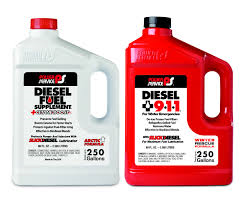
-911 is NOT to be used as a fuel additive that you would regularly put in the fuel tank to keep the fuel from jelling.
-Power Service Diesel Fuel Supplement + Cetane "White Bottle" is to be added to the fuel at each fill when the ambient temperature is < 30 degrees F.
-This is the additive you should use on a regular basis during the winter months.
Penray:
Winter Thaw Emergency Diesel Fuel Supplement
Dissolves already gelled fuel fast and reduces clogging of fuel filters. Prevents ice crystal build-up in fuel lines and filters by disbursing moisture.
Eliminates hard starting, pounding, excessive smoking and helps improve combustion. 100% compatible with low sulfur fuel and fuel blends.
Winter Pow-R Plus Diesel Fuel Supplement
ULSD compliant. Prevents gelling of diesel fuel. Prevents ice crystal formation. Reduces cold filter plug point b as much as 30ºF. Helps enhance cetane. Helps improve fuel economy. Utilizes HAFI® technology. Improves cold weather starting. Stabilizes and prevents corrosion. Helps reduce emissions. Helps improve lubricity.
How to Make a Cold Weather Survival Kit
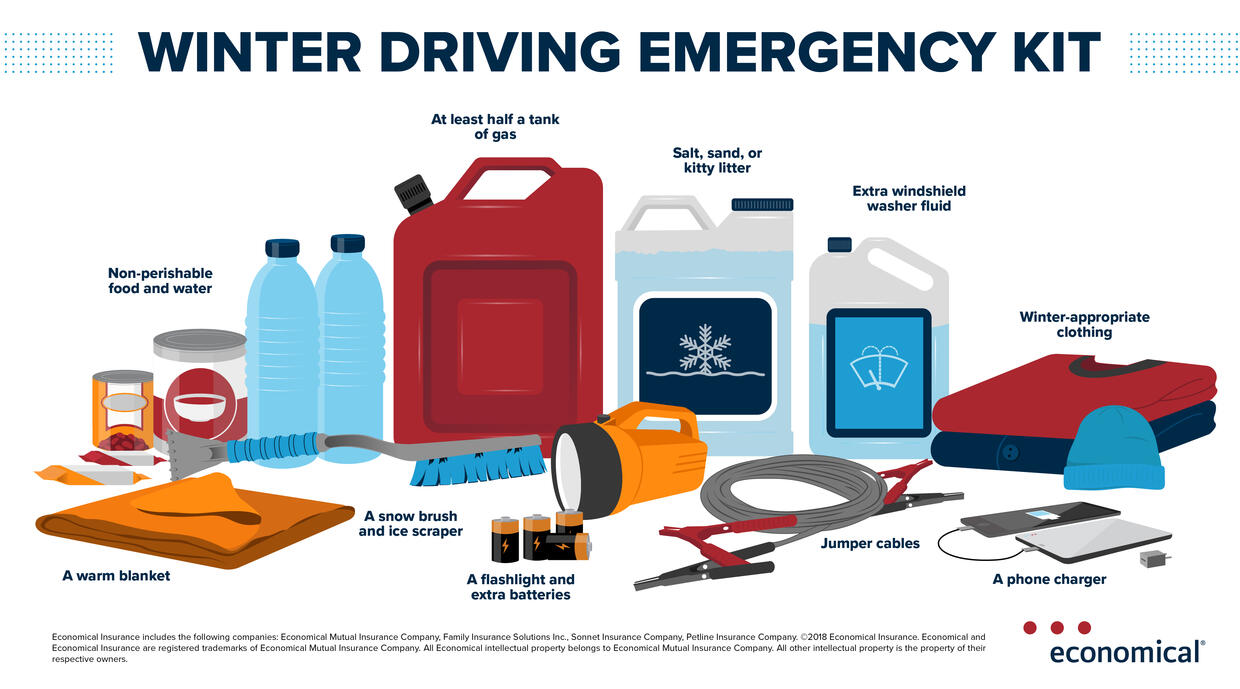
Everyone should carry a Winter Survival Kit in their truck. In an emergency, it could save your life. Here is what you need:
- a shovel
- windshield scraper and small broom
- flashlight with extra batteries
- battery powered radio
- water
- snack food including energy bars
- raisins and mini candy bars
- matches and small candles
- disposable hand/foot warmers
- extra hats, socks, and mittens
- first aid kit with pocketknife
- necessary medications
- blankets or sleeping bag
- tow chain or rope
- road salt, sand, or cat litter for traction
- booster cables
- fluorescent distress flag and whistle to attract attention
- cell phone adapter to plug into lighter and or extra battery supply
'Tis Deer Season!
It is deer season, and now is the time to remind drivers of the dangers of animals in the roadway. The Insurance Institute for Highway Safety estimates that 1.5 million deer-related accidents occur each year. Deer are struck in three out of four accidents involving animals. Nationally, deer collisions with vehicles annually cause some $1.1 billion in vehicle damage, kill 150 people and injure another 29,000 people.

Cattle, horses, dogs, and bears also led to fatalities in collisions. Crashes with deer are most likely to occur in late fall during deer breeding, migration, and hunting season. Accidents with deer are likely to occur on rural roads with a speed limit of 55 mph or higher speed limits, in darkness, or at dusk and dawn. In 60% of the accidents involving human fatalities with animal-vehicle collisions, the fatality was caused not by the collision with the deer, but failure to wear a safety belt. The animal-vehicle collision is the first event and often not the deadliest. It is what occurs to the vehicle after the initial collision that is often the cause of the fatality, i.e. striking a fixed object or another vehicle(s). There is no feasible way to keep deer and other animals off the roadway. Deer whistles have been sold over the years as a way of avoiding deer collisions. I can personally attest that the whistles work. However, it is still up to the deer what action is taken after hearing the whistle. This may include standing still in the roadway or running directly at you; therefore, drivers always need to be vigilant and especially in those areas that are prone to animal crossing.
IDEALEASE CARES SUPPORTS COMMUNITIES IN NORTH AMERICA
January 4, 2020 | Idealease | By Tri-County International Trucks
In 2015, Idealease, Inc., North America’s premier full-service commercial truck leasing, rental and maintenance company, created the Idealease CARES program to recognize the time, talent and funding that Idealease locations contribute to their communities and charitable causes. The program is an important part of the Idealease tradition of helping to foster Stability in the local community.
Our dedicated lease and rental professionals and location owners of more than 430 Idealease locations have given financial and volunteer support to countless charitable causes in North America. A small sample of recent contributions includes:
- Idealease of Central Wisconsin along with fleet customers participates in an annual Truckers for Tots holiday program, raising money for toys for disadvantaged children in surrounding areas.
- Idealease of Baltimore raised money to provide a full Thanksgiving or Christmas dinner to families as part of the Loaves & Fishes food pantry "Have a Heart, Lend a Hand” campaign in Baltimore, Maryland.
- Idealease of Reno/Sparks provided wildfire relief supplies through Project Bear Hugs in Reno, Nevada and Paradise, California.
- Roberts Idealease donated a rental truck for delivering setup equipment, waters, and snacks and managed a rest stop and for the Bike MS: Cactus and Crude Ride in Tahoka, Texas.
- Cumberland Idealease organized a donation drive and provided relief supplies including more than 30,000 water bottles transported in three trucks to the Second Harvest Food Bank to help victims of Hurricane Florence in North Carolina.
- Pliler Idealease provided coaches and referees for The Miracle League of East Texas which helps special needs children play baseball on a specially designed field in Longview, Texas.
- Wallace Idealease helped build a Habitat for Humanity home for a family in Fort Myers, Florida.
- IRL Idealease painted the art room for the Canadian Mental Health Association as part of the Pushor Mitchell United Way Day of Caring in Kelowna, British Columbia.
- Idealease, Inc. participated in the Special Olympics Illinois Truck Convoys in Tinley Park, Illinois and Hoffman Estates, Illinois and the Kelly Cares Foundation golf outing to raise money for community health and education in South Bend, Illinois.
- Lewis Motor Sales Idealease supported the Barrie Terry Fox Run for cancer research in Barrie, Ontario, Canada.
- Tampa Idealease lent trucks to the Hillsborough County Sheriff's Office to transport school supplies and bike helmets donated to students in schools in Tampa, Florida.
- Peterson Idealease delivered Meals on Wheels to people in need in Portland, Oregon.
- Summit Idealease raised funds for St. Jude Children’s Research Hospital in Memphis, Tennessee.
- Bluegrass Idealease provided necessary home improvements to people living in the Appalachian Mountains.
- Highway Motors Idealease co-hosted a group of young professionals from Taiwan through a Group Study Exchange in Harrisonburg, Virginia.
“Every day we emphasize the importance of caring about our customers’ business operations and supporting the communities where we do business,” said Dan Murphy, President and CEO of Idealease, Inc. “Idealease CARES is part of the Idealease core value of providing Stability to our local communities. I’m extremely proud of all our locations and the Idealease team members who regularly give back to help others—it is in our DNA to be active volunteers and financial contributors to those in need.”
Every year, Idealease creates a video for its corporate annual meeting to highlight and honor selected locations’ Idealease CARES community support programs. Click here to view these videos.